
Plastic Injection Molding: A Complete Guide to the Manufacturing Process
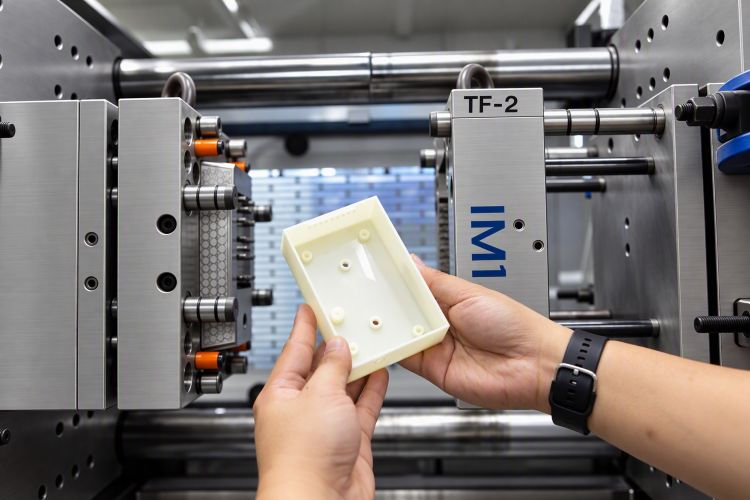
Molding by the injection method of plastic is largely utilized for mass production of accurate and repeatable parts out of plastic. The method can produce complicated shapes with the same characteristics over long production intervals, and can create parts used in medicine, automotive industry, and electronics.
What Is Plastic Injection Molding?
In injection molding, plastic pellets are heated until they become molten and then injected under pressure into a shaped mold cavity. Once the material cools and solidifies, the mold opens and the finished part is ejected. The cycle then repeats.
The process generally involves clamping, injection, cooling, and ejection, with temperature, pressure, and cycle time carefully controlled. These variables can affect the finished part's dimensions, appearance, and performance.
Key Steps in the Manufacturing Process
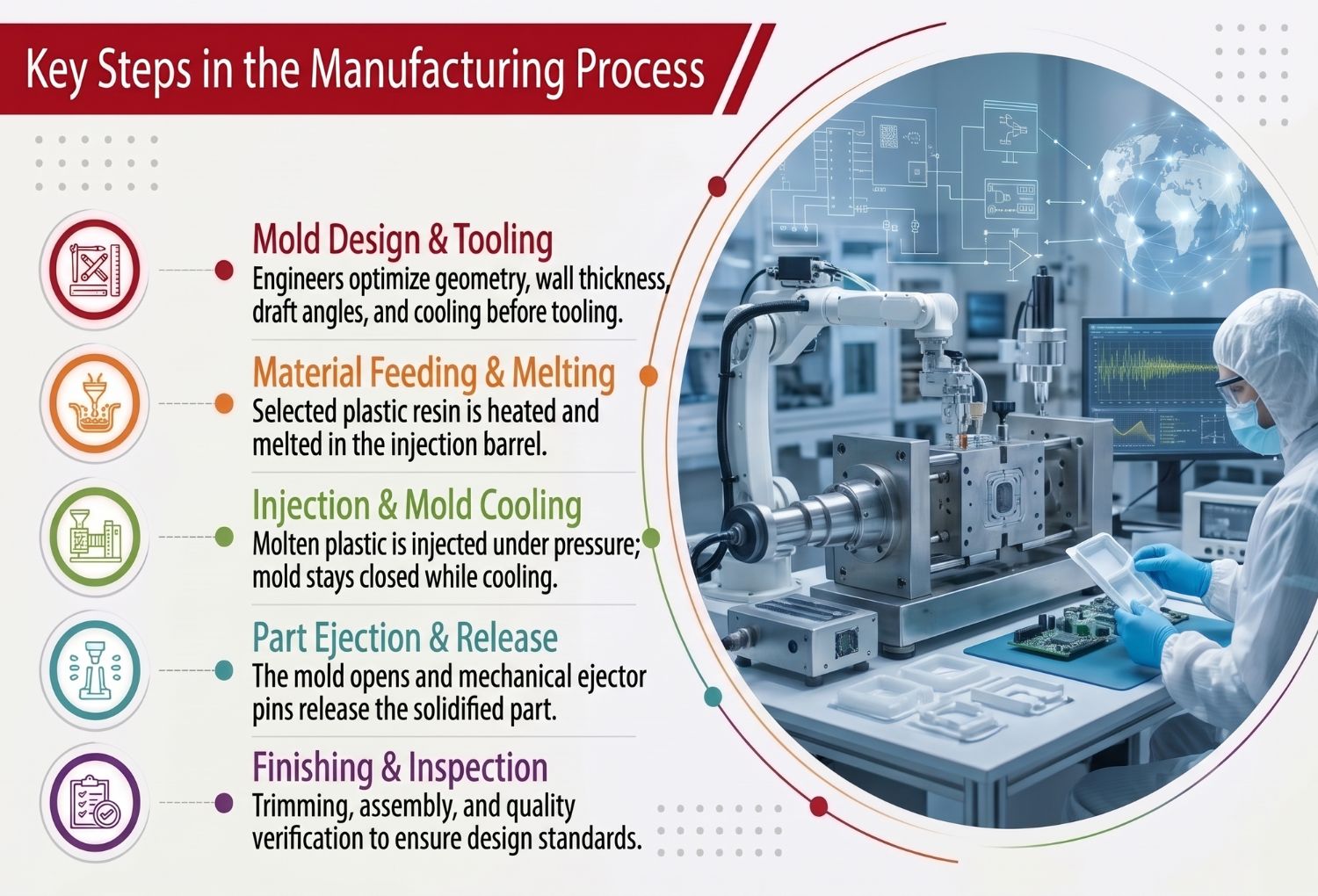
The process starts with mold design. Engineers consider the part's geometry, material, wall thickness, draft angles, cooling requirements, and ejection method before production tooling is created.
Next, the selected plastic resin is fed into the molding machine. A heated barrel melts the material, which is then injected into the mold at controlled pressure. The mold remains closed while the plastic cools and takes its final shape.
After cooling, the mold opens and ejector mechanisms release the part. Additional operations, such as trimming, finishing, assembly, or inspection, may follow depending on the application.
Design decisions made before tooling can have a significant effect on manufacturing results. For example, appropriate wall thickness, draft angles, and radii can help reduce common molding problems. Xometry's injection molding design guide
Choosing the Right Manufacturing Partner
A plastic injection molding manufacturer should be able to evaluate material selection, tooling, production requirements, and quality controls as part of the overall process.
Working with a specialized plastic injection company can also help when projects involve complex injection molded components, tight tolerances, or high production volumes.
Modern injection molding solutions can support everything from prototyping and tooling to full-scale production. Integrated Micro-Electronics Inc. (IMI) brings manufacturing capabilities together to support customers with plastic components and broader production requirements.
Other Blog
Choosing the Right Electronics Testing Services: Functional Testing and Failure Analysis Explained
From Functional Testing to Failure Analysis: The Role of Electronics Testing Services
How Electronics Testing Services, Functional Testing, and Failure Analysis Improve Product Reliability