
Battery Management Systems in Electric Vehicles
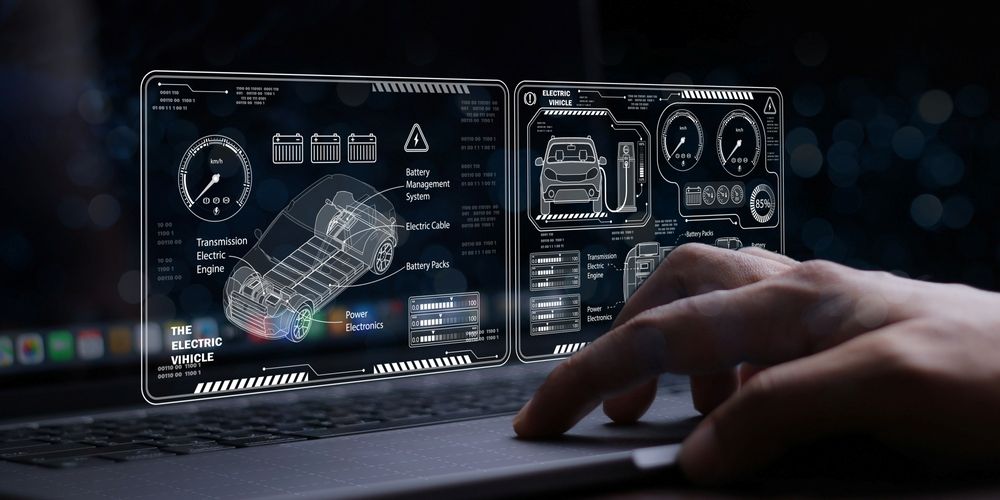
The performance, safety, and range of electric vehicles depend on more than just their sophisticated batteries. A critical component of an electric vehicle is the battery management system (BMS), which is in charge of supervising the battery pack and ensuring the cells are functioning properly. As technology in the automotive industry continues to progress, the BMS is becoming increasingly important, which is leading its application to various aspects of the electric vehicle.
How a Battery Management System Works
A BMS tracks important battery parameters, including cell voltage, current, and temperature. By monitoring these measurements, it helps detect abnormal operating conditions and reduces the risk of overcharging, excessive discharge, and overheating.
The system also supports cell balancing, which helps maintain more consistent charge levels across individual cells. Since battery packs contain numerous interconnected cells, imbalances can affect usable capacity and long-term performance. Accurate monitoring allows the system to estimate the battery's state of charge and state of health, helping drivers and vehicle control systems make informed decisions.
Why BMS Reliability Matters in Electric Vehicles
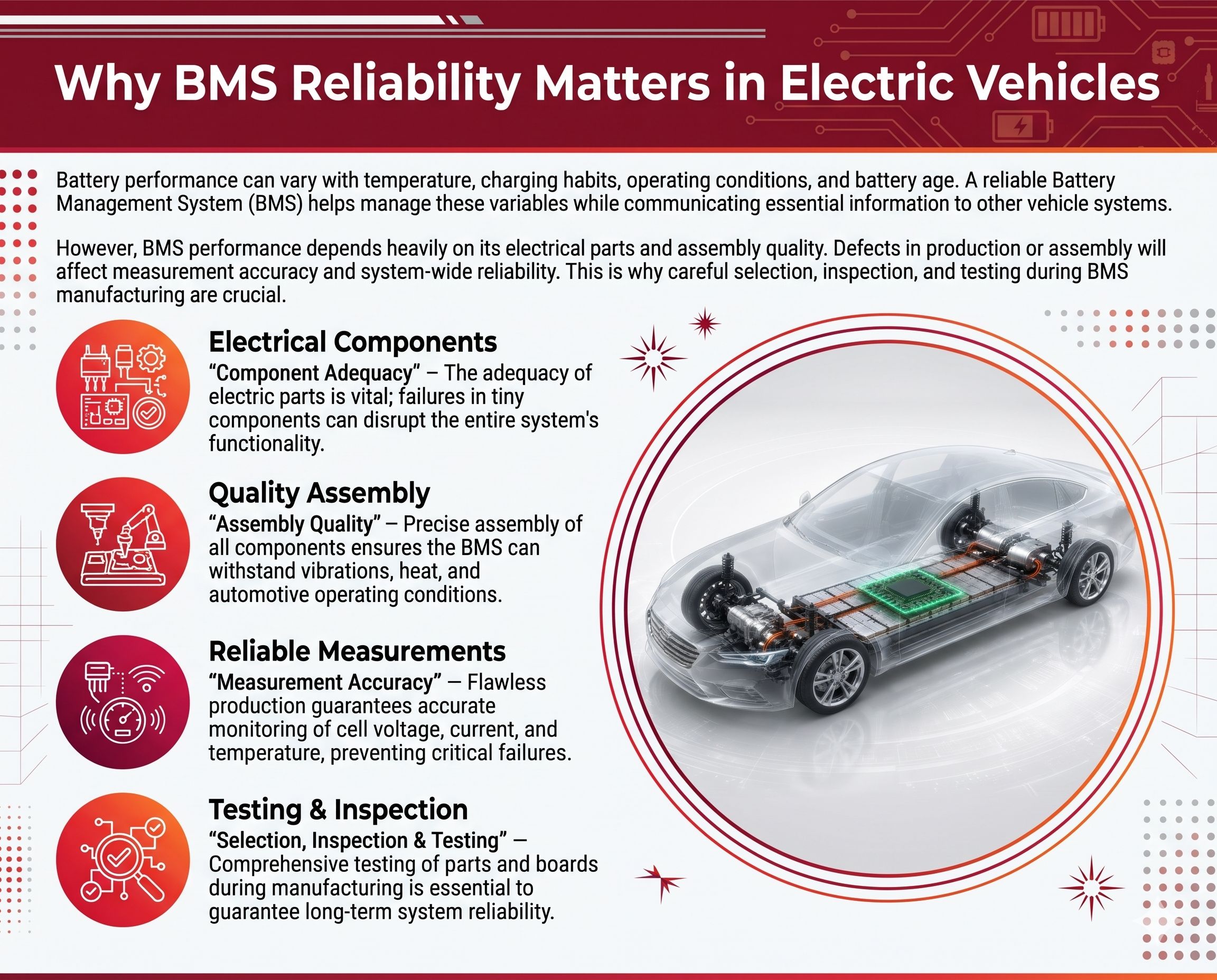
Battery performance can vary with temperature, charging habits, operating conditions, and battery age. A reliable BMS helps manage these variables while communicating essential information to other vehicle systems.
Nonetheless, the performance of the BMS depends on the adequacy of its electric parts and the quality of assembly. Problems with production or assembly of the components will affect quality of measurements and reliability of the system as a whole. This is why careful selection, inspection, and testing of the components during manufacturing of the BMS is crucial.
The Role of Automotive Manufacturing Solutions
Developing dependable battery management for electronics requires manufacturing processes suited to the demands of automotive applications. Automotive manufacturing solutions can support consistent assembly, quality control, and production scalability.
When making products, manufacturers must consider aspects such as where to place the components, how good the solder joints are, the heat dissipation performance of the product, and how resistant it is to vibrations. Testing and traceability are also very important aspects because they allow you to detect potential defects and keep production standards.
These aspects become more important when manufacturers start to produce electric automobiles and look for credible suppliers who can deliver quality products.
Electronic Manufacturing Solutions for Advanced Battery Systems
Specialized electronic manufacturing solutions help turn BMS designs into reliable electronic assemblies. Depending on project requirements, these capabilities may include printed circuit board assembly, component integration, inspection, and functional testing.
Comprehensive Electronics Manufacturing Services can also support coordination between engineering, manufacturing, and quality teams, helping products move from development toward scalable production. Companies such as Integrated Micro-Electronics Inc. (IMI) operates in the electronics manufacturing sector, where manufacturing expertise plays an important role in producing complex electronic assemblies.
Other Blog