
Harnessing the Strength of Smart Procurement in 2026

Key Takeaways
- Smart procurement links purchasing decisions to cost, quality and risk, supplier performance, and overall business objectives.
- A good procurement strategy must be more than cost – it is about continuity, supplier resilience, compliance and value.
- Digital procurement solutions can help to boost visibility of spend, supplier performance, and purchasing processes.
- Strategic sourcing helps organizations manage supplier dependencies while identifying opportunities for efficiency and resilience.
- Procurement teams increasingly need a combination of data skills, commercial judgment, negotiation capabilities, and supplier-management expertise.
Procurement has moved well beyond placing orders and negotiating prices. For manufacturers operating across complex supply networks, purchasing decisions can affect production continuity, product quality, working capital, and exposure to supply disruptions.
This is where smart procurement becomes valuable. Instead of treating procurement as a reactive function, organizations can use supplier data, spending analysis, risk monitoring, and market intelligence to make decisions before problems affect operations.
The Business Case for Strategic Procurement
A modern procurement strategy should support both immediate operational requirements and longer-term business objectives. Cost remains important, but focusing exclusively on purchase price can overlook risks associated with unreliable suppliers, poor quality, long lead times, or excessive supplier concentration.
Strategic procurement can help organizations:
- Identify unnecessary or inefficient spending
- Strengthen supplier performance management
- Reduce exposure to supply disruptions
- Improve negotiation and contracting decisions
- Align sourcing decisions with business priorities
- Make purchasing decisions using better-quality data
The result is a procurement function that contributes to operational resilience rather than simply processing transactions.
Core Elements Driving Strategic Procurement
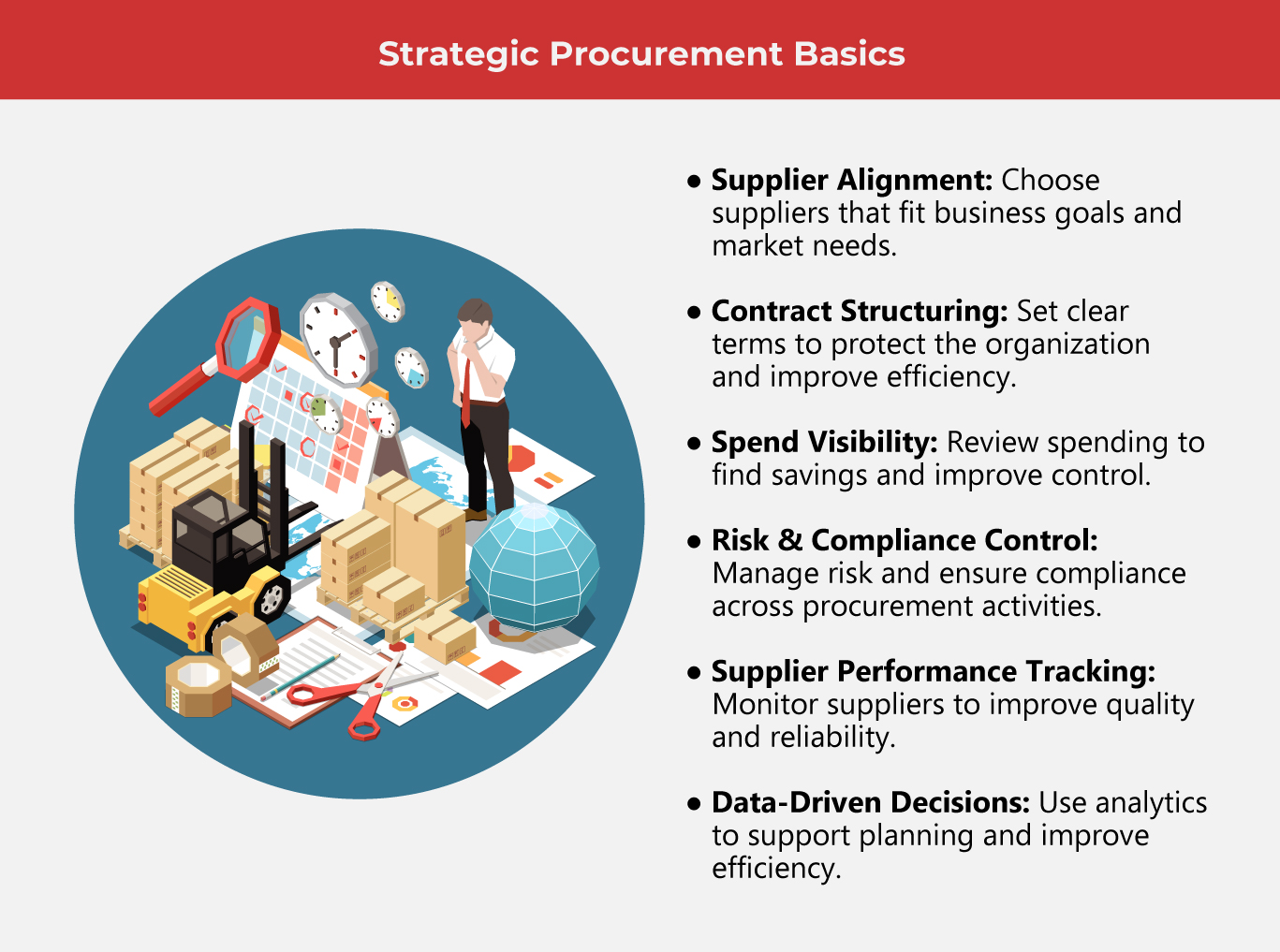
There are a number of interrelated activities that are needed for effective procurement. It is important that supplier selection is based on more than just the price, including capabilities, quality, reliability, compliance, capacity, and commercial fit.
Contract development is equally important. Clear agreements establish expectations around pricing, delivery, quality, responsibilities, and performance.
Spend analysis provides another layer of visibility. By examining purchasing patterns, organizations can identify fragmented spending, recurring costs, consolidation opportunities, and categories that require closer management.
Supplier monitoring should continue after onboarding. Performance data can reveal recurring quality issues, delivery problems, or other risks that may require corrective action or changes to the sourcing strategy.
Evolving Trends in Strategic Procurement
Digital procurement is changing how organizations manage purchasing information and supplier relationships. Digital platforms can bring procurement data into a more accessible environment, making it easier to track spending, workflows, supplier performance, and approvals.
Technology, however, does not replace procurement judgment. Teams still need to interpret information, assess trade-offs, communicate with suppliers, and decide when a sourcing change makes commercial sense.
Sustainability is also influencing procurement decision making. Alongside commercial considerations, organizations can consider suppliers based on their environmental practices, resource and waste management, compliance and other sustainability goals.
Supplier diversification is another important consideration. Depending on the category, maintaining alternative sources can reduce dependence on a single supplier and provide greater flexibility when market conditions change.
Strengthening Strategic Procurement Foundations
A resilient procurement function starts with knowing which materials, components, and supplier relationships are most critical to the business. Not every category requires the same level of oversight.
Organizations can begin by mapping critical spend, identifying supplier dependencies, reviewing contractual exposure, and assessing alternative sourcing options. Reliable data is essential throughout this process because poor information can lead to poor sourcing decisions.
In addition, for global manufacturers, procurement must also collaborate with engineering, quality, manufacturing, logistics, and finance. A cross functional approach ensures that sourcing decisions will be based on the real production needs as opposed to procurement goals alone.
IMI's global manufacturing and supply chain capabilities demonstrate the importance of connecting procurement with broader manufacturing operations. With more than 40 years of experience in electronics manufacturing and technology solutions, IMI supports customers across automotive, industrial, power electronics, communications, and medical markets.
Frequently Asked Questions
What is smart procurement?
Smart procurement uses data, technology, supplier intelligence, and structured decision-making to improve purchasing outcomes. It considers factors such as cost, quality, risk, supplier performance, and business requirements rather than focusing solely on purchase price.
How does a procurement strategy improve supply chain resilience?
A procurement strategy can improve resilience by identifying critical suppliers and materials, monitoring supplier performance, reducing unnecessary dependencies, and evaluating alternative sourcing options where appropriate.
What is digital procurement?
Digital procurement uses software and connected systems to manage purchasing processes, supplier information, spend data, approvals, contracts, and related workflows. It can improve visibility and make procurement information easier to analyse.
What is the role of strategic sourcing?
Strategic sourcing evaluates suppliers and purchasing categories with a long-term view. It considers factors such as total cost, quality, capacity, reliability, risk, and supplier capabilities when determining the most appropriate sourcing approach.
How can manufacturers strengthen procurement in 2026?
Manufacturers can enhance procurement by making spend visible, understanding critical supplier relationships, leveraging effective data, tracking suppliers' performance, establishing alternative sourcing where needed, and linking procurement to the engineering and manufacturing needs.
Other Blog