How AI and Data Centers Drive Growth
The worldwide surge in AI and data center development is reshaping global manufacturing, creating fresh demand for electrical components, heavy equipment, and specialized construction services. By 2030, businesses are projected to invest nearly $7 trillion in data center infrastructure worldwide, with about $4 trillion going to computing hardware and the rest to real estate, power systems, and related facilities. More than 40% of this spending is expected to take place in the US, cementing its role at the heart of the next digital industrial cycle.
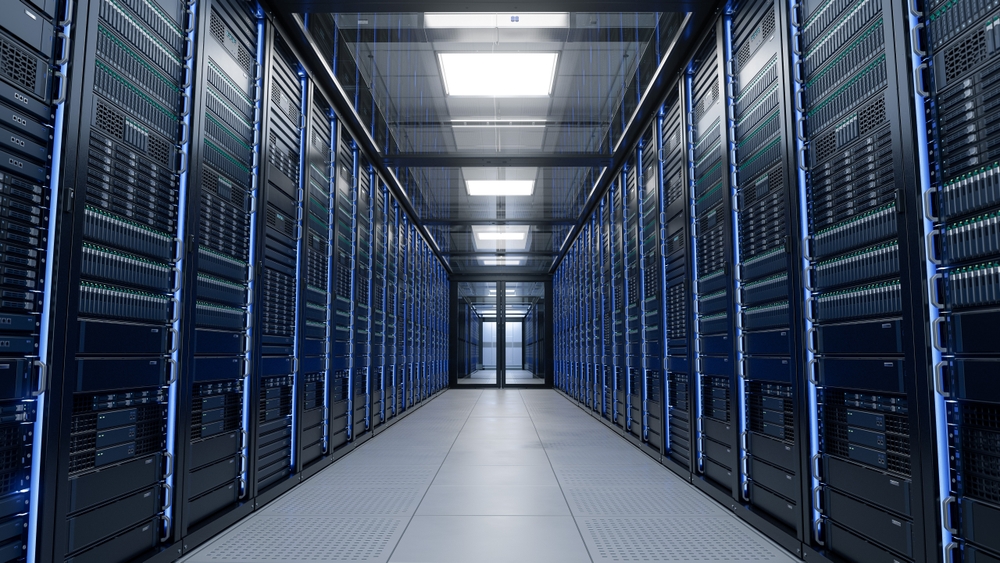
Once a niche component of corporate IT, data centers have become a cornerstone of modern industrial manufacturing and the digital economy. These purpose-built facilities host the servers that store, process, and move enormous volumes of information that power everything from factory automation to global e-commerce. Designed for constant operation, they are packed with computing equipment that must be cooled, secured, and monitored around the clock to keep digital systems running without interruption.
Today’s sites bear little resemblance to the backroom server closets of the past. As companies pursued future-ready operations, they migrated away from in-house systems to massive, specialized hubs engineered for scale and resilience. Some of these hyperscale facilities now span areas comparable to large retail complexes, housing dense rows of servers that support cloud platforms serving millions of users simultaneously. This shift reflects how essential data infrastructure has become to the next era of connected production and smart industry.
As cloud platforms and AI expand at a rapid pace, this infrastructure is entering a new phase of growth. Across the US, states are drawing increased attention from hyperscale operators and colocation firms eager to develop new facilities—driven not only by demand, but by the need for rigorous reliability testing to ensure systems can perform flawlessly at scale.
(Also read: COVID-19 Changed Manufacturing in 7 Big Ways)
Massive data center expansion
Data centers are scaling at a speed few industries have ever experienced, driven by cloud computing, AI, and the expanding digital economy. The global market, currently valued at roughly $243 billion, is projected to climb past $584 billion by 2032, reflecting how essential digital infrastructure has become to daily life. These facilities now carry about 95% of global internet traffic, making them as critical to national operations as power generation or transportation systems.
The industry’s footprint is also shifting. While the US still hosts nearly half of all data centers, emerging industrial markets such as India, Kenya, and Singapore are increasing investments to establish themselves as regional technology hubs.
Artificial intelligence is intensifying the surge. Training large AI systems can consume more than 1.7 million kilowatt-hours of electricity, roughly equal to the annual power use of about 160 U.S. homes. As a result, operators are developing supercomputing campuses that draw energy on the scale of small cities, with many new projects proposing loads well above 100 megawatts.
For many communities, data centers now deliver the same economic value once provided by steel mills and manufacturing industries, creating high-value jobs, generating tax revenues, and supporting manufacturers that are integrating AI into product design and development and supply chain management.
Driving job creation and growth
Data centers are emerging as cornerstone assets for innovation-led economies, generating high-skilled employment and boosting manufacturing careers. Far from being passive storage sites, these facilities attract entire ecosystems of cloud services, fintech platforms, e-commerce players, and AI firms, turning host communities into magnets for new investment and technical expertise.
The employment impact is substantial. A large facility spanning roughly 250,000 square feet can bring in as many as over a thousand workers during construction, including electricians, technicians, heavy equipment operators, and specialized tradespeople. Once operational, a single site typically sustains around 50 permanent roles, ranging from design and engineering teams to facility managers. The economic ripple effect is even broader, with every on-site position supporting an estimated 3.5 additional jobs in the surrounding economy.
Loudoun County in Virginia, a prominent data center hub, now derives almost half of its property tax revenue from these facilities, generating approximately $16 billion in new value in 2024 and enabling more than 12,000 local jobs.
Between 2017 and 2023, the U.S. data center sector saw direct employment increase by more than 50%, providing a vital talent pipeline as factories increasingly adopt advanced manufacturing technologies.
(Also read: Top 10 Manufacturing Trends You Shouldn’t Ignore)
Global data center trends
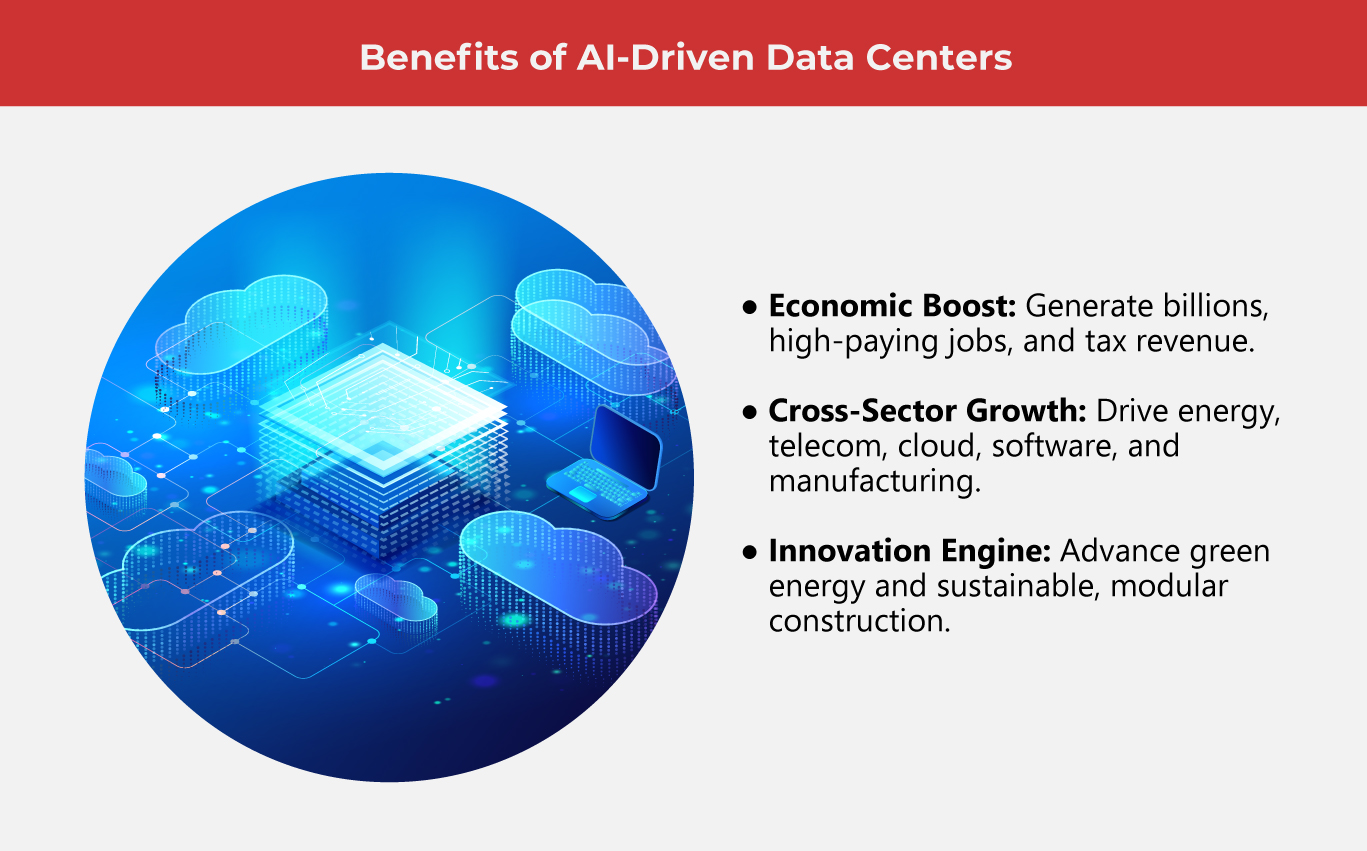
Global demand for data center capacity is expected to more than triple by 2030. In the United States, annual growth could reach 20 to 25%, with hyperscale operators accounting for nearly 70% of the projected expansion. These tech giants are investing billions to develop sprawling campuses, often covering hundreds of acres, to maximize computing power all in one location.
Key drivers include:
- AI and high-performance computing
Large language models and generative AI are creating intense computational needs, contributing around 40% of projected demand through 2030.
- Cloud migration and Software as a Service (SaaS)
Continued adoption of cloud services drives a steady 16% compound annual growth rate (CAGR) in non-AI workloads.
- Digitalization of public services
Healthcare, licensing, and digital ID systems are increasing reliance on data infrastructure.
- Emerging technologies
Internet of Things (IoT), 5G, and edge computing add further pressure on data center capacity.
Obstacles facing data center growth
The rapid growth of data centers brings significant economic and technological opportunities, but it also introduces complex challenges for infrastructure, sustainability, and policy. Operators and policymakers must navigate these obstacles to ensure expansion is both viable and responsible.
- Power strains
U.S. data centers could add roughly 460 terawatt-hours of electricity demand by 2030, tripling current consumption and putting pressure on regional grids and decarbonization efforts.
- Water scarcity
High water usage for cooling could rise 170% by 2030, creating conflicts in drought-prone regions and requiring trade-offs with less-established, power-intensive cooling technologies.
- Regulatory hurdles
Complex rules around cost recovery, licensing, permitting, data sovereignty, and foreign investment slow approvals and increase uncertainty for new projects.
- Resource constraints
Land, skilled labor, and specialized equipment are limited, potentially delaying construction and affecting operational efficiency.
- Opportunity costs & project risks
Large-scale data centers tie up capital and land, sometimes delaying other high-impact investments, while some hyperscalers pause projects due to power, construction, or design challenges.
- Community Concerns
Local opposition can emerge over environmental, water, and infrastructure impacts, highlighting the need for proactive engagement.
Planning for sustainable growth
To fully realize the potential of data center expansion, stakeholders must adopt proactive strategies that balance growth with sustainability.
Utilities and regulators can enable development by ensuring timely cost recovery and modernizing grid infrastructure to handle surging demand. Tapping the renewable energy market and adopting advanced cooling systems will address power and water constraints while reducing environmental impact. Early coordination with communities, clear permitting pathways, and workforce development programs can mitigate local resistance and labor shortages.
By integrating these solutions, regions can capture economic growth, support manufacturing solutions, and secure long-term digital infrastructure resilience.
As one of the Top 20 EMS companies in the world, IMI has over 40 years of experience in providing electronics manufacturing and technology solutions.
We are ready to support your business on a global scale.
Our proven technical expertise, worldwide reach, and vast experience in high-growth and emerging markets make us the ideal global manufacturing solutions partner.
Let's work together to build our future today.
Other Blog