Why the Next Tech Leap Is Flexible
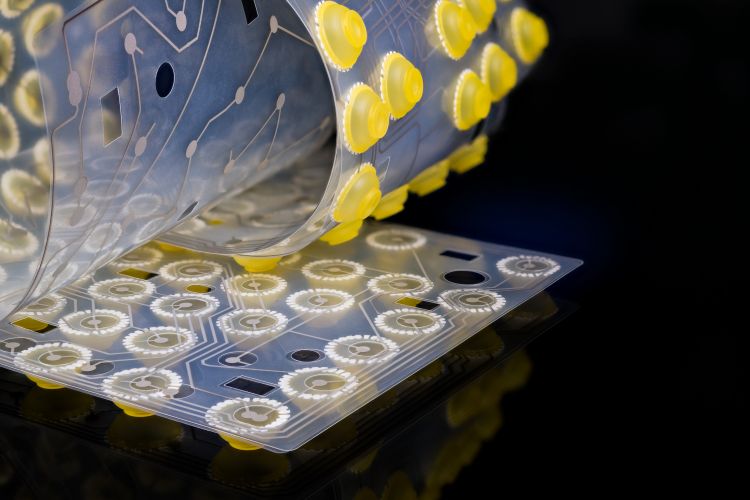
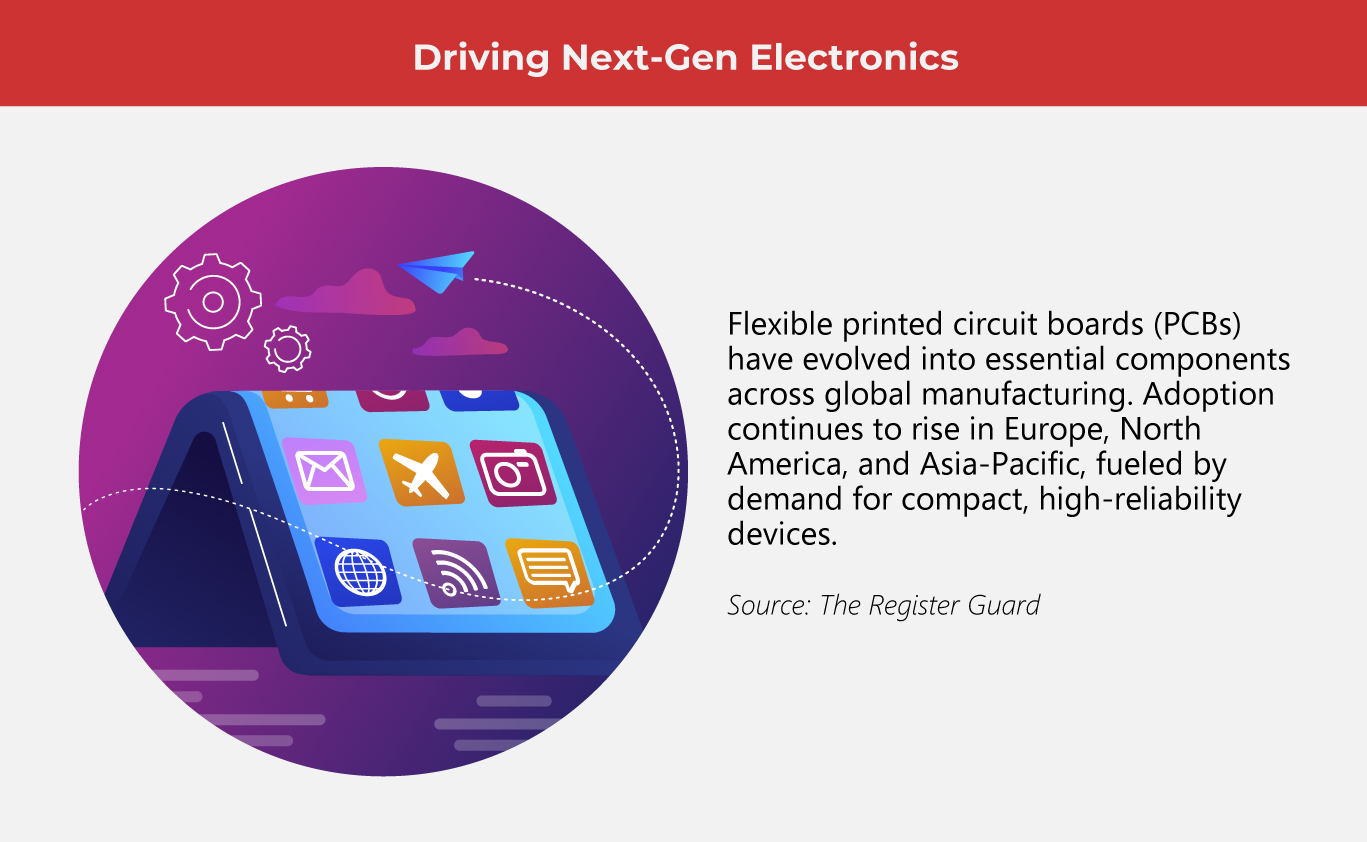
Flexible electronics, commonly known as flex circuits, are reshaping modern manufacturing solutions by enabling electronic components to bend, twist, and conform to compact or irregular spaces. Unlike traditional rigid boards, these circuits are built on flexible substrates such as plastic, glass, paper, or metal foil, allowing greater design freedom across a wide range of applications.
The global flexible electronics market is experiencing rapid expansion, with its value projected to grow from approximately US$43.23 billion in 2026 to nearly US$96.77 billion by 2033. Consumer electronics continue to dominate the sector, accounting for an estimated 68% market share in 2026, driven largely by rising demand for wearable devices, foldable smartphones, and other compact smart technologies.
Top 5 Advantages of Flexible Electronics
Flexible electronics are shaping future-ready technologies that enable new levels of design freedom, performance, and adaptability across modern devices.
-
Economic value
Flexible electronics are often more cost-efficient than traditional rigid systems because they reduce material usage, simplify assembly, and enable roll-to-roll manufacturing at scale. This production method lowers fabrication costs while improving throughput, making it suitable for high-volume applications like consumer devices and wearables. Their lightweight design also reduces packaging and transport expenses. Over time, flexible circuits can further lower system costs by integrating multiple functions into a single layer, minimizing the need for complex wiring and additional components.
-
Lower-cost substrates
While it’s still an emerging field, flexible tech already offers a clear cost advantage by using more affordable materials compared to conventional systems that depend on expensive glass substrates. Researchers highlight the strong potential for low-cost manufacturing as the technology matures. In the future, electronic components may be printed directly onto plastic films, significantly reducing production expenses. This shift allows manufacturing industries to maintain device performance while transitioning to cheaper, flexible substrates that support scalable, cost-efficient production.
-
Ease of transport
Designed for life on the move, these electronics redefine how devices are built and used. Unlike traditional systems that rely on fragile glass-based displays, flex circuits use thin materials that improve durability while reducing bulk. Organic thin-film transistors further enhance this by enabling slimmer, more resilient designs that are less prone to damage during handling or transport. As a result, products built with flexible electronics are easier to carry, more robust in everyday use, and better suited for modern, mobile lifestyles.
-
Design freedom
More tailored industrial solutions are becoming possible through this technology, which allows systems to be designed around specific application needs. In wearable devices like smart bands, flex circuits combine sensors, displays, and processing functions into compact, efficient formats that deliver real-time data and connectivity. Beyond consumer use, these technologies can be engineered to suit unique shapes and operational requirements across industries. With multiple substrate options available, manufacturers can better optimize performance and efficiency for a wide range of specialized applications.
-
Opportunity for innovation
New levels of design and engineering are being achieved, as advancements in sensors and displays expand what devices can do and how they are built. Modern flexible systems can transition between compact and larger formats, enabling screens that unfold or reshape based on use. This adaptability gives engineers greater freedom to explore unconventional product structures. From wearable smartphones to integrated automotive displays, flex circuits support highly versatile applications, driving continuous innovation in how electronic devices are conceived and developed.
(Also read: PCB and PCBA: Why They Matter)
Flexible Electronics Applications
As product development continues to prioritize lighter, smarter, and more adaptable devices, flexible electronics are opening new possibilities across a growing range of applications and technologies.
-
Automotive market
Automotive manufacturers are embracing new forms of smart, adaptive technology through the use of flexible sensors and displays. Biometric systems embedded into steering wheels and vehicle interfaces can identify drivers and personalize settings automatically. Meanwhile, curved and shatter-resistant flexible displays are helping create safer, more ergonomic interiors while supporting sleeker, more integrated vehicle designs.
-
Medical electronics
Healthcare is increasingly embracing this technology, particularly in wearable devices that monitor vital signs such as heart rate, sleep patterns, and physical activity in real time. Stretchable sensors and advanced biomarker systems enhance patient monitoring and diagnostics, while flexible biometric arrays improve security and integration. These innovations support more accurate, continuous, and comfortable healthcare solutions.
(Also read: Where Smaller Means Smarter: 5 Healthcare Advances)
-
Consumer devices
Consumers are expected to see more flexible electronic devices entering everyday use, from improved foldable smartphones to advanced home displays. As flex circuits and organic light-emitting diode (OLED) technology evolve, durability and performance in foldable phones will continue to improve. Future televisions may also become rollable or foldable, offering thinner, less intrusive alternatives to traditional screens while reshaping how people interact with display technology in homes and personal devices.
-
Wearables
Wearable technology is evolving quickly, but current devices are still limited by bulky batteries that affect comfort and design. Flexible batteries offer a promising solution, enabling smaller, lighter wearables by integrating power sources directly into bands and compact structures. As development continues, these innovations are expected to enhance test solutions for next-generation smartwatches and other wearable devices.
Emerging Trends in Flexible Tech
The evolution of flexible technology is paving the way for more advanced and versatile applications across industries.
-
Multi-technology electronics
Hybrid electronics merge traditional circuitry with flexible components, supporting advanced test and system development across modern industries. This combination delivers strong electrical performance from conventional systems while adding the lightweight design of flex circuits. The result is a balanced solution that improves functionality, manufacturing efficiency, and design flexibility in complex applications.
-
Structure-functional electronic systems
Companies are increasingly exploring structural electronics as a way to integrate functionality directly into product design. Instead of relying on rigid circuit boards enclosed in protective casings, flexible systems enable smart surface layers that conform to complex shapes. These printed circuits turn structural components into active, load-bearing elements with sensing capabilities. In automotive applications, this approach allows vehicle bodies to detect impact and environmental changes, enhancing safety and creating systems that function more like a responsive, connected network.
-
Conductive printing inks
Flexible electronics are expanding the use of conductive inks, enabling circuits to be printed directly onto materials like textiles and paper. When paired with integrated circuits, they support improved connectivity, including better 5G signal performance. Compared to traditional plated designs, conductive inks offer faster production, lower costs, and greater design flexibility, driving continued industry adoption.
-
In-mold electronics
In-mold electronics are a form of three-dimensional structural electronics that combine functionality directly into molded components. This approach offers benefits such as faster production cycles, reduced part counts, lightweight construction, and increased design possibilities. As the technology matures and becomes more scalable and reliable, adoption of in-mold electronics is expected to continue expanding across industries.
Unlocking What’s Next
Flexible electronics are poised to redefine the boundaries of design, manufacturing, and application across industries. As material science and system integration continue to mature, these technologies will enable even more compact, intelligent, and adaptive devices. The future points toward broader adoption, deeper functionality, and entirely new possibilities in next-generation electronics ecosystems.
As one of the Top 30 EMS companies in the world, IMI has over 40 years of experience in providing electronics manufacturing and technology solutions.
We are ready to support your business on a global scale.
Our proven technical expertise, worldwide reach, and vast experience in high-growth and emerging markets make us the ideal global manufacturing solutions partner.
Let's work together to build our future today.
Other Blog