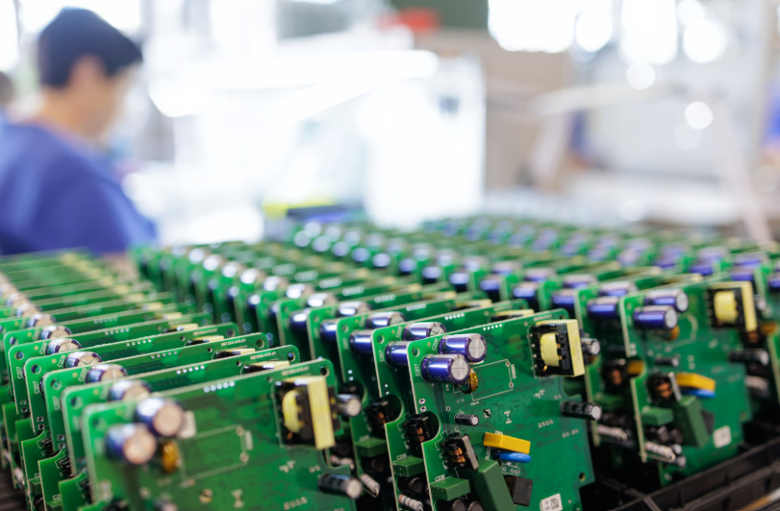
Where Smaller Means Smarter 5 Healthcare Advances
Miniaturization has become one of the most transformative shifts in healthcare, allowing doctors to diagnose, treat, and monitor patients with greater efficiency and precision. Smaller devices have helped improve outcomes while expanding access to care beyond traditional hospital settings.
The movement toward compact tools gained momentum alongside advances in medical technology and electronics. As engineering capabilities improved, manufacturers steadily reduced the size of components without sacrificing performance, opening the door to portable and wearable innovations.
The roots of this evolution trace back to the early 20th century, when pioneering devices such as the Electrocardiogram and the X-ray machine first appeared. These early systems were large, stationary, and required dedicated hospital space, limiting their accessibility.
Over time, efforts to shrink bulky equipment laid the groundwork for today’s highly compact devices. Each size reduction not only improved convenience but also accelerated the development of modern, patient-centered medical tools.
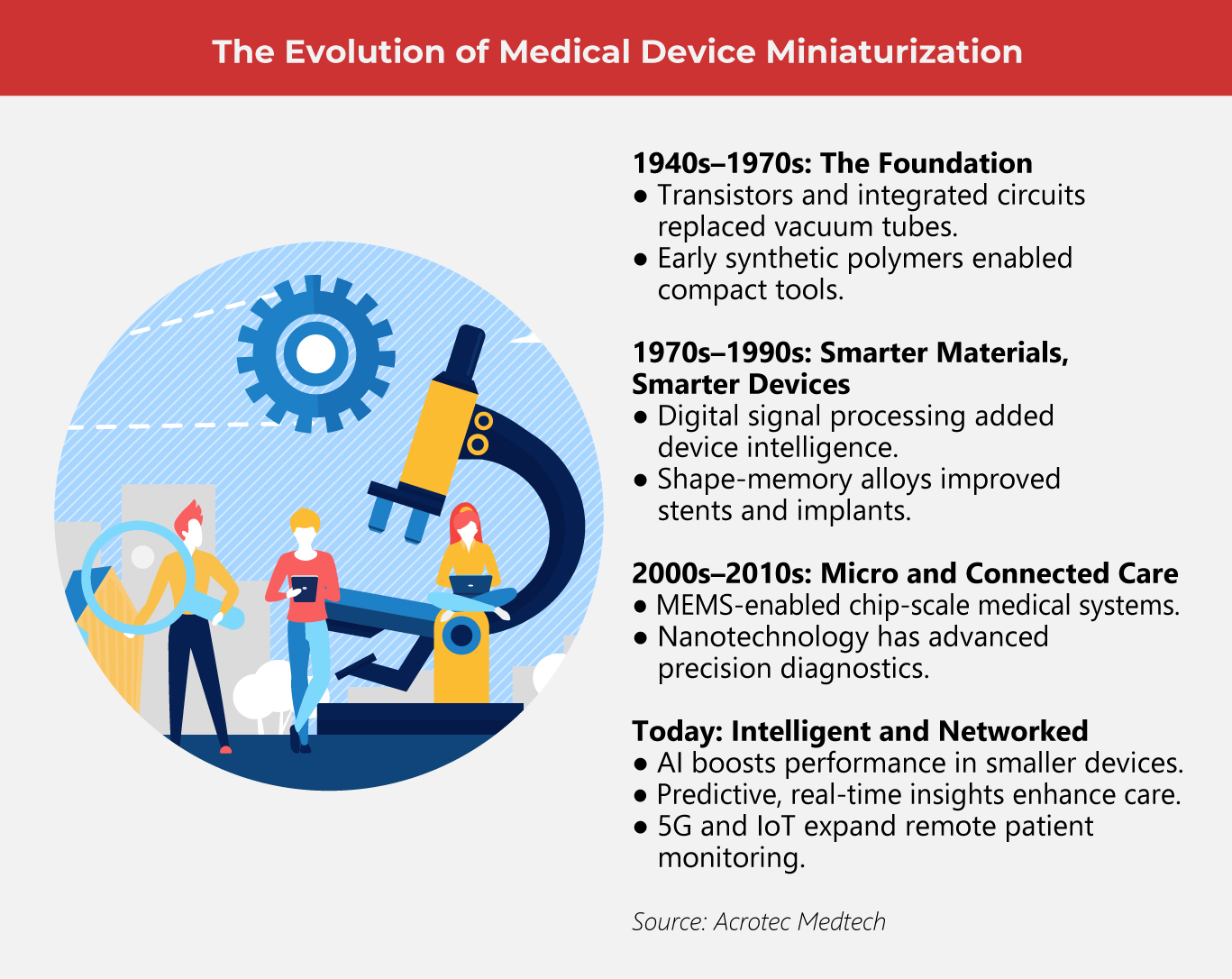 The late 20th century marked a turning point for healthcare as digital tools reshaped the medical device landscape. Digital signal processing made diagnostics faster and more precise, replacing mercury thermometers with digital versions and shrinking ultrasound systems into portable units. Advances in medical electronics accelerated the shift toward compact, high-performance equipment that could move beyond hospital walls.
The convergence of microelectronics and mechanics led to microelectromechanical systems (MEMS), enabling microscopic sensors and actuators to power implantables such as pacemakers and cochlear devices. At the same time, Bluetooth and Wi-Fi integration unlocked wireless monitoring, allowing clinicians to track vital signs and glucose levels remotely and in real time.
Wearables soon followed, from smartwatches to clinical-grade biosensors, supporting chronic disease management and preventive care. Nanotechnology pushed miniaturization further, opening pathways for targeted drug delivery and ultra-precise diagnostics.
Today, innovation extends beyond size reduction. Stronger focus on product design and development, coupled with design for manufacturing, ensures these increasingly complex devices remain scalable and reliable. Emerging advances in microscale 3D printing, bioresorbable electronics, 5G, and the Internet of Things (IoT) promise even smaller, smarter systems that may one day monitor or treat patients without the need for surgical removal.
(Also read: Hitting It Big with Small Things)
Miniaturization at Work
Medtech is advancing through miniaturization, and this series of product introductions highlights future-ready solutions transforming patient care
-
Home-Use Dialysis Machines
Dialysis machines have come a long way, transforming from massive, hospital-bound devices into compact, portable solutions. Once requiring patients to visit hospitals for treatment, early models weighed around 200 kilograms and were stationary. Advances in technology have led to portable options, which allow patients to perform dialysis at home. Beyond improving quality of life, these innovations offer significant economic value.
-
Portable MRI
Once towering and stationary, MRI machines required specially shielded rooms and immense infrastructure to operate. Today, technological advances have brought a shift toward portability, enabling scanners to reach patients directly. Some can be wheeled to a bedside, offering flexibility previously impossible. While still sizable, these devices reflect a clear trend toward miniaturization and patient-centered care. Such innovations highlight how manufacturing excellence drives medical technology forward, transforming once cumbersome equipment into practical tools that improve the overall patient experience.
-
Transforming Cardiac Care
Pacemakers have undergone a dramatic transformation, shrinking from fist-sized devices to compact, leadless innovations. Abbott’s Nanostim Leadless Pacemaker, comparable in size to a large vitamin capsule, can be implanted directly into the heart, eliminating the need for connecting wires and reducing patient discomfort and complications. Such advances highlight how cutting-edge manufacturing solutions enable miniaturization. The cardiac pacemakers market has been so successful that it is projected to hit $7.12 billion by 2030, growing at a CAGR of 5.12%.
-
Compact hearing aids
Hearing aids have evolved dramatically, from 17th-century ear trumpets to today’s AI-powered, nearly invisible devices. Key milestones include the first electronic aids, like the 1902 Acousticon, transistor-based wearable models in the 1950s, and digital devices such as Widex Senso. Modern innovations integrate AI and health monitoring, while connectivity with smartphones and IoT devices enhances usability. Market growth is projected to reach $13.68 billion by 2030. Advanced manufacturing and rigorous product testing ensure comfort, customization, and high performance for users.
-
Miniature X-Ray Units
Early X-ray machines from the late 19th century were massive, requiring high-voltage power and dedicated rooms. Over decades, advances in electronics, radiography, and material science have enabled portable models that can be taken directly to the point of care. Lightweight units now serve clinical, veterinary, and industrial applications. Future designs are expected to become even smaller and more efficient through innovations like carbon nanotube technology. Rigorous material composition analysis ensures these compact devices remain safe, reliable, and high-performing.
Precision Miniaturization Methods in Medical Technology
Through innovative design and engineering, advanced miniaturization techniques are enabling complex medical components to become smaller, more efficient, and highly precise.
-
Micro Molding and Milling
Micro molding enables the mass production of intricate micro components from thermoplastics, meeting extremely tight dimensional tolerances, sometimes as precise as 0.001 inches. Micro milling, meanwhile, creates complex 3D geometries in tough materials like hardened steel, achieving tolerances below one micron. It delivers superior surface finishes and efficiency, making it ideal for producing precision molds.
-
Smart Quality Control
The integration of AI and IoT has transformed quality control for medical device components. IoT sensors continuously monitor production metrics such as machine vibrations, tool wear, temperature, and material flow. AI algorithms analyze this data to predict maintenance, optimize machining parameters in real time, detect defects with sub-micron precision, and adjust production schedules.
-
Precision Micro Manufacturing
Micro and Computer Numerical Control (CNC) machining, including multi-axis systems, produce metal components as small as 1–500 µm with tight tolerances and intricate geometries. Hybrid machining combines CNC processes with laser cutting and welding, reducing prototyping time and scrap while enabling complex features. Laser micro machining further refines precision by removing material at a microscopic scale for surgical and orthopedic instruments.
-
Materials Development
Advances in materials science have driven the development of micro medical device components. Innovative options like Nitinol and nanoscale materials enable enhanced performance and functionality. Approved applications of these materials span antimicrobial dressings, orthopedic and dental implants, and devices used in cardiovascular, neurological, and orthopedic treatments, highlighting how material innovation supports long-term efficacy in next-generation medical technologies.
-
Sculpting at the Microscale
Micro-Electro-Discharge Machining (Micro-EDM) creates tiny, high-precision parts ranging from 50–100 μm by using controlled electrical sparks to remove material without direct contact. The process melts and vaporizes targeted areas, making it ideal for conductive metals. This technique enables the production of intricate surgical instruments and implants, combining microscale accuracy, minimal waste, and consistent repeatability.
(Also read: The Next Big Thing in Wearables)
The Next Frontier of Miniaturization
Miniaturization continues to redefine medical technology, driving smarter, more patient-friendly devices. Beyond compact tools, the future points toward nanomedicine—microscopic robots, nanoscale biosensors, and ultra-precise wearable devices could transform diagnosis, treatment, and real-time monitoring. As technology advances, medical devices will become smaller, more integrated, and capable of performing tasks once thought impossible, opening a new era of healthcare innovation. As one of the Top 20 EMS companies in the world, IMI has over 40 years of experience in providing electronics manufacturing and technology solutions.
We are ready to support your business on a global scale.
Our proven technical expertise, worldwide reach, and vast experience in high-growth and emerging markets make us the ideal global manufacturing solutions partner.
Let's work together to build our future today.