A Key Breakthrough in EV Tech
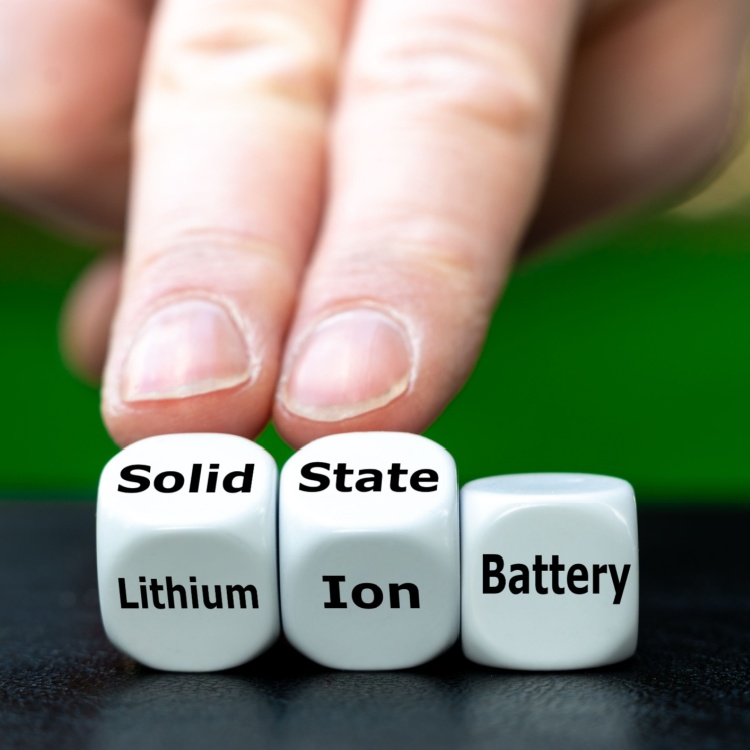
Ganfeng Lithium, the world’s largest lithium metal producer, has begun mass production of semi-solid-state batteries, reporting energy densities between 400 and 650 Wh/kg. The new lithium-hybrid cells are initially intended for non-automotive applications, though industry expectations suggest eventual integration into electric vehicles (EVs) as the technology matures.
The company plays a dominant role in global manufacturing, supplying nearly half of the world’s lithium metal. It maintains supply agreements with major automakers, including Tesla, Volkswagen, Hyundai, and BMW. A recent four-year contract with Hyundai for lithium hydroxide further strengthens its position in the EV battery supply chain.
Meanwhile, FAW Group, a key partner of Volkswagen in China, has been testing a semi-solid state battery delivering around 500 Wh/kg in a prototype vehicle. The 142 kWh pack replaces a conventional lithium iron phosphate (LFP) unit with less than half the capacity, enabling a reported driving range exceeding 1,000 km under local testing standards. Despite its high energy density, the battery is said to be more cost-efficient, largely due to its use of manganese instead of expensive nickel.
Taken together, these developments highlight the growing strategic importance of semi-solid state batteries in industrial manufacturing.
(Also read: The Importance of EMS in Boosting EVs)
Why Semi-Solid State Batteries Matter
A semi-solid-state battery uses a hybrid electrolyte that exists between liquid and solid states, allowing ions to move efficiently while improving structural stability. Unlike conventional lithium-ion batteries (LIBs), which depend on fully liquid electrolytes, this gel-like system significantly reduces flammability and leakage risk while maintaining strong ionic conductivity.
The result is a safer, more stable energy storage solution that improves performance and lifespan without requiring a complete overhaul of existing battery architectures. As electrification accelerates, it is increasingly viewed as a practical evolution in power storage rather than a distant replacement technology.
From a performance standpoint, semi-solid systems deliver several clear advantages. By enabling compatibility with high-capacity materials such as silicon-based anodes and high-nickel cathodes, they achieve higher energy density, typically in the 400–500 Wh/kg range, compared with traditional LIBs at roughly 200–300 Wh/kg.
This translates into longer EV driving ranges and extended runtime for electronic devices. At the same time, reduced electrolyte volatility enhances safety, while faster charging is possible without excessive heat buildup, improving usability in real-world applications.
These gains are supported by stronger engineering capabilities and more refined system integration approaches. Because semi-solid architectures remain compatible with existing production lines, they avoid many of the scale-up challenges seen in next-generation solid-state batteries.
Their durability is further confirmed through thermal cycling test protocols, which measure stability under repeated temperature changes, and leakage test validation, which reinforces their structural safety advantages. Complementary analytical testing ensures consistent electrochemical performance across operating conditions.
Durability is another defining benefit, with improved resistance to electrode degradation supporting longer cycle life and better capacity retention.
Environmental performance also improves due to longer service life and reduced material waste, lowering replacement frequency and supporting sustainability goals. As a result, governments, automakers, and battery developers are increasingly investing in this technology as part of the broader energy transition.
Semi-Solid State Battery: Core Structure Breakdown
Semi-solid state batteries are defined by a tightly engineered internal structure that balances performance and scalability in modern manufacturing solutions.
-
Electrolyte system
At the core is a hybrid electrolyte system built from gel-like, polymer, or ceramic matrices infused with lithium salts. This maintains strong ionic movement while improving mechanical stability. Its design helps reduce internal short-circuit risks and limits dendrite formation, improving operational safety and long-term reliability.
-
Electrode architecture
Electrode design is adapted from conventional lithium-ion platforms but optimized for advanced product development goals. Manufacturers often explore silicon-rich anodes and high-performance cathode chemistries to push energy density higher while ensuring compatibility with the semi-solid interface.
-
Internal separation and current pathways
Supporting these elements are critical internal layers such as current collectors and separators. These components manage electron flow, maintain physical isolation between electrodes, and enhance structural integrity, ensuring the battery performs efficiently under demanding conditions.
Semi-Solid State Battery Adoption in Key Industries
Semi-solid state batteries are steadily moving from laboratory development into early commercial deployment across multiple sectors. Several automakers, including Toyota, Nissan, and leading Chinese manufacturers, are integrating these battery systems into premium models. These applications are targeting extended driving ranges of roughly 800 to 1,000 km per charge, highlighting their growing relevance in high-performance mobility.
Beyond transportation, consumer electronics are emerging as another major adoption area. Devices such as smartphones, laptops, drones, and first-person view (FPV) systems are beginning to use semi-solid batteries to support faster charging rates, often in the 3C to 5C range.
In specialized industries, the technology is gaining traction in medical and aerospace applications. Compact medical devices, including implantable sensors, benefit from the batteries’ stable output and reduced safety risks, while aerospace systems value their reliability under limited-space environments.
(Also read: How IMI Can Improve Your Products with Testing & Calibration)
The Next Step in Energy Storage
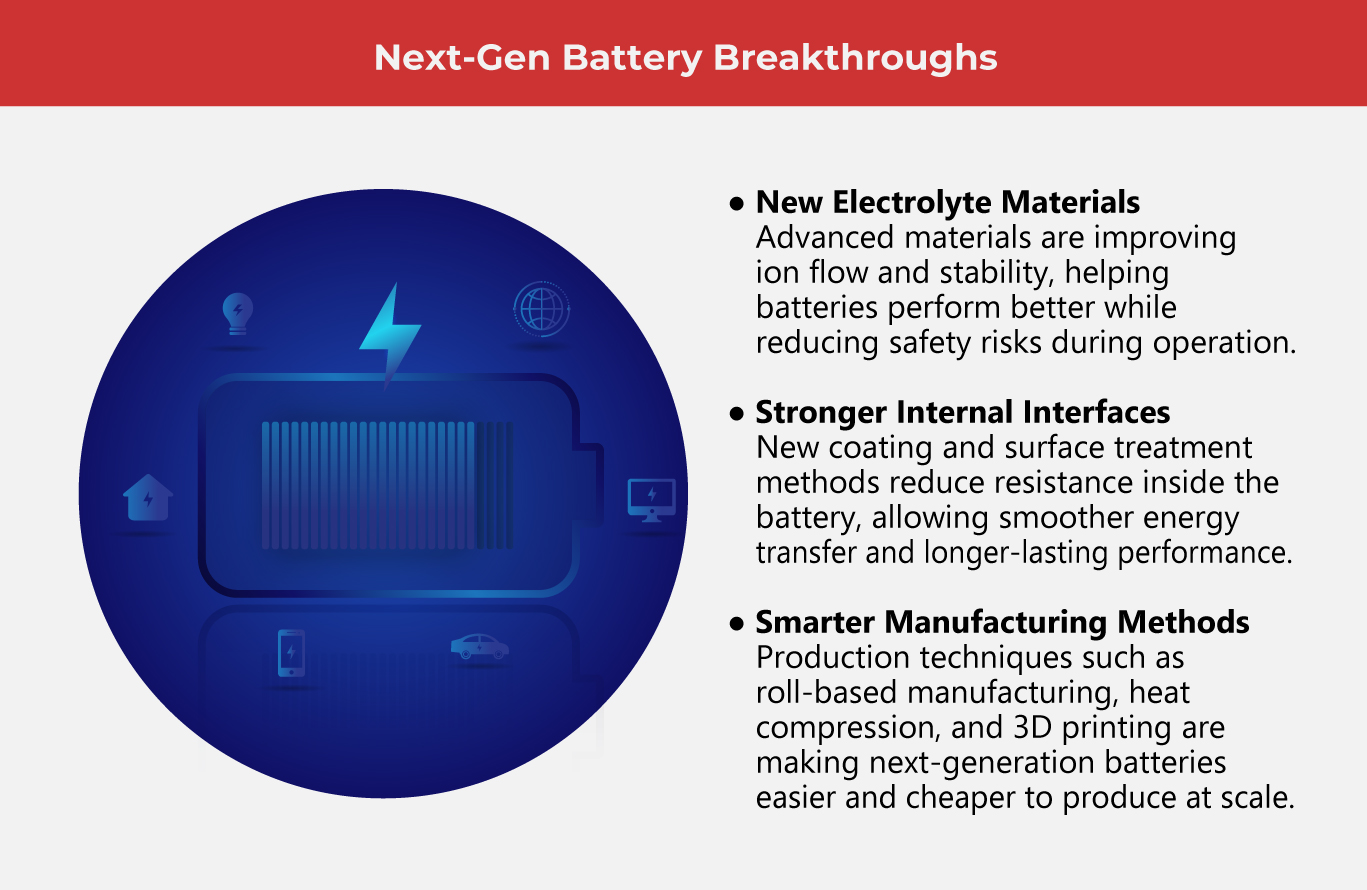
The long-term direction of battery development is full solid-state technology, where liquid or gel components are completely replaced by solid electrolytes such as sulfide, oxide, or polymer materials. While this design promises major gains in safety and energy performance, it still faces challenges in scaling production, cost, and interface stability. As a result, it remains a key target in ongoing product testing across the industry.
Compared with semi-solid systems, full solid-state batteries aim for higher energy density, potentially enabling longer-range EVs and more compact energy storage. However, their manufacturing requirements are more complex, often needing entirely new production lines, which limits short-term commercial rollout. Semi-solid designs therefore, continue to serve as a transitional solution, offering a balance between performance improvement and existing manufacturing compatibility.
Despite current barriers, companies and research groups continue to push forward with future-ready designs, viewing solid-state systems as the next major leap in energy storage. Their success will ultimately depend on whether they can deliver both technical performance and long-term economic value at scale.
As one of the Top 30 EMS companies in the world, IMI has over 40 years of experience in providing electronics manufacturing and technology solutions.
We are ready to support your business on a global scale.
Our proven technical expertise, worldwide reach, and vast experience in high-growth and emerging markets make us the ideal global manufacturing solutions partner.
Let's work together to build our future today.
Other Blog