What's New in Cobots for 2026

Cobots initially gained traction for their safety advantages, enabling direct human-robot collaboration without protective cages. Since then, their use has broadened significantly as advances in system integration have made them adaptable to a wide range of industrial tasks.
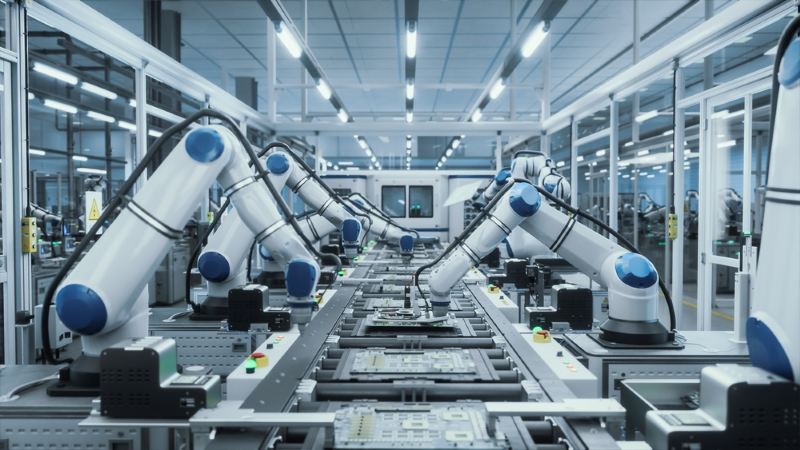
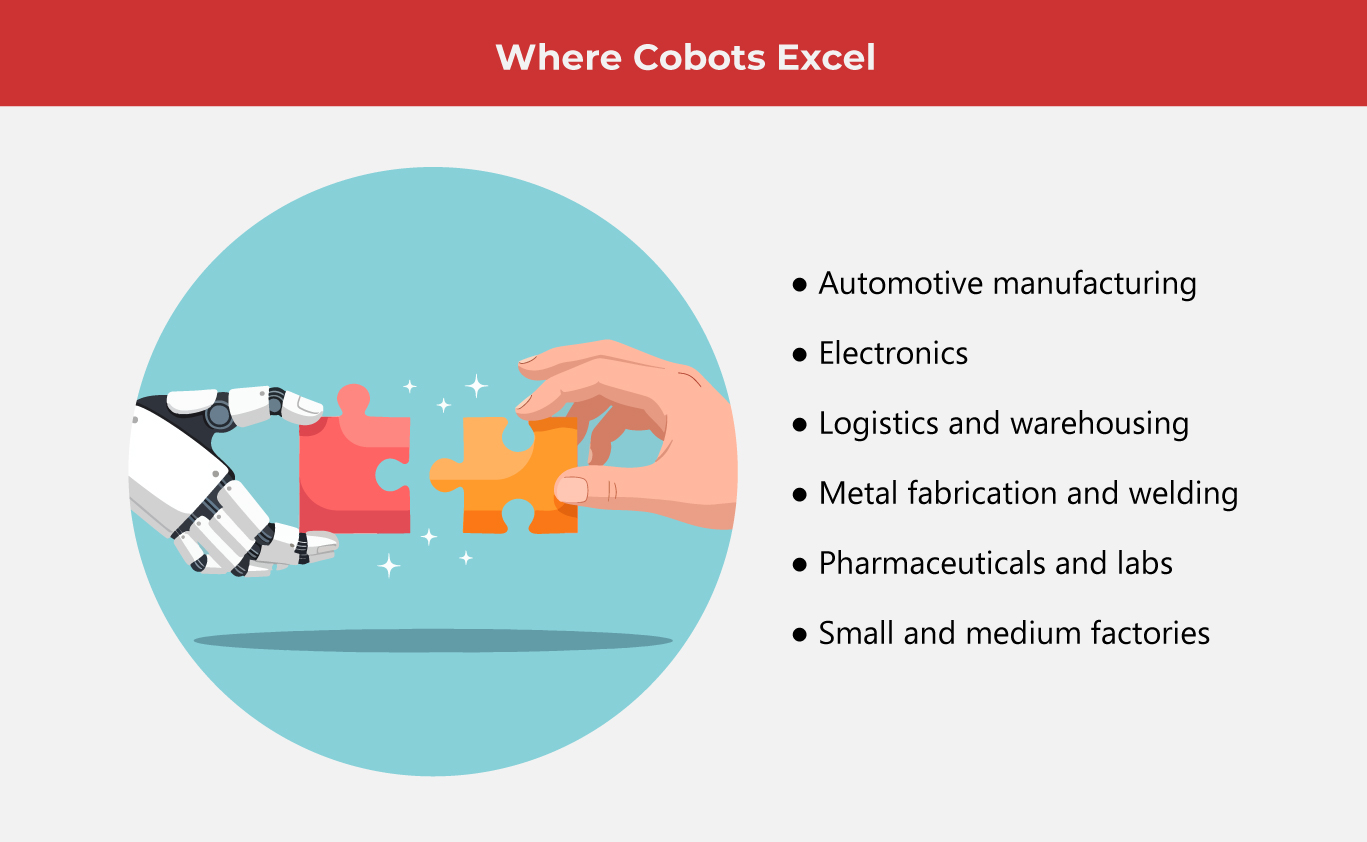
Today, they are deployed across diverse applications—from lab automation and precision assembly to welding, machine tending, material handling, pick-and-place, and palletizing. In the automotive market, they have become a key part of production workflows, reflecting how collaborative robots and traditional industrial systems are increasingly integrated rather than used separately. Rather than replacing conventional robots, cobots are now seen as complementary tools within broader automation strategies.
Key Benefits of Cobots
In global manufacturing, cobots are increasingly being integrated into production systems as manufacturers seek more flexible and efficient automation solutions.
-
User-friendly operation
Ease of use is a key advantage of cobots because they are designed with intuitive interfaces that allow operators to program and adjust tasks quickly, often without advanced robotics expertise. This reduces training requirements and simplifies deployment in changing industrial manufacturing environments, making automation more accessible across different fields.
-
Space-saving and lightweight build
Cobots are compact and lightweight, making them easier and cheaper to install without major structural changes. Their small size allows them to fit into tight production spaces while remaining flexible for different tasks.
-
Quick installation and reconfiguration
Swift deployment is a key advantage of cobots because they can be rapidly programmed and reassigned to new tasks with minimal downtime. This adaptability allows manufacturers to respond faster to changing production needs, reduce idle time, and improve operational efficiency without major reconfiguration of existing systems.
-
Embedded safety functions
Built-in safety features make cobots especially valuable because they are designed to work safely alongside people without the need for heavy barriers or isolation. Their sensors and responsive controls allow them to slow down or stop when humans are nearby, creating a future-ready and collaborative workspace where automation and human workers can comfortably share the same environment.
(Also read: Meet Rigorous Standards With IMI)
Cobot Trends Defining 2026
In 2026, collaborative robots are expected to play a growing role in lean manufacturing strategies as industries look for smarter ways to improve efficiency and reduce waste. As cobots evolve alongside new safety and digital standards, they are also delivering stronger economic value by helping companies streamline operations and boost productivity without heavy infrastructure costs.
-
Expanding into new markets
Cobots are moving well beyond traditional factory environments, finding new roles in sectors that once had little or no automation. Their compact design, quiet operation, and safety-focused engineering make them suitable for spaces where human interaction is constant and product validation is critical.
Adoption is growing across a wide mix of industries, including clinical and diagnostic laboratories, pharmaceutical production, research facilities, and testing environments. Outside healthcare and science, cobots are also being introduced into commercial kitchens, bakeries, hospitality settings, and small-scale craft and artisanal manufacturing.
These sectors are drawn to cobots because they can handle reliability testing and repetitive tasks with consistency while remaining easy to operate. Their simplicity, accuracy, and low disruption make them a practical fit for environments that prioritize both efficiency and human-centered workflows.
-
Deployment in high-risk environments
Cobots are being adopted more widely across heavy industries such as shipbuilding, manufacturing, logistics, and other demanding sectors where working conditions are often harsh and high-risk. Activities like material analysis and handling, surface treatment, welding, and managing hazardous substances require strong precision and consistent safety performance, making cobots a reliable support tool in these environments. Their ability to maintain steady output while reducing human exposure to danger is encouraging broader use in traditionally labor-intensive operations.
A key shift is also their improved accessibility. Even facilities without dedicated robotics expertise can now deploy cobots through intuitive methods such as voice-based commands, lead-through programming, gesture control, and simple drag-and-drop interfaces. These human-centered systems make automation easier to configure for applications like product testing and analysis, allowing robotics to be integrated more smoothly into everyday industrial processes.
-
Delivering factory-grade performance
Cobots are moving beyond light, repetitive tasks and into demanding, high-performance industrial roles once reserved for traditional robotic systems. This evolution reflects growing confidence in cobots as capable production tools rather than simple assistive devices.
The transition is being driven by improvements in payload capacity, reach, speed consistency, motion accuracy, and overall repeatability, alongside stronger safety and compliance systems. As a result, manufacturers now expect cobots to deliver durability, precision, and long operational life, aligning more closely with full-scale industrial requirements.
These systems are now being used in high-accuracy dispensing, 3D printing, visual inspection, and quality control, where reliability and precision are critical to performance.
-
AI-led technological advancement
As AI-powered automation expands across industries, cobots are emerging as the preferred platform for embedding intelligent capabilities into everyday production systems. Their characteristics make them well-suited for advanced functions such as real-time vision processing, adaptive motion planning, predictive fault detection, and dynamic task learning.
Modern cobots push this further by combining generative AI, 3D perception, force sensing, and cloud-edge computing to enable more autonomous, adaptive performance. This approach allows cobots to move beyond fixed programming toward continuous learning and multi-task execution in real operating environments.
Increasingly, cobots are becoming both the users and enablers of AI-driven robotics development, serving as practical testbeds where new capabilities are refined, validated, and scaled.
(Also read: How AI Tools Boost DFM)
-
Standards Alignment in Cobot and AI Expansion
For much of the past decade, safety regulations struggled to keep pace with rapid progress in collaborative robotics and AI-enabled automation. That gap is now narrowing as updated international guidelines begin to take shape in response to more advanced systems entering real production environments.
These new standards increasingly focus on AI-driven behavior, safe human-robot interaction in shared workspaces, sensor-based awareness of surroundings, mobile robot safety, and more adaptive, context-sensitive risk assessment. Together, they reflect the growing complexity of modern automation systems.
With clearer and more consistent rules emerging, companies are gaining greater confidence to deploy larger fleets of cobots across operations, including those powered by AI and mobile platforms. This improved regulatory clarity is expected to further accelerate global adoption and integration of collaborative robotics in the years ahead.
Collaborative Automation at Scale
Cobots have moved from experimental tools to essential components of modern manufacturing, offering flexibility, safety, and increasingly industrial-grade capability. As they expand into new sectors and integrate AI, their role in improving efficiency, quality, and adaptability continues to grow. With clearer standards emerging, cobots are set to anchor the next phase of automation, supporting smarter, more scalable, and more resilient production systems worldwide. As one of the Top 30 EMS companies in the world, IMI has over 40 years of experience in providing electronics manufacturing and technology solutions.
We are ready to support your business on a global scale.
Our proven technical expertise, worldwide reach, and vast experience in high-growth and emerging markets make us the ideal global manufacturing solutions partner.
Let's work together to build our future today.
Other Blog