Winning Supply Chains Need AI
Traditional models built on predictable trade flows and low-cost production no longer reflect current realities. Systems once designed around just-in-time delivery and concentrated sourcing are being challenged by political shifts, shifting regulations, and growing concerns over strategic dependence. In response, supply chain management is moving beyond cost control toward resilience, diversification, and stronger oversight of critical inputs. For many companies and governments, where products are made and who controls essential materials now carry as much weight as price.
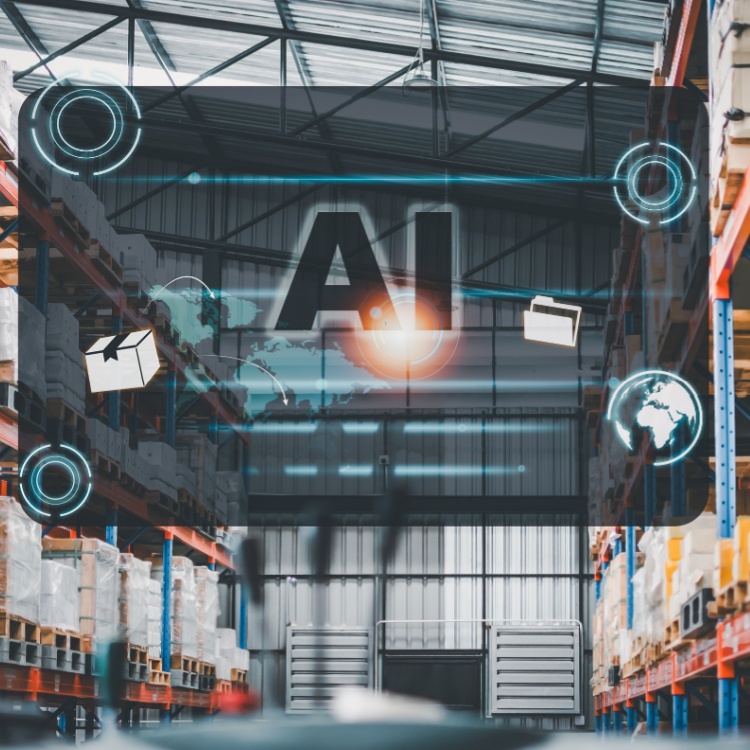
AI is emerging as a core driver of modern manufacturing solutions, pushing companies past simple monitoring tools and into automated decision-making. Many manufacturers already use digital platforms to monitor sourcing, production, and deliveries, but the real advantage now lies in systems that can forecast shortages and adjust schedules quickly. This shift is driving demand for smarter manufacturing solutions.
A survey of senior executives across Europe, the US, and China found that over 90% expect AI to significantly reshape supply chains by 2030. Despite that confidence, only 8% reported fully deploying AI-led planning across global operations. The shortfall points to persistent barriers such as disconnected platforms, weak compatibility, and inconsistent information quality.
(Also read: Securing Your Supply Chain This 2026)
7 Forces Transforming Supply Chains
Supply chain leaders today stand at a turning point, navigating rising complexity and disruption that is reshaping the industrial market in novel ways.
-
Geopolitical uncertainty
Rising global conflicts and trade uncertainty are injecting volatility into supply chains, forcing companies to rethink outsourcing strategies and build flexibility into logistics networks. Critical minerals and energy inputs are especially exposed, as export controls, concentrated supply, and shifting tariffs reshape sourcing decisions, prompting firms to diversify suppliers and absorb higher costs.
-
Compliance pressures
Companies must navigate differing rules across markets, from trade compliance to environmental indicators and sourcing standards. This increases cost and slows decision-making, while also requiring firms to continuously adapt operations to meet international standards, strengthen reporting systems, and align processes across jurisdictions.
-
Fragmented growth
Market conditions are increasingly uneven, as inflation, tighter financing, and weaker demand disrupt traditional planning models. Instead of scaling production based on expected sales, firms are restructuring operations around limited inputs and resource constraints. This shift demands deeper analysis of supply conditions to guide decisions, replacing long-standing assumptions of steady, demand-led growth.
-
Tech advancement
Rapid advances in AI, automation, and advanced computing are reshaping logistics by cutting costs and compressing lead times. Early adopters are already gaining outsized returns, widening the competitive gap. With GenAI and AI agents accelerating the pace of digital transformation, firms that act decisively will stay future-ready.
-
Skills gap
Talent shortage is slowing digital transformation efforts in industrial manufacturing. As companies adopt more advanced technologies, the shortage of qualified workers is becoming a key constraint. This is pushing firms to redesign processes, invest in training, and rely more on flexible labor models to maintain efficiency and continuity.
-
Transparency
Trust is emerging as a key source of economic value, influencing performance and partnerships across industries. Companies that embrace shared data and accountability are improving productivity while building resilient relationships. As a result, supply chain leaders are taking on greater strategic weight, with decisions tied to corporate values.
-
Sustainability requirements
Environmental expectations are influencing how supply chains are designed and managed. Companies are being pushed to track emissions and tap the renewable energy market across sourcing and logistics. This is leading to stricter supplier requirements, redesigned procurement strategies, and greater investment in lower-carbon operations.
(Also read: How to Secure Your Smart Factory)
The Shift Toward AI-Driven Supply Chains
AI is increasingly embedded within broader system integration efforts, connecting data, processes, and decision-making across supply chain operations.
-
Compliance-enabled transformation
Rising regulations are pushing companies toward end-to-end visibility across multi-tier suppliers, extending far beyond tier-one partners. Rules such as the Uyghur Forced Labor Prevention Act, EU Deforestation Regulation, and Digital Product Passport demand detailed traceability of sourcing, ESG data, and product origin. Non-compliance risks fines, delays, and loss of market access.
-
Warehouse automation
Labor shortages across supply chains are intensifying, especially in warehousing, where e-commerce growth is increasing demand while fewer workers are available. A report shows 55% of leaders are boosting tech spending and 45% plan automation investments, while McKinsey notes over a third of logistics capital now goes to automation. AI focuses on streamlining repetitive tasks and supporting workers with smarter systems.
-
IoT partnered with AI
IoT development is being reshaped by deeper integration with AI, stricter Zero Trust security frameworks, and broader scalability in critical operations. As data volumes grow, systems are shifting toward edge-based processing, allowing real-time insights and faster decision-making closer to sensors. This is already improving predictive maintenance, helping detect failures early and reduce downtime, as seen in smart infrastructure initiatives delivering major efficiency gains.
-
Growth of regional supply networks
Supply chain geography is shifting as companies increasingly regionalize operations to reduce reliance on concentrated suppliers and fragile trade routes. Manufacturing is moving closer to demand centers, supported by broader multi-sourcing approaches. Rather than a retreat from globalization, this reflects a redesign of network structure toward more distributed systems that can adjust quickly during disruptions.
-
Stronger governance
As supply chains become more data-driven, regional, and automated, new governance challenges are emerging. Differences in AI regulation and digital trade rules risk creating friction across global networks. Without coordination, systems could fragment into incompatible regional models. Maintaining interoperability, shared cybersecurity frameworks, and aligned digital policies will be essential to keep supply chains connected and globally functional.
-
Environmental responsibility
Sustainability is becoming central to how supply chains are designed and managed, with 44% of executives viewing circularity as a strategic investment. Practices like reuse, modular product design, and reverse logistics are shifting from compliance tasks to core priorities. Companies are also embedding environmental metrics into procurement and logistics systems, enabling real-time trade-offs between cost, service, and emissions.
From efficiency to orchestration
AI is shifting supply chains from static analytics to real-time decision systems that can model scenarios, anticipate bottlenecks, and coordinate responses across networks. Today, 60% more leaders prioritize resilience and agility as core competitive drivers, reflecting a broader shift in mindset.
The leadership mandate is evolving from control to orchestration—synchronizing suppliers, logistics partners, technology providers, and even policy environments into adaptive ecosystems. In this model, resilience is not built alone but through interconnected systems enabled by AI-driven foresight. Competitive advantage now lies in moving quickly under any condition, not predicting a single outcome.
 As one of the Top 30 EMS companies in the world, IMI has over 40 years of experience in providing electronics manufacturing and technology solutions.
We are ready to support your business on a global scale.
Our proven technical expertise, worldwide reach, and vast experience in high-growth and emerging markets make us the ideal global manufacturing solutions partner.
Let's work together to build our future today.
Other Blog