Value Engineering Better Products and Lower Costs
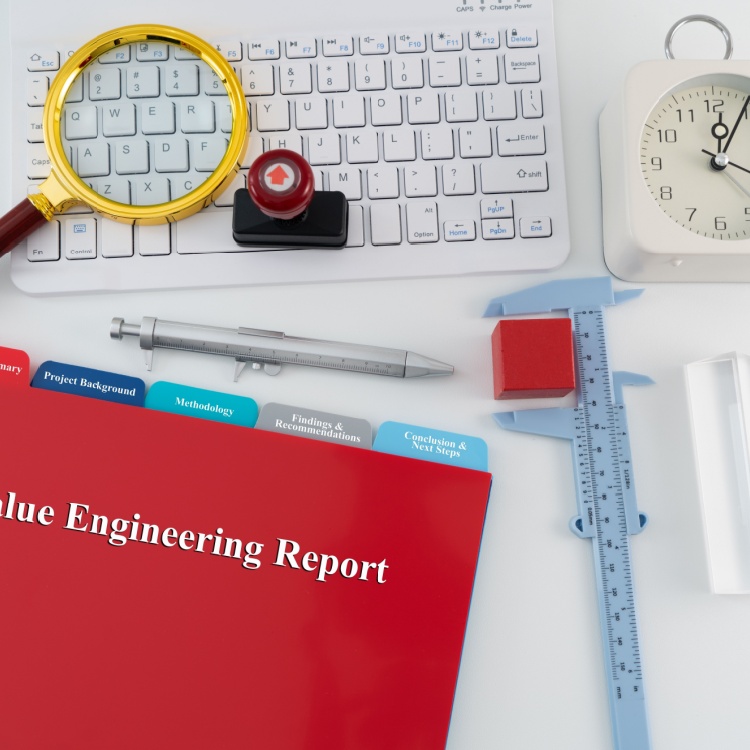
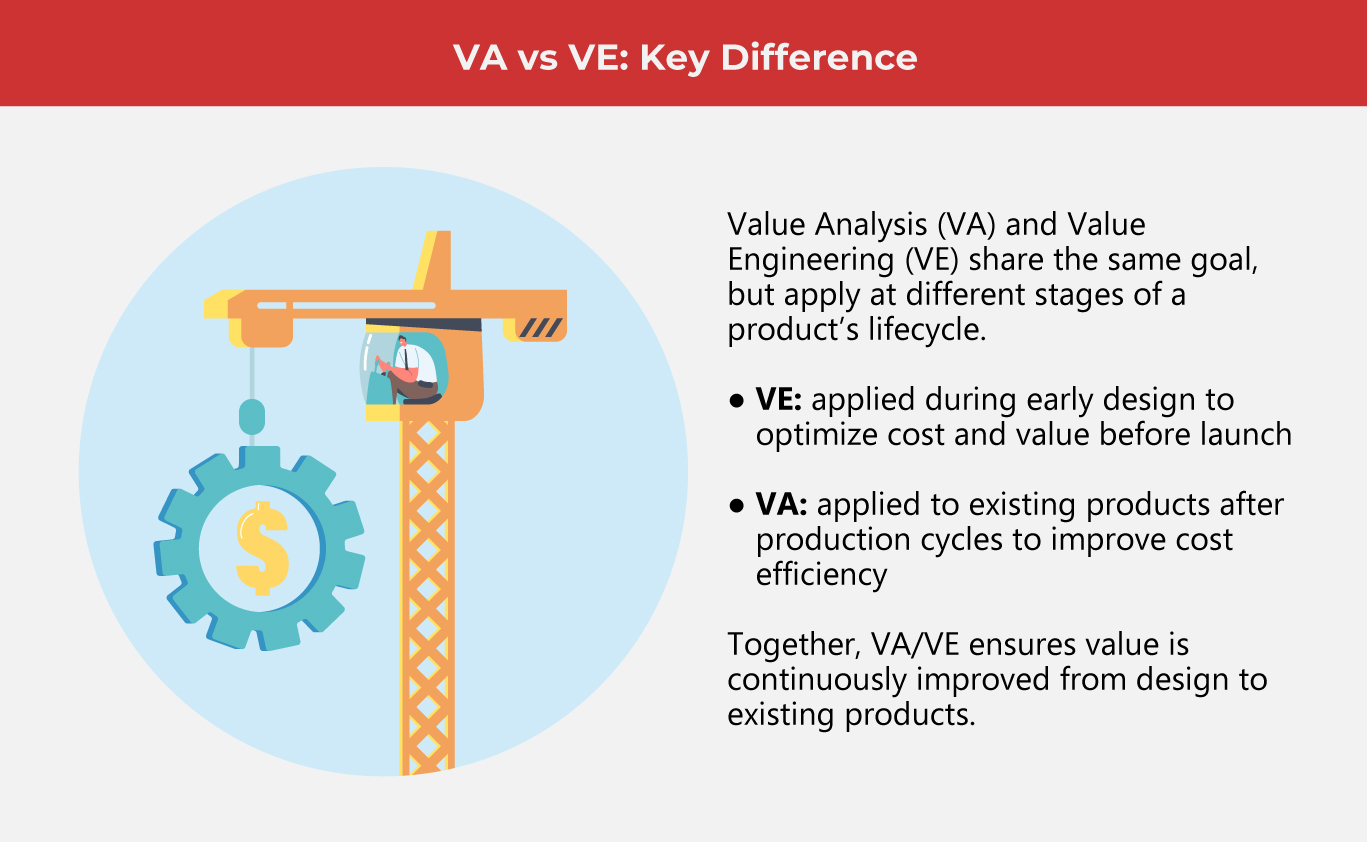
VE has become an increasingly important strategy in modern product development as companies search for ways to improve performance while managing rising costs. First introduced in the manufacturing sector, the approach focuses on analyzing how a product functions and identifying methods to deliver the same or better results at a lower overall cost. Rather than simply trimming expenses, VE aims to maximize the balance between quality, functionality, and long-term value.
The process often involves reviewing a product’s design, materials, manufacturing methods, and operational efficiency throughout its product life profile. By closely examining each component and function, companies can uncover opportunities to simplify production, reduce waste, and improve reliability without sacrificing performance. This has made VE a key driver of stronger engineering capabilities across industries.
As inflation and stricter margins continue to pressure businesses, many firms are shifting away from traditional cost-cutting strategies toward engineering-led solutions. Increasingly, companies see VE not only as a savings tool but as a strategic approach for building more competitive and resilient products.
(Also read: Circular Design is Reshaping EMS This 2026)
How VE Creates Better Outcomes
Manufacturing excellence is shaped by how value engineering is used in design and production.
-
Lower long-term costs
New products entering the market require a careful balance between speed, quality, and cost control. During product introduction, VE supports better decision-making by evaluating materials, systems, and methods early to reduce lifecycle costs and avoid expensive changes during production. While development prioritizes speed and performance, post-launch analysis helps uncover efficiencies, recover costs, and strengthen long-term outcomes.
-
Optimized workflows
Collaboration tends to break down when problems are discovered too late in the process. Manufacturing solutions guided by VE shift that dynamically involve teams earlier, where design choices can still be adjusted. This early evaluation helps surface risks before they escalate, reducing backtracking and delays. As a result, decisions move faster, and workflows stay more aligned and purposeful.
-
Sustained project success
In industrial manufacturing, early VE helps teams align design intent with cost and performance realities. By testing options upfront, decisions account not only for initial expense but also for durability, maintainability, and long-term operational impact. This reduces uncertainty, improves risk control, and supports more consistent delivery. Over time, it builds confidence among stakeholders and strengthens project execution.
-
Customer satisfaction
Customer expectations are shifting quickly, and products must keep pace. VE supports future-ready development by guiding teams to design with usability, reliability, and adaptability in mind from the start. This leads to solutions that better match real user needs, perform consistently in practice, and remain relevant as conditions change, ultimately improving the overall customer experience.
A 6-Step Approach to VE
A structured value engineering method guides how improvements are assessed and applied across design and engineering.
-
Collect data.
During the information phase, teams working on industrial solutions first build clarity around project goals, scope, constraints, and key cost drivers. They align on objectives such as budget, performance, sustainability, and long-term needs, while identifying major cost contributors. Reviewing drawings, Building Information Modeling (BIM) models, and specifications helps teams understand system interactions and uncover opportunities for improvement early.
-
Assess the functions.
Next, the project is broken down into the specific functions each system or component must deliver. Teams distinguish essential functions from secondary features, ensuring core performance needs are prioritized over elements that add cost without clear value. Using FAST (Function Analysis System Technique), they map relationships between functions to understand how each element supports the overall project purpose and performance.
-
Explore possible solutions.
Once required functions are defined, teams shift to exploring more efficient ways to achieve them. Alternatives are generated through brainstorming, with a focus on improving performance, simplifying manufacturing and reducing cost. Gathered input ensures practical perspectives are included. Options such as material substitutions, prefabrication, and sequencing changes are assessed through material composition analysis to improve efficiency and reduce site complexity.
-
Validate your measures.
When multiple options can deliver the same function, teams evaluate and compare them to determine the best overall value. Lifecycle cost analysis is used to weigh upfront investment against maintenance, durability, and long-term performance. Each alternative is also assessed for its impact on schedule, quality, and sustainability goals, including key environmental indicators that reflect overall project responsibility and efficiency.
-
Refine and test your design solutions.
In the development phase, the most viable ideas are further refined and examined in detail. Teams update design models to visualize proposed changes and their system-wide effects, while revising cost estimates to confirm potential savings. Solutions are also validated with manufacturers to ensure they are practical to build and align with efficient production sequencing.
-
Propose and execute.
Once the best options are refined, teams move into presenting and implementing value engineering decisions. Proposals are shared with stakeholders for approval, followed by updates to drawings, specifications, and project documents. Approved changes are then integrated into design, procurement, and construction workflows. Finally, outcomes are tracked to verify savings, measure performance, and capture lessons learned for future projects.
How Artificial Intelligence Supports VE
As VE shifts from occasional exercises to continuous cost optimization, the choice of software tools has become increasingly important. Engineering leaders are now faced with a growing wave of AI-driven solutions, yet few clearly demonstrate how they translate into measurable results for cost-focused decision-making. Rather than relying on a single all-in-one platform, leading teams are adopting a systems-level approach that combines specialized tools across the entire cost lifecycle.
AI and advanced analytics are being used to identify cost risks earlier and support faster evaluation of design alternatives. Predictive cost models help flag potential budget overruns before they escalate, while pattern recognition tools draw insights from historical projects to reveal recurring drivers of change orders. Automated model checks also ensure designs align with both performance and cost targets. In parallel, generative design tools enable engineers to explore solutions based on defined constraints and objectives, improving decision quality during early planning.
This ecosystem is further strengthened by AI agents that capture workshop outputs, should-cost engines that enable rapid and defensible estimates, large language models that synthesize technical and cost data into clear narratives, and physics-based generative design platforms that reduce material usage. Navigating these technologies can be complex, so mapping them to specific cost decision points helps teams apply the right tool at the right stage.
(Also read: Bridges and Gaps in Global AI)
From Method to Mindset
Value engineering is shifting from a structured method to a continuous way of thinking across industrial systems. As design complexity grows, its role will increasingly depend on earlier integration, clearer data use, and stronger cross-functional alignment. The next phase is not refinement alone, but embedding VE into everyday decision-making so value is shaped continuously, not corrected later.
 As one of the Top 30 EMS companies in the world, IMI has over 40 years of experience in providing electronics manufacturing and technology solutions.
We are ready to support your business on a global scale.
Our proven technical expertise, worldwide reach, and vast experience in high-growth and emerging markets make us the ideal global manufacturing solutions partner.
Let's work together to build our future today.
Other Blog