Bridges and Gaps in Global AI
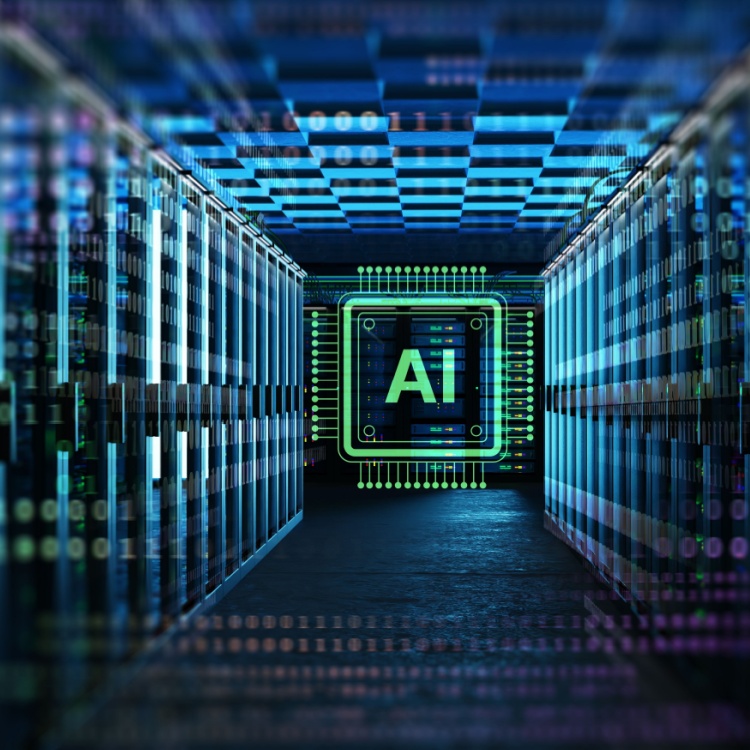
Corporations pour billions into AI infrastructure amid surging demand.
For instance, Meta Platforms has moved to acquire AI startup Manus, sharpening its focus on agentic AI as rivalry intensifies across the industrial market. The deal signals a bid to weave more autonomous intelligence into its platforms amid mounting pressure to lead the next wave of AI development.
A wave of multi-billion-dollar deals has underscored the economic value driving big tech’s aggressive race to lock in AI capacity. OpenAI sits at the center of the surge, striking massive partnerships spanning cloud computing, chip supply, and data center development. From deepening ties with Amazon, Oracle, Nvidia, and AMD to future-ready infrastructure ventures such as the Stargate data-centre project, the company is anchoring an ecosystem built to sustain explosive AI demand.
Meta, NVIDIA, Google, and Microsoft are pursuing parallel strategies, signing long-term cloud agreements, acquiring startups, and taking strategic equity stakes to secure computing power and talent. Meta has inked deals with CoreWeave, Oracle, and Google while moving to acquire AI specialists, while Nvidia has paired investments with acquisitions and licensing agreements to reinforce its dominance in chips and infrastructure.
Beyond the usual giants, capital is also flowing through the automotive market, chipmakers, and data-center operators, from Tesla’s chip deal with Samsung to BlackRock-backed data-centre acquisitions and SoftBank’s renewed bets on semiconductors. Together, the transactions signal a broad consolidation phase, as firms rush to control the hardware, software, and energy needed to power the next era of AI.
(Also read: How AI and Data Centers Drive Growth)
NVIDIA teams up with the US DOE
NVIDIA has partnered with the U.S. Department of Energy (DOE) through the Genesis Mission, a strategic initiative aimed at accelerating scientific discovery and maintaining U.S. leadership in AI. As a private industry partner, NVIDIA brings its advanced engineering capabilities to integrate a discovery platform linking government, academia, and industry. The mission seeks to enhance operational efficiency across energy, national security, and scientific research, doubling productivity and enabling transformative breakthroughs.
The collaboration has already delivered results across multiple fields. NVIDIA’s Apollo AI models are improving weather forecasting, computational fluid dynamics, and structural mechanics, while AI-driven robotics, edge computing, and autonomous labs leverage high-fidelity simulation and digital twins to optimize processes. In energy, the partnership advances nuclear fission and fusion research, while quantum computing projects accelerate algorithm discovery. AI applications in biology, materials science, and synthetic design are generating innovations in healthcare and critical materials research.
By combining cutting-edge AI with DOE initiatives, the partnership strengthens U.S. competitiveness while promoting sustainability, efficiency, and technological excellence.
Partnership formalized through an MOU
NVIDIA has formalized a collaboration with the DOE through a memorandum of understanding (MOU) that sets priorities for advancing analytical testing and test and system development across the agency’s research initiatives. Key focus areas include AI-driven manufacturing solutions and supply chain management, open-source AI models, fission and fusion energy research, quantum computing, and autonomous laboratories.
Central to the collaboration is the integration of AI-enabled digital twins and real-time decision-making at the edge, enabling more precise design, operation, and control of complex systems such as nuclear reactors and experimental research facilities. The partnership also targets the acceleration of breakthroughs in subsurface and geothermal resources, as well as studying environmental indicators.
By leveraging NVIDIA’s AI tools and computational platforms, the DOE aims to create “AI co-scientists” capable of speeding algorithm development, code generation, and modelling for high-demand scientific applications.
Deepening ties in supercomputing
NVIDIA’s involvement in the Genesis Mission builds on a growing track record of collaborations with the DOE. These initiatives include a partnership with Oracle to construct the DOE’s largest supercomputer at Argonne National Laboratory, alongside plans to support seven additional systems across Argonne and Los Alamos National Laboratories.
At the core of these projects is NVIDIA’s accelerated computing architecture, which powers modern AI and enables researchers to train massive models, simulate complex physical systems, and push the boundaries of scientific inquiry at unprecedented speed and scale. By providing the computational backbone for high-performance simulations and AI-driven research, NVIDIA is helping transform how scientific and industrial challenges are approached.
The Genesis Mission leverages these capabilities to expand the ongoing industrial revolution driven by AI, positioning the US at the forefront of innovation. Through these partnerships, NVIDIA and the DOE are not only strengthening supercomputing infrastructure but also enabling breakthroughs that will define the next era of technological advancement.
(Also read: 8 Reasons Why You Should Use AI for Improving Factories)
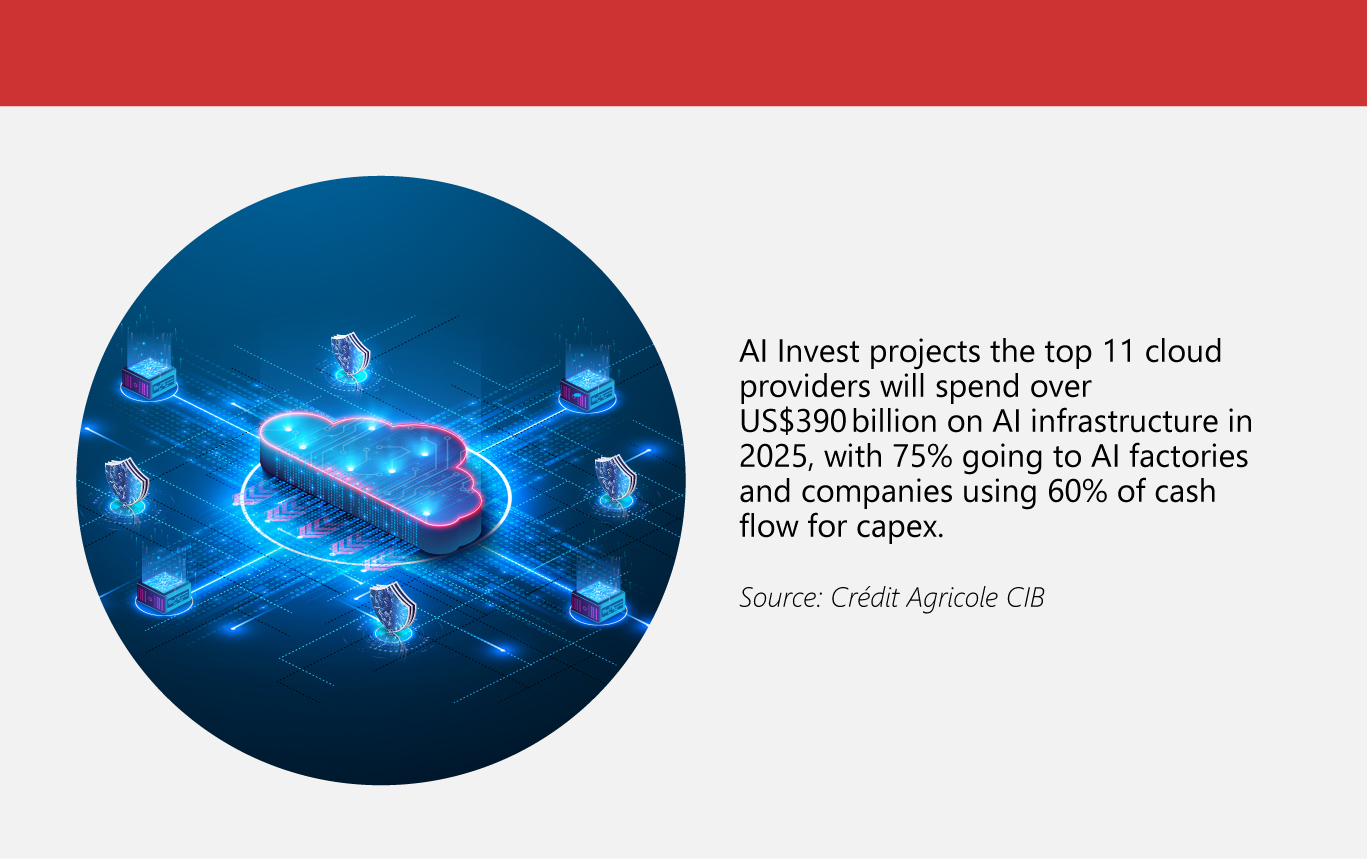
The Global Race for AI Infrastructure
Thousands of newcomers with little experience in computing are rushing to claim a stake in the booming AI infrastructure market. Ambitious figures, from a Shark Tank host in Alberta to a young Bitcoin mining firm in the US, are planning massive data centers, while Avello’s company aims to run Europe’s largest operation. Their rise marks a shift away from Big Tech dominance and introduces heightened risks as less seasoned firms join the global buildout.
While diversification in the data center industry spreads risk across multiple players, it also raises the stakes. A collapse in the AI business model could ripple through global markets, affecting equity and debt alike. Lenders have poured billions into these projects, with US data-center credit deals reaching $178.5 billion this year. Tech giants such as Oracle, Meta, and Alphabet have driven global bond issuance past $6.57 trillion, with JPMorgan noting that nearly all major debt markets will be tapped to finance expansion.
Yet critics warn of a potential AI bubble. Investors highlight circular deals, where companies fund the very firms that purchase their products, raising questions about genuine demand. Experts also note that many planned projects may never materialize, arguing that private equity or media personalities rarely form the ideal team for frontier-scale data centers.
For now, demand for AI infrastructure far outpaces supply, ranking as a top concern for executives worldwide. Over time, overbuilding could leave site owners exposed if tech firms back out. Multi-billion-dollar deals from Meta and Microsoft show how companies are securing flexible computing capacity through leases and special financing structures, reflecting both the enormous opportunity and the risks embedded in the global AI infrastructure race.
As one of the Top 20 EMS companies in the world, IMI has over 40 years of experience in providing electronics manufacturing and technology solutions.
We are ready to support your business on a global scale.
Our proven technical expertise, worldwide reach, and vast experience in high-growth and emerging markets make us the ideal global manufacturing solutions partner.
Let's work together to build our future today.
Other Blog