Top Semiconductor Breakthroughs of 2025
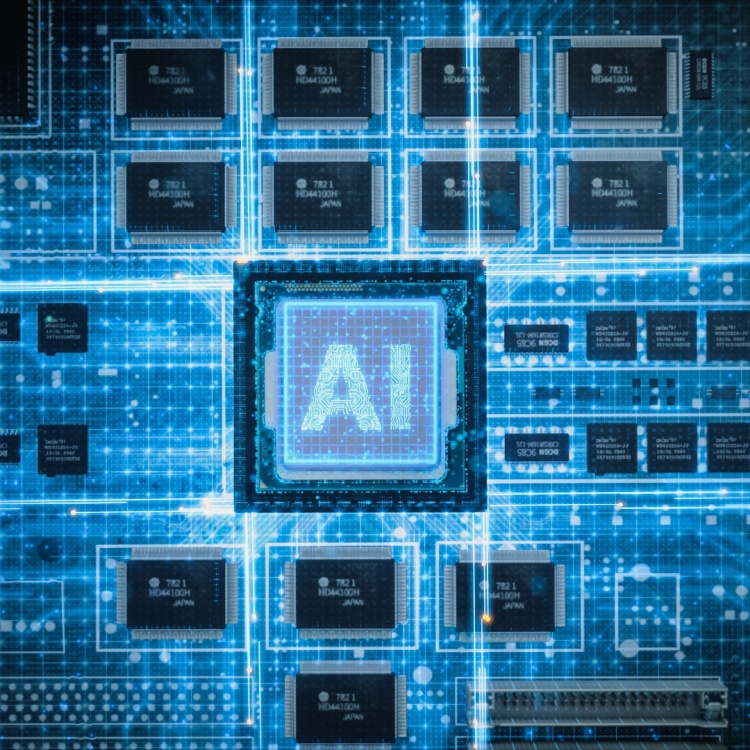
From everyday gadgets to massive cloud platforms, semiconductor chips quietly power nearly everything we use. As artificial intelligence (AI) continues to scale at breakneck speed, the need for faster processors and more sophisticated memory is accelerating. This surge is placing unprecedented pressure on the industry’s manufacturing capabilities, forcing fabrication plants to rethink how they build, optimize, and expand their production processes to keep pace with next-generation technologies.
(Also read: Language AI & Manufacturing: A Perfect Match)
How AI is reshaping the semiconductor landscape
As chipmakers race to supply the processors and memory required by AI, efficiency at the fabrication stage has taken on a new level of importance. Improvements that extend consumable lifetimes, maintain stable temperatures, and ensure precise wafer movement no longer translate merely into marginal savings. They create meaningful advantages in speed, yield, and sustainability. By enhancing manufacturing excellence, advanced materials help fabs move more quickly from design to volume production, ensuring that next-generation chips reach the industrial market faster.
The effects of AI do not stop at the factory gate. As models grow larger and workloads multiply, the energy appetite of data centers is rising sharply. Forecasts indicate that global power consumption from these facilities could more than double by the end of the decade, with AI emerging as one of the dominant drivers. This shift is prompting technology providers to broaden their focus beyond semiconductors alone. Energy-monitoring components, smart cabling systems, and high-performance optical links are becoming integral parts of a more resilient digital backbone, linking wafer fabrication, chip deployment, and data-center operations into a single, interconnected ecosystem.
AI itself is also reshaping how innovation unfolds. It no longer exists as a standalone trend but increasingly acts as a multiplier across robotics, life sciences, and energy optimization. New approaches such as agentic AI, software capable of independently planning and executing multi-step tasks, are gaining attention for their potential to improve operational efficiency.
At the hardware level, this has sparked a surge in application-specific chips designed to handle AI’s extreme requirements for computing power, memory bandwidth, and thermal management.
Together, these developments underscore how AI is driving a fundamental rethinking of both digital infrastructure and the technologies that sustain it.
Top 10 semiconductor trends of 2025
These are the top 10 semiconductor trends of 2025, highlighting how rising performance demands are reshaping design priorities and pushing manufacturers to adopt smarter manufacturing solutions across the entire value chain.
-
3D chip stacking
Chipmakers are adopting stacked architectures and modular components to enhance processing power and overall system efficiency. Reliable materials that ensure precise assembly and maintain wafer stability are becoming vital for these advanced semiconductor architectures.
-
Automation
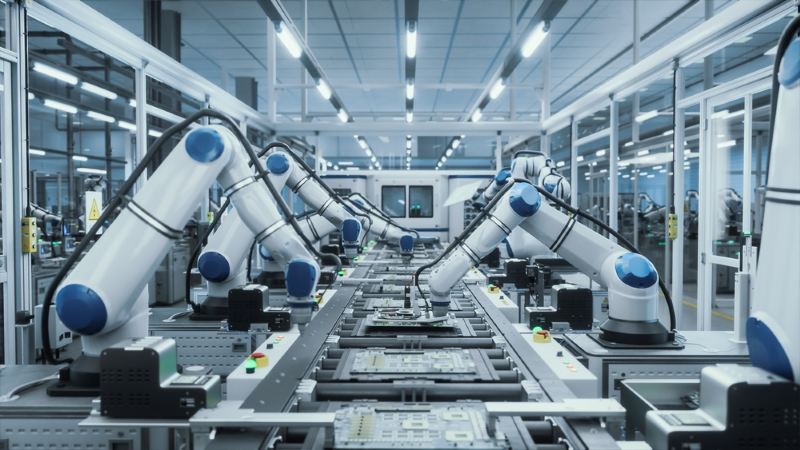
Across industries, future-ready autonomous systems are moving from trials to real-world roles. They learn, adapt, and collaborate, powering applications from logistics coordination to digital agents functioning as virtual teammates.
-
Integrated silicon optics
Thermal analysis and precise bonding, combined with effective heat management and careful handling, are becoming essential to ensure reliable performance in advanced silicon photonics and co-packaged optics.
-
Human-machine partnerships
In human–machine interaction, adaptive intelligence and multimodal inputs enhance responsiveness. Advanced engineering capabilities now enable tools, wearables, and robotics to augment human intent, bridging the gap between operator and cocreator.
-
Rising competition in the wafer market
China’s expansion into 200mm and 300mm wafers is intensifying market competition. Rigorous product testing and quality assurance are now crucial as local suppliers drive prices down, challenging global wafer manufacturers’ position.
-
Tech sovereignty
Countries and companies are investing in local chip fabrication, quantum research, and critical infrastructure. New product introduction and innovation ensure resilience, helping reduce geopolitical risk while securing leadership in emerging technology sectors.
-
Growth constraints
Rising computing demands from AI, robotics, and immersive applications are stressing global infrastructure. Effective supply chain management, workforce planning, and regulatory navigation are now essential to expand capacity and deploy systems efficiently worldwide.
-
AI-powered packaging
As AI chips grow in complexity, precise interconnections and advanced packaging drive demand for innovative materials and tools. Enhancing efficiency and reliability in fabrication creates significant economic value across the semiconductor industry.
-
Growing scale and specialization
Innovation in cloud services and advanced connectivity is driving growth both in massive data centers and at the edge. Precision machinery enables modular systems and specialized devices, supporting scalable and versatile AI ecosystems.
-
Innovation with integrity
Building trust is now essential as technologies become more personal and powerful. Emphasizing transparency, fairness, and accountability across AI, biotech, and immersive platforms guides scaling, investment, and long-term impact.
(Also read: How to Keep Your Manufacturing Compliance Top Tier)
Top 5 semiconductor trends for 2026
The semiconductor sector is entering a transformative phase, driven by AI, advanced memory systems, automotive electrification, supply chain strategy, and sustainability initiatives. Key trends shaping 2026 include:
-
Custom AI hardware boom
Investment in purpose-built AI processors is skyrocketing. Companies are shifting from general-purpose systems to specialized GPUs, boosting computational performance, reducing deployment costs, and enabling more powerful AI and machine-learning workloads.
-
Next-Generation memory architectures
High-speed, high-capacity memory solutions are becoming central to modern chip design. Innovations like stacked memory and processing-in-memory architectures are enhancing data throughput, reducing latency, and supporting large-scale AI computation.
-
Electrification drives automotive chips
As vehicles adopt more advanced software-defined and safety systems, semiconductor content per car continues to rise. Centralized computing units, Light Detection and Ranging (LiDAR) integration, and enhanced electronic control units are accelerating growth in the automotive market, driving intelligent, connected vehicles.
-
Geopolitics Shapes Supply Chains
Governments and firms are investing heavily in local and regional manufacturing. Reshoring, nearshoring, and traceable production methods are strengthening resilience, minimizing reliance on volatile global supply networks.
-
Sustainable Power & Materials Innovation
High-performance semiconductors such as Silicon Carbide (SiC) and Gallium Nitride (GaN) are seeing growing adoption in electric vehicles and large-scale data center applications. Coupled with renewable energy adoption, recycled materials, and traceable manufacturing, the industry is lowering energy use and carbon emissions.
Shaping the future of semiconductors
The semiconductor industry is evolving from a production-driven sector to a strategic force shaping technology, mobility, and energy. As computing demands escalate and ecosystems grow more complex, success increasingly depends on integrating innovation with operational resilience.
Companies that invest in specialized hardware, advanced memory, and sustainable materials are not only enhancing performance but also creating long-term economic and environmental value.
Looking ahead, the interplay between technology sophistication and strategic planning will define which players drive the next wave of transformative solutions across AI, automotive, and energy markets.
As one of the Top 20 EMS companies in the world, IMI has over 40 years of experience in providing electronics manufacturing and technology solutions.
We are ready to support your business on a global scale.
Our proven technical expertise, worldwide reach, and vast experience in high-growth and emerging markets make us the ideal global manufacturing solutions partner.
Let's work together to build our future today.
Other Blog