How to Keep Your Manufacturing Compliance Top Tier

Manufacturing compliance refers to meeting the laws, standards, and industry requirements that govern how products are produced, tested, and brought to market. It covers key areas such as product quality, worker safety, environmental indicators, and ethical labor practices set by regulators and industry groups. Beyond legal obligations, compliance helps ensure consistency, accountability, and trust. Manufacturers must continuously monitor operational efficiency and undergo audits, as failures can result in fines, product recalls, and reputational damage.
In today’s highly regulated production environment, manufacturing compliance sets the rules for how products are made, tested, and delivered in industrial manufacturing. It brings together regulations, standards, and internal policies to ensure operations meet local and international legal and safety requirements. More than a checklist, compliance provides a foundation for consistency, accountability, and confidence in the products that reach the market.
Manufacturing excellence is often challenged by scattered documentation, uneven supplier practices, and rushed audit preparations that disrupt daily operations. By embedding compliance into routine workflows through mapped regulations, automated monitoring, and clear accountability, manufacturers can build stronger, more resilient facilities and reduce operational strain.
Top reasons compliance is crucial for manufacturers
Understanding why compliance is essential can help manufacturing markets operate safely, efficiently, and responsibly.
- Business continuity
A robust compliance program guides consistent workflows, trains employees effectively, and keeps records organized, enabling smooth onboarding, reliable production, and clear accountability during audits and internal reviews across manufacturing technologies and industries.
Core components of an effective compliance program
A strong compliance program rests on several key elements, including process qualification, to ensure consistent operations, protect quality, and keep manufacturing efficient and reliable.
- Supplier quality checks
Many compliance issues arise from third-party suppliers. Implementing structured supplier onboarding, thorough documentation of quality and reliability testing, and clear contractual clauses ensures vendors are accountable, reduces risks, and helps manufacturers maintain consistent standards.
- Reliable and traceable data
Accurate analysis relies on tamper-proof, traceable records across production and environmental monitoring. Digital audit trails and controlled access allow regulators to verify data integrity and track each step of manufacturing processes.
- Regulatory trend monitoring
Staying aware of evolving rules helps manufacturers anticipate changes, adapt processes, and prevent non-compliance. Monitoring emerging standards ensures operations remain aligned with global expectations, reduces risk, and supports continuous improvement in product quality and safety.
- Incident management plans
Clear response procedures allow manufacturers to act quickly and effectively during unexpected events, minimizing operational disruptions and regulatory penalties. Well-prepared playbooks support rapid resolution, maintain production continuity, and uphold quality and compliance standards.
- Operational change guidelines
Whenever a process is updated, new equipment is introduced, or suppliers change, compliance obligations evolve as well. An effective program ensures all changes undergo formal approval, thorough testing, and risk assessment before implementation.
Trends shaping manufacturing compliance
As manufacturing evolves, staying ahead of emerging compliance trends helps companies seize opportunities in a rapidly changing regulatory landscape.
- Digital transformation
According to PricewaterhouseCoopers (PwC), 71% of manufacturers plan to pursue digital transformation initiatives over the next three years, relying on robust compliance systems to ensure these changes are implemented safely and effectively.
- Tighter cybersecurity regulations
As digital services and AI expand, stricter data protection laws like the UK’s Data Protection Bill push businesses to strengthen cybersecurity, adopt rigorous data protocols, and conduct regular audits to stay compliant.
- Automated compliance tracking
Regulators are using AI to spot compliance issues, and businesses must adapt. AI-powered monitoring streamlines reporting, identifies risks, and ensures adherence, enhancing efficiency, insight, productivity, and cost savings while managing compliance effectively.
- Environmental, Social, and Governance (ESG) regulatory alignment
Corporate sustainability takes center stage as governments and investors tighten ESG reporting requirements. Companies must disclose carbon emissions and conduct thorough supply chain checks, or risk financial penalties and declining investor trust.
- Employment and diversity standards
Evolving employment laws now emphasize inclusivity and employee rights. Companies must update HR policies, implement training, and establish reporting systems to address gender pay, anti-discrimination, and hybrid work requirements while staying fully compliant.
(Also read: Top 10 Manufacturing Trends You Shouldn’t Ignore)
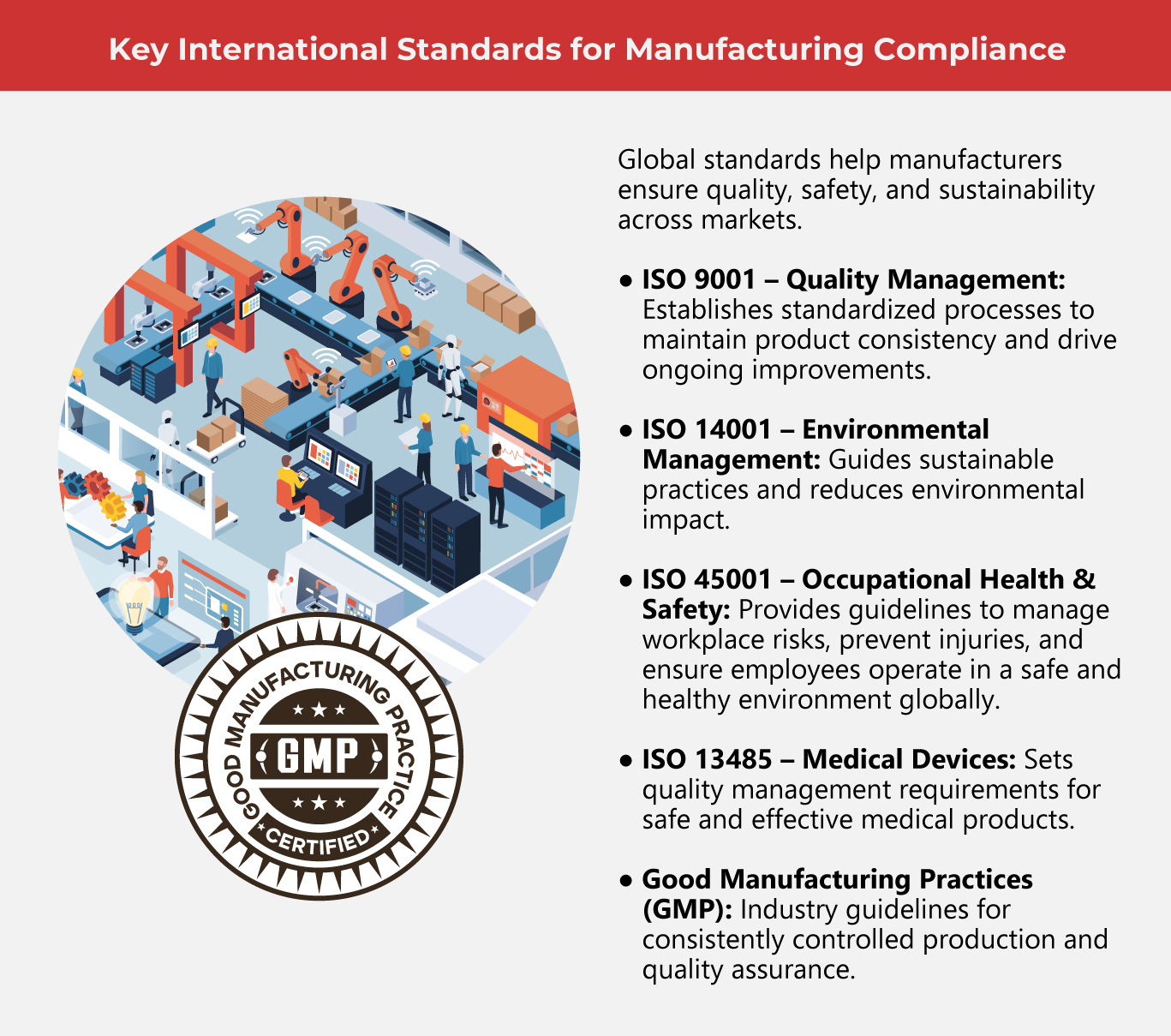
Building a compliance culture
Achieving manufacturing compliance goes far beyond meeting legal requirements—it is a strategic discipline that integrates audits, accurate recordkeeping, supplier oversight, and continuous monitoring into daily operations. When compliance becomes part of the organizational DNA, every process, document, and decision withstands scrutiny while supporting long-term operational resilience.
Manufacturers should start with a thorough risk assessment to identify vulnerabilities across internal policies, industry regulations, and external standards. Clear compliance goals and detailed policies guide employees, while robust documentation practices demonstrate adherence and facilitate troubleshooting. Regular training ensures the workforce is informed and empowered to uphold standards. Digital tools, including AI-driven monitoring, further streamline compliance activities, improve reporting accuracy, and provide actionable insights for risk management.
Ongoing vigilance is essential. Establish reporting channels, review practices regularly, and address noncompliance swiftly. By embedding a proactive, technology-enabled compliance strategy and fostering a culture of continuous improvement, manufacturers can anticipate risks, maintain regulatory integrity, and secure operational excellence in an ever-evolving regulatory landscape.
As one of the Top 20 EMS companies in the world, IMI has over 40 years of experience in providing electronics manufacturing and technology solutions.
We are ready to support your business on a global scale.
Our proven technical expertise, worldwide reach, and vast experience in high-growth and emerging markets make us the ideal global manufacturing solutions partner.
Let's work together to build our future today.
Other Blog