How AI Tools Boost DFM
DFM is a design and engineering approach focused on designing products so they can be produced efficiently, reliably, and at lower cost. It involves evaluating materials, geometry, tolerances, and processes early in development to minimize complexity, reduce defects, and streamline production.
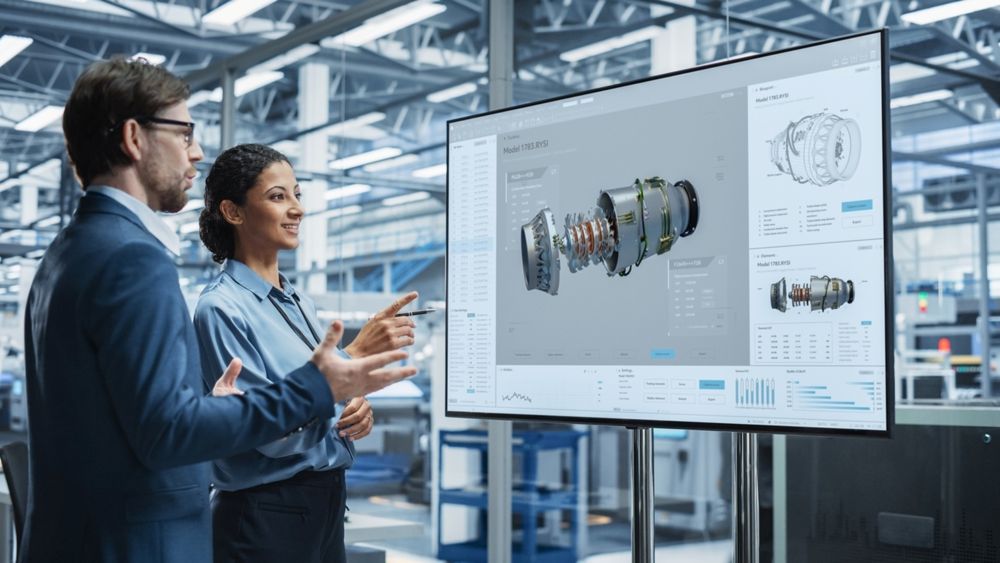
This focus on early decision-making naturally connects to Computer-Aided Design (CAD), the software engineers use to create and refine digital product models. DFM is applied within the CAD stage, where designs take shape and manufacturing solutions can be formulated in real time. Additionally, teams can catch issues sooner, optimize for specific processes, and move toward production with greater confidence.
(Also read: How DFM Reduces Costs & Increases Profit)
Unlocking Efficiency with AI-Powered CAD
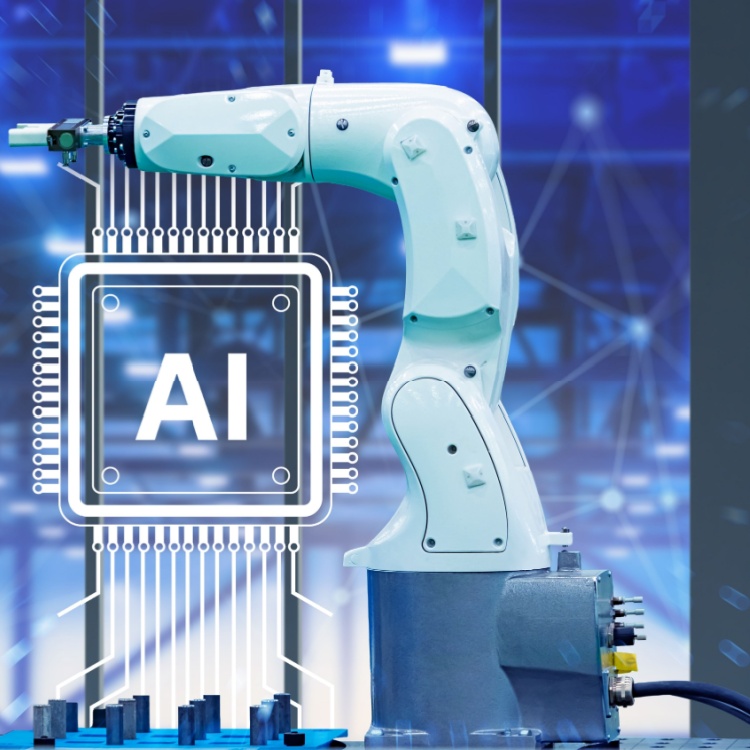
AI is transforming CAD into an intelligent design partner that helps improve operational efficiency. These advancements bring several key benefits:
-
Workflow automation
In product design and development, AI streamlines workflows by automating repetitive modeling tasks, generating design variations, and reducing manual effort. It predicts next steps to enable smoother, faster iterations while minimizing interruptions. AI can also interpret markups to directly apply revisions.
-
Optimized design generation
AI explores thousands of design alternatives to identify optimal solutions within defined constraints such as weight, strength, and cost. It recommends materials based on performance needs and evaluates designs under stress, temperature, and motion conditions, supporting engineers in achieving manufacturing excellence through efficiency and reliability.
-
Modeling and virtual testing
Real-time feedback enables AI to instantly highlight stress points and structural issues during design, allowing immediate corrections within product development. It speeds up simulations for faster virtual prototyping and early validation before physical builds. Combined with augmented reality (AR) and virtual reality (VR) tools, it supports immersive 3D reviews, making engineering workflows more future-ready and efficient.
-
Feature recognition and pattern reuse
Industrial solutions increasingly leverage machine learning to detect repeated design patterns. When comparable parts are identified across workflows, the system suggests standard feature applications such as fastener placements or fillets, maintaining reliable output across teams.
-
Better accuracy
AI-driven CAD improves accuracy by leveraging data from past designs, simulations, and manufacturing outcomes to detect inconsistencies early and refine geometry in real time. Research in AI-assisted CAD systems shows significant reductions in design errors and validation time through automated checking and rule-based modeling assistance in engineering workflows.
-
Improved collaboration
Collaboration is strengthened through sketch diagnostics, constraint validation, and automated tagging, helping multidisciplinary teams be on the same page. Cloud-based platforms enable real-time co-editing of a single model, reducing version conflicts and speeding feedback cycles. This improves communication efficiency and enhances accountability across the product development lifecycle in industrial manufacturing.
-
Sustainability goals
AI can optimize designs for material efficiency, reducing waste, and minimizing energy-intensive iterations through simulation and predictive analysis. It helps identify lighter, more resource-efficient designs early, lowering emissions across production cycles. Industry reports highlight AI’s role in cutting material use and improving lifecycle environmental performance in manufacturing.
AI Tools for DFM
Manufacturing technologies and industries increasingly rely on AI-driven DFM tools that learn from historical data such as design reviews, supplier feedback, and production outcomes instead of fixed rules. By recognizing patterns linked to past issues, these systems scale engineering knowledge, reduce recurring design problems, and preserve institutional insight that is often undocumented.
-
DFM analysis and knowledge systems
Industrial solutions of this type function outside core CAD environments and instead operate within the design review stage of product development. They apply AI and machine learning to analyze models, drawings, and past engineering feedback to detect manufacturability issues that rule-based systems often miss.
Rather than relying on fixed logic, these platforms learn from historical decisions and review outcomes, surfacing recurring risks such as repeated design flags, late ECO triggers, and manufacturing concerns that slip through standard checks. This allows organizations to capture informal engineering knowledge and apply it consistently across teams. While effective for cross-functional reviews and scaling expertise, these tools are not simulation or cost engines and depend on steady user adoption to deliver value.
-
Rule checking tools
These tools operate inside or alongside CAD systems, evaluating geometry against predefined manufacturability rules and design standards. They provide immediate feedback during modeling, helping engineers prevent basic, repeatable errors early in development. However, their effectiveness relies on how complete and well-maintained the rule sets are, which require ongoing updates and configuration.
They are widely used for early-stage design control and standards enforcement in industries such as aerospace, the automotive market, and medical electronics. These environments value predictability and clear, rule-based validation. Still, the tools are limited to what has been explicitly encoded and struggle with cost evaluation, complex trade-offs, or nuanced engineering decisions. As a result, they are best viewed as a foundational DFM layer rather than a complete solution.
-
Quote-based manufacturing platforms
These systems evaluate part geometry within real manufacturing networks, combining automation and machine learning trained on historical quotes and production outcomes. They deliver rapid insights on manufacturability, cost drivers, and lead times by comparing designs to previously quoted or produced parts rather than fully interpreting engineering intent or lifecycle-wide DFM patterns.
Because they are closely tied to supplier quality and quoting workflows, their feedback reflects network data rather than deep design reasoning. This makes them highly effective for outsourced manufacturing, fast iteration, and early sourcing decisions, where speed and pricing clarity matter most.
Their key contribution is economic value, helping teams quickly understand cost implications and production feasibility. However, they are less suited for early conceptual design or capturing long-term engineering knowledge across projects.
-
Manufacturing cost modeling platforms
These platforms simulate manufacturing processes, materials, tooling requirements, and regional variables to estimate cost and production feasibility. They enable early comparison of manufacturing methods and highlight design-to-cost trade-offs, supporting more informed decision-making during product validation stages.
They are especially useful for strategic planning, offering clear insight into key cost drivers and helping teams evaluate make-or-buy decisions and select appropriate production processes. However, they require significant setup and are not typically used in day-to-day design work, nor do they replace detailed DFM analysis.
Best suited for automotive, heavy equipment, appliances, HVAC, and energy sectors, these tools support high-volume or high-cost programs. They primarily guide what to produce rather than how to model it in daily engineering workflows.
(Also read: The New Rules of Manufacturing in 2026)
Toward Intelligent, Connected DFM
DFM is evolving from a manual, rule-bound process into an intelligent ecosystem powered by AI, data, and connected engineering tools. Across CAD, review platforms, rule checkers, and cost systems, the common shift is toward earlier insight, faster iteration, and more informed decision-making.
Instead of relying solely on static rules or isolated expertise, teams can now leverage systems that learn, predict, and scale engineering knowledge across the product lifecycle. While no single tool solves DFM end-to-end, together they form a layered approach that improves efficiency, accuracy, and manufacturability.
The future of manufacturing lies not in replacing engineers, but in augmenting them with smarter, more adaptive design intelligence.
As one of the Top 30 EMS companies in the world, IMI has over 40 years of experience in providing electronics manufacturing and technology solutions.
We are ready to support your business on a global scale.
Our proven technical expertise, worldwide reach, and vast experience in high-growth and emerging markets make us the ideal global manufacturing solutions partner.
Let's work together to build our future today.
Other Blog