How Jet Dispensing Is Driving SMT Speed
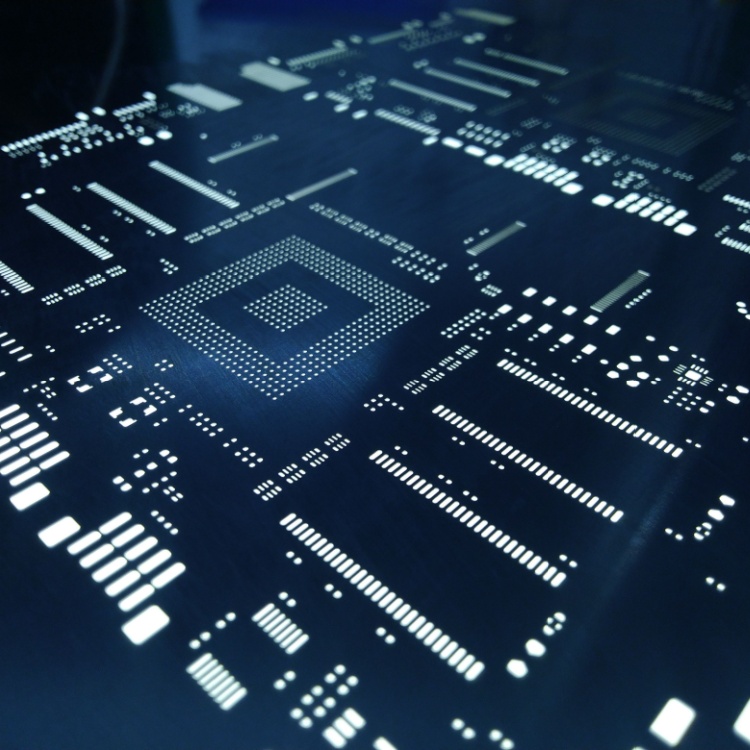
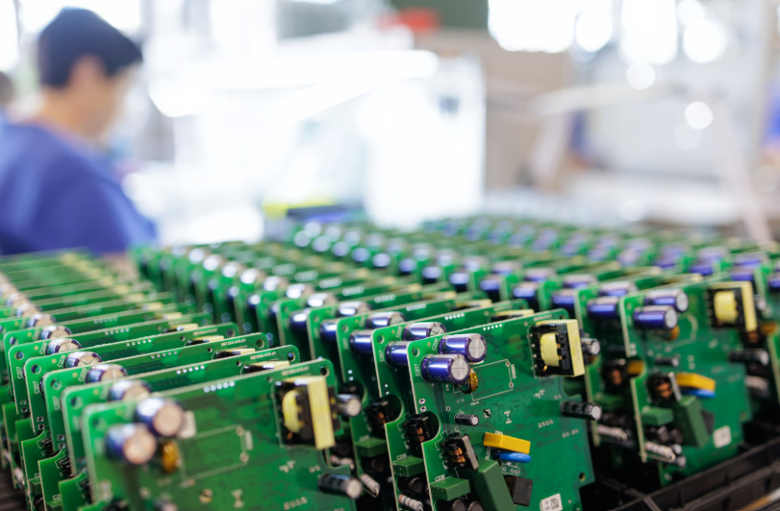
Jetting is emerging as a manufacturing solution in surface mount technology (SMT), offering a non-contact method for delivering solder paste directly onto printed circuit boards (PCBs). By removing the need for metal stencils, it enables stable deposit formation even on complex board designs. Multiple precise deposits can be applied to the same pad without physical contact, reducing the risk of defects and improving consistency in high-density assemblies.
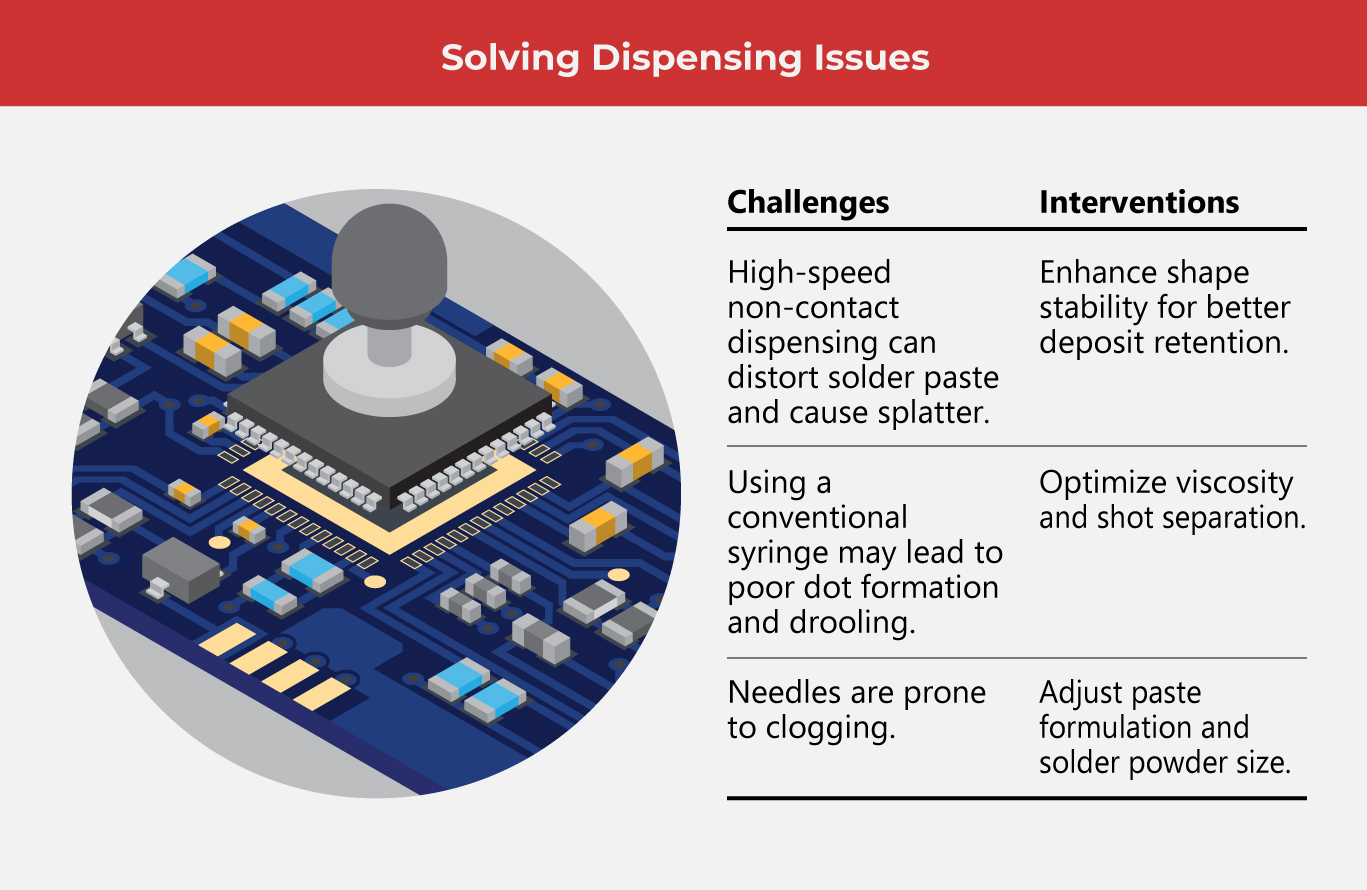
At its core, jet technology represents a shift from mechanical contact to controlled fluid ejection, where solder is propelled as droplets onto the target surface without the applicator touching the board. This approach allows for highly accurate, repeatable dot formation with very small volumes, supporting the demands of modern miniaturized electronics.
(Also read: Top 7 Advantages of Using Chip on Board Tech)
Benefits of Jet Dispensing in Modern Electronics Production
In industrial manufacturing, jet technology is gaining wider adoption as production capabilities advance and process requirements continue to evolve.
-
Fast operation
Jetting removes the need for Z-axis movement, allowing materials to be applied continuously without stopping or repositioning. It enables faster, more continuous operation and smoother workflows, helping reduce production interruptions. By minimizing issues such as stringing and tailing, it supports more stable and consistent output across global manufacturing environments.
-
Scalable process control
Without a needle, jetting easily reaches confined areas without disturbing nearby components, making it ideal for densely populated boards. It can deliver fluid where traditional methods struggle, especially between closely spaced parts. By eliminating contact with the surface, it reduces reliance on detailed surface analysis and the need to account for variations in height or topography.
-
Performance
Jetting enables ultra-small, precise deposits with consistent volume control. It can place microscopic dots and build larger forms by layering them, without tool changes or contact. Complex shapes, clean lines, and sharp corners are achieved efficiently, supporting flexible, high-precision production without slowing processes or compromising accuracy.
-
Reliable output
Non-contact dispensing applies material without touching the surface, helping ensure cleaner, more controlled results. Only the fluid meets the work area, reducing issues like dripping or residue and keeping dot size consistent. In future-ready manufacturing, this approach also supports stable performance even when surfaces vary in cleanliness, flatness, or overall condition.
-
Low upkeep
While cleanliness is important, time spent on maintenance reduces productivity. Traditional systems often require multiple components to be disassembled and cleaned, leading to longer downtime. Jet dispensing simplifies this process with fewer fluid-contact parts, allowing quick, tool-free maintenance. This improves operational flow, reduces interruption, and delivers strong economic value.
-
Productivity
Productivity is boosted through easier maintenance and reduced downtime in dispensing processes. A non-contact approach helps avoid accidental damage to components, lowering the need for rework. With no Z-axis movement or standoff requirements, buildup issues are minimized and control is simplified. This also streamlines handling, supporting smoother and more continuous production flow.
-
Cost efficiency
Modern dispensing systems are defined by strong engineering capabilities that combine speed, precision, and adaptability. By reducing material waste, downtime, and maintenance demands, they help lower overall operating expenses across the production lifecycle. Fine process control enables quick adjustments to changing material properties, while flexible configurations allow a single platform to support diverse applications efficiently.
(Also read: The Rise of Agentic AI in EMS)
Evolving Trends in Electronics Production
Driven by consumer, automotive, and industrial automation demand, the SMT market is projected to reach $22 billion by 2030, supported by AI, robotics, and flexible manufacturing systems.
-
AI-driven inspection
Automated optical inspection and solder paste inspection have become more intelligent, moving beyond fixed rule-based systems that often generate false alarms as components shrink and board density increases. AI-driven platforms now learn from large datasets to better distinguish real defects from normal variation, improving accuracy and reducing production disruptions.
-
End-to-End Line Automation
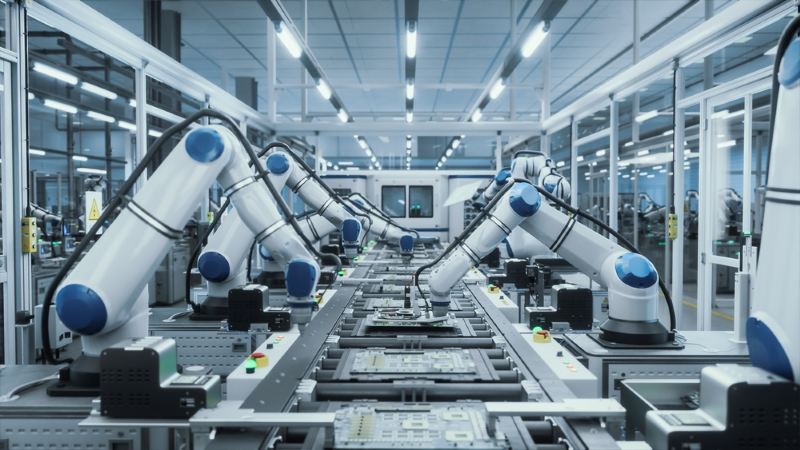
While placement speed and solder quality are often optimized, peripheral processes like board handling, buffering, loading, marking, and cooling are now critical to overall performance. As equipment reaches speed limits, these supporting stages increasingly define line throughput. Integrated handling and automation modules help remove bottlenecks, reduce manual intervention, and support smoother, more continuous production in high-mix environments.
-
Robotic soldering solutions
Selective and wave soldering have long supported through-hole and mixed assemblies, but complex boards with connectors, shields, and large components often still rely on manual soldering. Advanced robotic soldering systems are addressing this gap, using multi-axis control, precision heating, and real-time monitoring to deliver consistent, traceable joints. This helps manufacturers manage complexity, labor shortages, and stricter process requirements.
-
Thermal profiling goes 4D
Reflow profiling has traditionally been a manual, time-intensive process requiring repeated oven runs and thermocouple analysis to meet process windows. 4D thermal profiling transforms this by generating full PCB heat maps, revealing gradients, hotspots, and cold zones. This improved visibility speeds optimization, reduces iteration cycles, and supports faster qualification of complex, high-density assemblies with greater process control.
-
Miniature components
Component miniaturization continues to advance, alongside growing adoption of advanced packaging across consumer, automotive, and industrial electronics. This shift is placing greater demands on SMT processes, from stencil design and paste control to placement accuracy and reflow precision. As assemblies become more complex, manufacturers must consider not only current requirements but also future production capabilities and scalability.
-
Data-driven material control
Material shortages, shifting delivery timelines, and stricter end-to-end tracking requirements are turning material management into a core part of production readiness. Automated storage systems with environmental control, full component tracking records, and system connectivity are becoming essential in regulated sectors like aerospace, medical, and defense. These solutions help ensure correct parts usage, maintain order discipline, and improve visibility across the manufacturing flow.
The Role of Jetting in Modern Electronics
Jetting is becoming a key enabler in modern electronics manufacturing, supporting the shift toward miniaturization and high-density assembly. Its non-contact approach delivers precise, consistent material application while improving process flexibility across SMT production. By reducing defects, simplifying handling, and supporting complex designs, it helps manufacturers achieve greater efficiency and control. As production demands continue to rise, jetting stands out as a future-ready solution for scalable, high-performance dispensing.
As one of the Top 30 EMS companies in the world, IMI has over 40 years of experience in providing electronics manufacturing and technology solutions.
We are ready to support your business on a global scale.
Our proven technical expertise, worldwide reach, and vast experience in high-growth and emerging markets make us the ideal global manufacturing solutions partner.
Let's work together to build our future today.
Other Blog