Circular Design Is Reshaping EMS This 2026
Transitioning to a circular electronics model significantly enhances core environmental indicators while simultaneously driving value for businesses and communities.
-
Material efficiency
By shifting from raw extraction to efficient loops, circular models significantly lower the demand for new supplies. This transition relies on material testing to ensure recovered parts meet quality standards before reuse. Such a strategy not only eliminates waste but also protects manufacturers from the growing risks associated with global resource depletion.
-
Cutting waste
Safeguarding ecological health starts with responsible e-waste practices that prevent hazardous materials from contaminating natural habitats. Manufacturers utilize environmental tests to determine which components are safe for repurposing, effectively turning potential pollutants into reusable assets. By diverting toxic materials from landfills, this strategy prioritizes efficient recovery over disposal to ensure hazardous electronics are managed.
-
Energy optimization
Manufacturing from recycled components consumes far less power than extracting and refining raw minerals from the earth. By bypassing these energy-heavy initial stages, companies can align more effectively with the renewable energy market and its goals for decarbonization. Circular systems drastically lower the carbon footprint required to bring products to market.
-
Product longevity
Modular designs empower users to maintain their devices through simple repairs and strategic upgrades rather than total disposals. This commitment to longevity preserves the economic value of initial investments by stretching the functional lifespan of every component. Such a focus on durability ensures that hardware remains productive for years, effectively reducing long-term costs.
-
Market prospects
Expanding specialized sectors like repair and refurbishment transforms discarded hardware into catalysts for financial growth. By adopting innovative industrial manufacturing solutions, companies can tap into previously overlooked revenue streams. This transition creates local jobs and stabilizes supply chains, proving that sustainable resource management is a powerful driver of modern economic stability.
-
Regulatory compliance
Proactive organizations avoid legal risks and financial penalties by aligning their operations with tightening global e-waste mandates. Adopting a future-ready circular strategy ensures seamless compliance as governments enforce stricter recycling standards and resource management laws. This strategic shift transforms regulatory hurdles into competitive advantages.
(Also read: How Circular Manufacturing Can Save the World)
What is Design for Disassembly?
The global landscape is currently bracing for a staggering crisis, with e-waste projected to surge to 3.4 billion tons by 2050. To combat this, manufacturers are pivoting toward strategies that prioritize the inherent value of hardware over its eventual disposal.
This shift requires a fundamental rethink of design for manufacturing, moving away from the rigid, linear models of the past that favored speed-to-market at the cost of massive industrial waste. By focusing on circularity, companies are now engineering products that are intentionally easy to dismantle, reassemble, and upgrade.
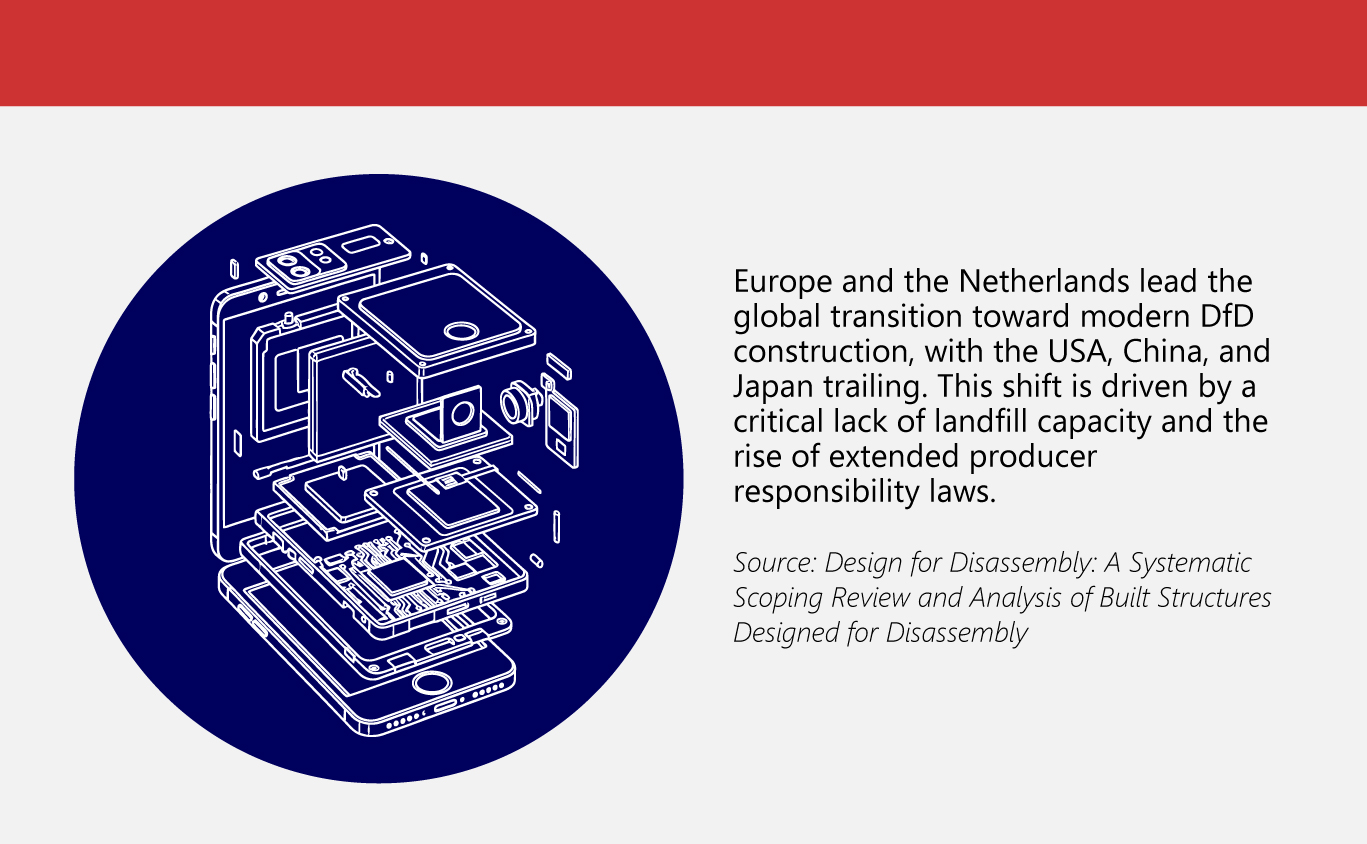
At the heart of this transformation is Design for Disassembly (DfD). This methodology ensures that original components can be recovered and repurposed—either within the same product line or integrated into entirely new systems. Choosing disassembly over traditional recycling is often a more efficient path to decarbonization, as it frequently consumes significantly less energy than the intensive grinding and melting processes required to reclaim raw materials.
In recent decades, evolving technologies and lower production costs have made hardware increasingly difficult to repair. Modern system integration often relies on permanent bonds or intricate layouts that discourage intervention. However, new digital capabilities and simulation platforms are changing this dynamic. By modeling the disassembly process during the earliest stages of product design and development, engineers can ensure that subcontractors and non-centralized sites can retain the material value of components without incurring prohibitive costs.
The roots of this movement trace back to the success of DfD in the 1970s and 80s, which prioritized cost optimization and part reduction. While those early methods increased competitiveness and production capacity, they also paved the way for the waste challenges seen today. DfD emerged as the necessary answer to shrinking resources, evolving from a niche concept in the early 90s into a cornerstone of modern industrial strategy. Today, it stands as a vital tool for organizations looking to eliminate waste at the source and build a more resilient, sustainable future.
 (Also read: Top 10 Sustainable Trends that Boost Manufacturing)
What is the Digital Product Passport?
Mandated by EU law under the Ecodesign for Sustainable Products Regulation (ESPR), the Digital Product Passport (DPP) serves as a definitive record of data, providing a comprehensive history of every transaction and transformation a product undergoes. This centralized information hub ensures that claims regarding material origin, carbon footprint, and ethical labor are backed by auditable evidence rather than unsubstantiated marketing.
At its core, the DPP is designed to facilitate a circular economy by providing a technical file containing unique product identifiers, material compositions, and detailed repair instructions. This is essential for modern manufacturing excellence, as it allows stakeholders to verify compliance-grade data and optimize resource efficiency. Rather than viewing sustainability as a voluntary ESG goal, the DPP transforms it into a legal necessity, ensuring that products are engineered for longevity, reuse, and seamless recycling.
The rollout is strategically phased, focusing first on high-impact categories. Notably, electronics manufacturing is one of the key sectors expected to be covered by DPP. Given the complexity of modern hardware, the DPP will be vital for managing hazardous materials and facilitating the recovery of valuable components. By 2026, a central EU registry is anticipated to be in place, signaling the transition from pilot projects to mandatory production systems.
To remain competitive, companies must integrate these requirements into their broader manufacturing technologies and industries. Preparing for the DPP demands a robust internal data architecture capable of real-time validation across global supply chains. This infrastructure does more than satisfy compliance; it unlocks new business value by enabling authenticated resale, improving material efficiency, and fostering deeper consumer trust through total transparency.
The Path to Sustainable Electronics
Transitioning to a restorative production model requires a holistic shift toward resource efficiency and environmental stewardship. Success in this sector involves integrating ethical design principles that prioritize durability and straightforward disassembly from the outset.
Beyond technical innovation, organizations must refine their procurement strategies to favor ecological vendors and invest in comprehensive staff training to ensure internal alignment. By leveraging modern assembly methods and collaborating with specialized waste management partners, companies can effectively oversee the entire product lifespan.
This commitment not only minimizes scrap but also builds a resilient foundation for enduring environmental health.
 As one of the Top 30 EMS companies in the world, IMI has over 40 years of experience in providing electronics manufacturing and technology solutions.
We are ready to support your business on a global scale.
Our proven technical expertise, worldwide reach, and vast experience in high-growth and emerging markets make us the ideal global manufacturing solutions partner.
Let's work together to build our future today.
Other Blog