Digital Twins: Boost Efficiency, Speed, and Profits
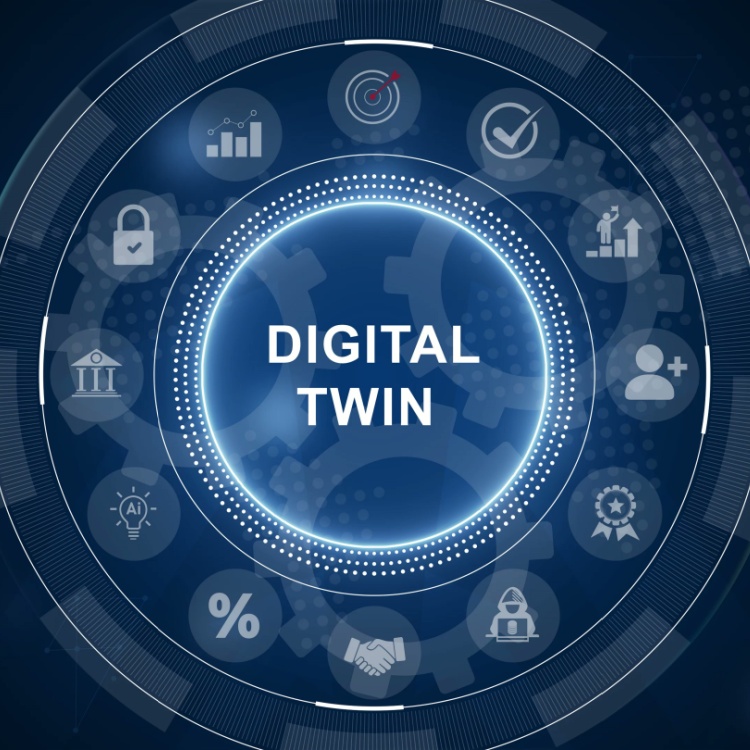
As a next-generation manufacturing solution, digital twins bring together simulation models, live sensor inputs, and connected operational systems into a unified digital environment that mirrors real-world assets. By linking physical and digital systems, digital twins provide deeper insight and unlock new levels of optimization across the production lifecycle.
The rapid rise of digital twins is reshaping manufacturing industries, with market forecasts indicating the sector could grow by around US$163 billion by 2029, driven by annual growth rates nearing 65%. This surge reflects increasing demand for digital tools that can keep pace with complex production environments, positioning digital twins as a critical industrial solution for companies aiming to stay competitive in a data-driven era.
Beyond market momentum, the operational impact is already measurable. Digital twin adoption has been linked to reductions in unplanned downtime of up to 45%, alongside stronger predictive maintenance capabilities that minimize costly disruptions.
Technical Foundations of Digital Twins
Digital twin systems are redefining how manufacturing industries approach performance monitoring and decision-making, offering a powerful foundation for real-time analysis and reliability tests. At their core, these systems create dynamic digital counterparts of physical assets, continuously fed by data from sensors and the Internet of Things (IoT) devices embedded across production environments. This steady stream of information is aggregated through advanced data integration platforms, ensuring that insights are both accurate and timely. By combining inputs from multiple sources, manufacturers gain a holistic view of operations, enabling faster identification of inefficiencies and potential failures.
Behind this capability lies a sophisticated digital infrastructure. Cloud-based and high-performance computing platforms process vast datasets, supporting complex simulations and predictive models that mirror real-world conditions. These virtual environments are powered by modelling software and enhanced by machine learning tools, allowing deeper analysis and more informed operational decisions. Visual dashboards and immersive 3D interfaces translate complex data into accessible formats, helping teams interact with systems intuitively and respond with precision.
Equally critical is the technology that underpins system integrity and responsiveness. Edge computing reduces latency by processing data closer to its source, while standardized communication protocols ensure seamless interaction between components. Advanced imaging tools, including LiDAR and 3D scanning, improve model accuracy, while secure databases manage evolving datasets.
(Also read: How to Secure Your Smart Factory)
The Role of Digital Twins in Modern Manufacturing
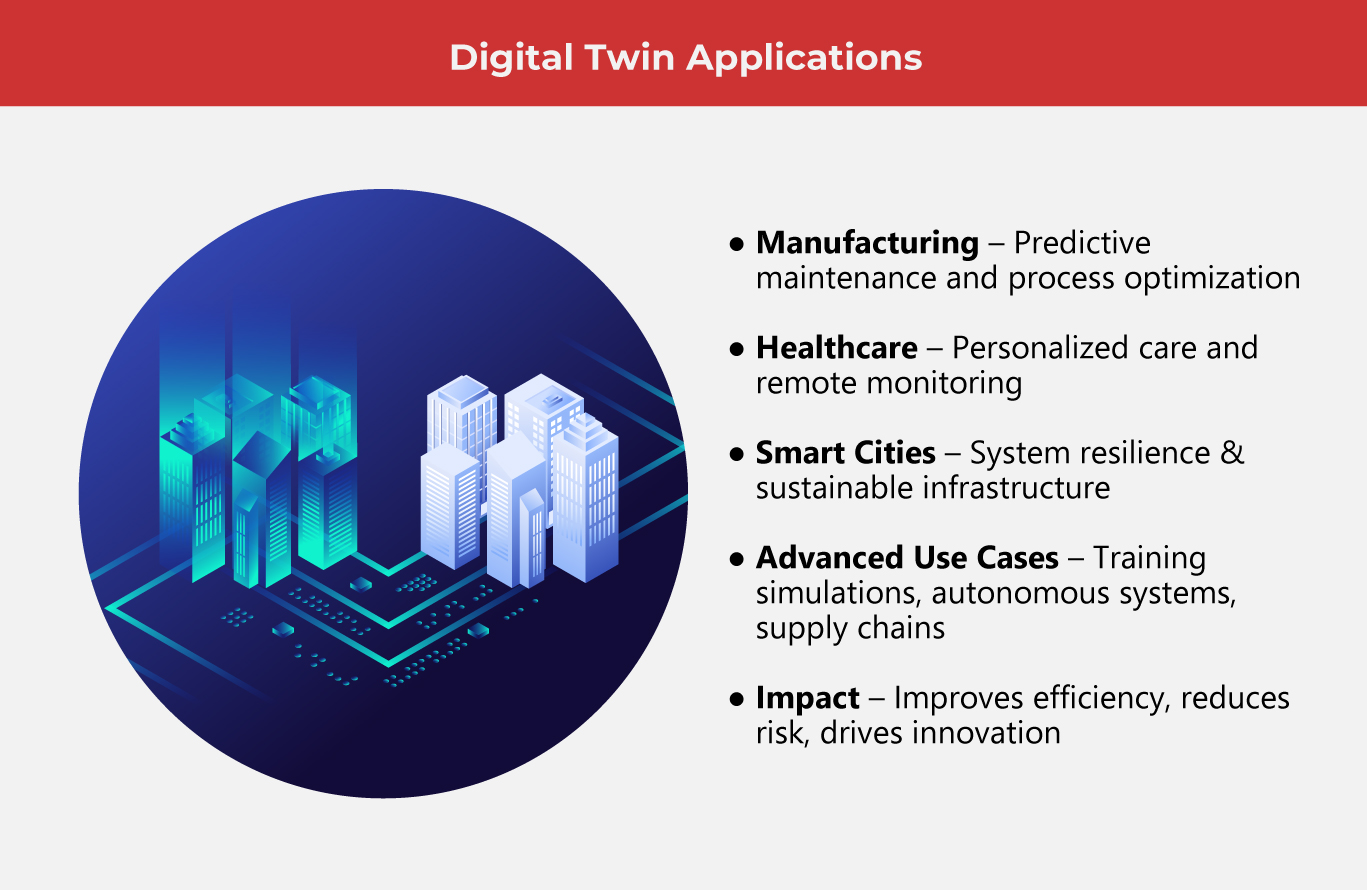
Digital twins are evolving into dynamic systems that connect design, production, and operations, playing a growing role in new product introduction across modern manufacturing. They enable faster validation and more accurate decision-making by improving product testing before physical deployment. These systems are reshaping how industry approaches innovation within an emerging digital industrial ecosystem.
-
Predictive maintenance
By creating a live digital replica of physical equipment, digital twins enable predictive maintenance by continuously analyzing real-time sensor data from industrial assets. This data is used to detect performance anomalies, model wear-and-tear patterns, and anticipate potential failures before they occur. Through ongoing data analysis, maintenance needs can be forecast with greater accuracy and precision.
-
Workflow optimization
With simulated production systems, manufacturers can studay workflows, test scenarios, and adjust resource allocation with precision. By replicating operations before changes are applied, they help identify inefficiencies, improve throughput, and reduce defects. This continuous feedback loop enhances efficiency, increases yield, and strengthens product validation through data-driven decision-making.
-
Product development
Companies adopting these systems alongside AI, machine learning, and the IoT report up to a 25% reduction in product development cycles. Beyond speed, they improve collaboration by connecting workflows and data, supporting faster innovation and stronger competitiveness. Early identification of issues helps prevent expensive redesigns later in the process. As a result, organizations using digital twin implementations have been able to cut overall product development costs by around 12%.
-
Quality assurance
Before a single machine runs on the factory floor, digital twins allow it to be tested in a virtual world. This capability strengthens test and system development by enabling autonomous systems and manufacturing processes to be evaluated safely under realistic conditions. Through high-fidelity modelling, they support early defect detection and performance refinement. The result is a better alignment with regulatory requirements.
-
Workforce training
As a key future-ready tool in training and education, digital twins enable immersive, interactive simulations that strengthen learning and practical skill development. Across industries, they are used to enhance hands-on education, improve safety training, and support cybersecurity preparedness. When combined with augmented reality and virtual reality, digital twins create highly realistic environments that improve engagement, readiness, and real-world application of knowledge.
-
Supply chain management
Digital twins are reshaping supply chains by turning complex data into real-time decisions that improve efficiency and strengthen sustainability. Through advanced modelling and continuous simulation, they enhance forecasting, logistics coordination, and resource flow while accounting for critical environmental factors. This enables more resilient, adaptive networks that reduce waste, improve responsiveness, and support long-term strategic supply chain performance.
In advanced applications, digital twins support human-robot collaboration by integrating immersive technologies such as virtual reality, motion tracking, and haptic feedback. This creates more intuitive, responsive environments where machines and operators work seamlessly together, extending the role of digital twins beyond traditional manufacturing optimization into ergonomics and interactive industrial systems.
(Also read: Meet Rigorous Standards with IMI)
Challenges and the Future Direction of Digital Twins
Despite their growing impact across industries, digital twins still face significant barriers to widespread adoption. High computational requirements, complex data integration across multiple systems, and increasing cybersecurity risks continue to challenge implementation. In addition, the absence of universal standards makes it difficult to ensure interoperability and scalability across platforms and sectors.
Addressing these issues will require coordinated efforts between researchers, industry leaders, and policymakers to develop secure, scalable, and more unified digital twin ecosystems.
Equally important is the establishment of standardized frameworks and interdisciplinary training programmes, which will help build the skills and consistency needed to support broader, more effective adoption of digital twin technologies across global industries. As one of the Top 30 EMS companies in the world, IMI has over 40 years of experience in providing electronics manufacturing and technology solutions.
We are ready to support your business on a global scale.
Our proven technical expertise, worldwide reach, and vast experience in high-growth and emerging markets make us the ideal global manufacturing solutions partner.
Let's work together to build our future today.
Other Blog