Meet Rigorous Industry Standards with IMI
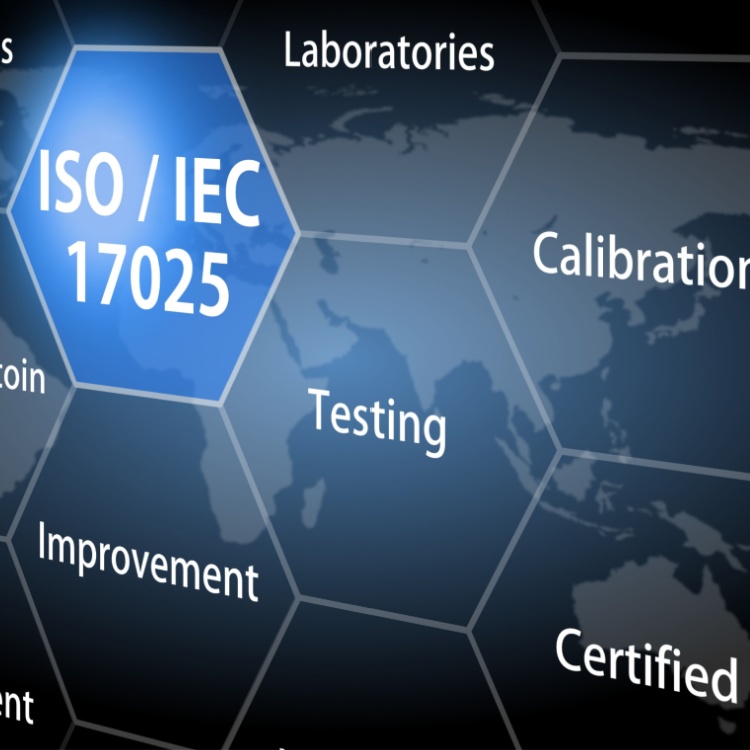
Quality assurance serves as the foundational framework for scientific integrity, employing a systematic suite of processes to guarantee the accuracy and reliability of analytical data. By integrating rigorous standards and standardized practices, laboratories can effectively minimize human error and eliminate data discrepancies. Ultimately, this comprehensive approach ensures that laboratory testing remains a trusted pillar for critical decision-making across healthcare, environmental analysis, and industrial research.
IMI ATC Laboratory Core QA Pillars: Calibration, Reliability and Failure Analysis
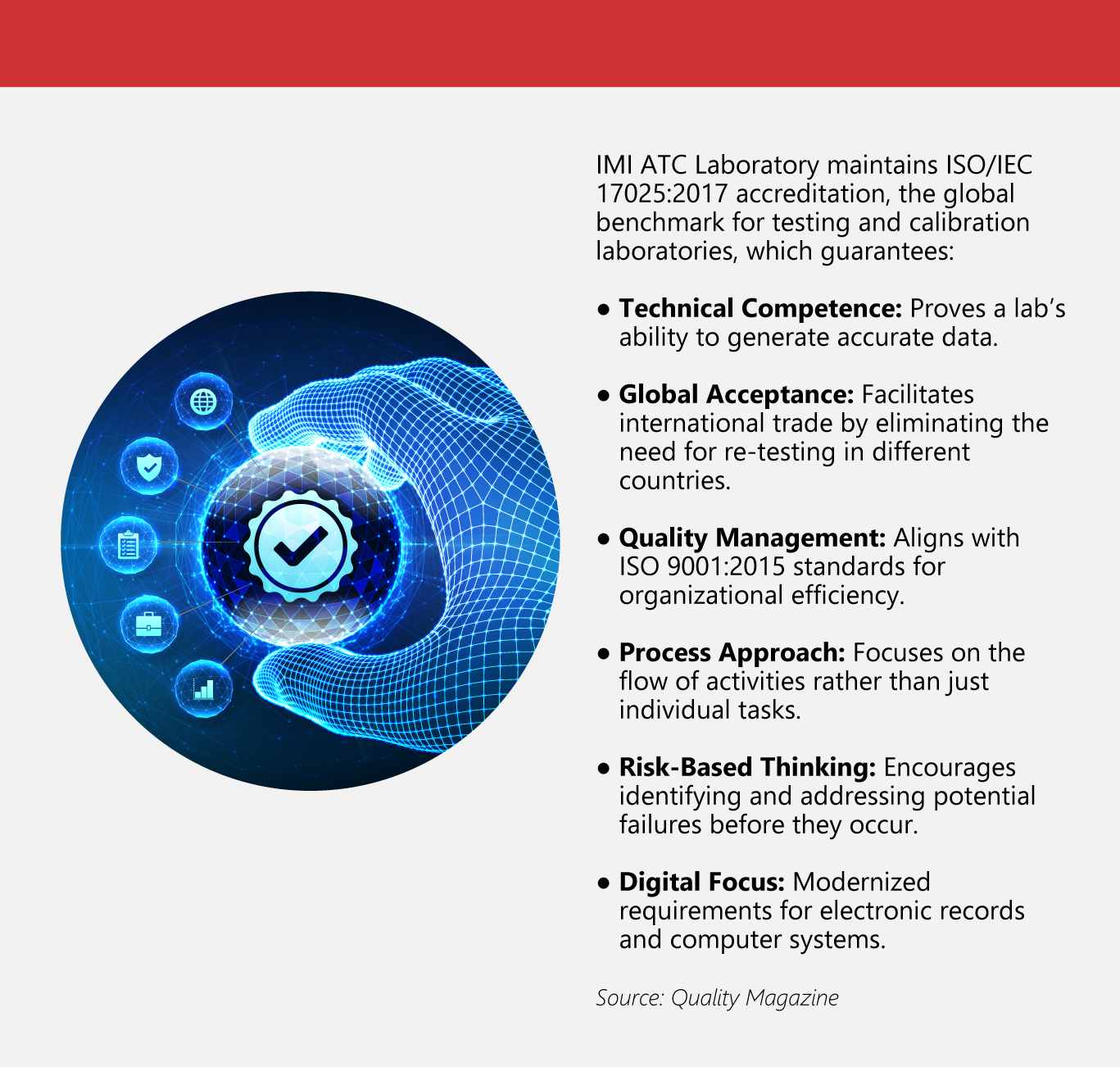
IMI’s Analytical Testing and Calibration (ATC) laboratory, accredited to ISO/IEC 17025:2017 provides a robust framework for technical integrity, integrating rigorous processes to ensure every result is accurate and compliant. By combining rapid turnaround times with precise data, the lab serves as a specialized partner for failure analysis and reliability testing. This systematic approach to quality assurance minimizes operational risks for manufacturers and reinforces the technical credibility of IMI’s industrial solutions.
(Also read: IMI Offers Top Calibration: 7 Key Benefits)
-
Comprehensive Failure Investigation and Risk Assessment
The ATC team employs an interdisciplinary approach to failure analysis, identifying specific modes and mechanisms caused by product design and development, materials, or field applications. By providing expert investigation into defects, IMI delivers valuable insights that allow partners to foresee and avoid potential problems. These findings serve as critical inputs for formal risk assessments, ensuring that manufacturing and assembly processes remain optimized against future vulnerabilities.
-
Advanced Reliability Engineering and Environmental Simulation
To validate product life profiles, IMI’s reliability engineering team conducts a wide range of environmental simulations, including temperature, vibration, and humidity testing. The laboratory is committed to designing accurate stress test plans and performing accelerated testing based on international standards. Whether utilizing passive or active test solutions, this process ensures that products can withstand the rigorous endurance requirements of their intended operating environments.
-
Accredited Calibration and Instrumentation Services
The IMI ATC-Instrumentation laboratory, accredited to ISO/IEC 17025:2017 provides traceable calibration services across the electronics, semiconductor, medical, and aerospace industries. Equipped with high-end facilities, the lab services a broad spectrum of electrical, mechanical, and physical instruments. Notably, major aviation companies rely on IMI ATC laboratory for the calibration of high-torque tools up to 600 Nm, dimensional gauges, and long-range digital multimeters, ensuring all equipment meets the precise demands of high-stakes industries.
Commitment to Quality Excellence
Driven by a journey toward zero defects, IMI prioritizes customer and stakeholder needs through proactive risk-based thinking and continuous process improvement.
- ISO 9001:2015 (Quality Management System/QMS)
This standard sets the criteria for a quality management system based on principles like strong customer focus and continuous improvement. It helps ensure that customers get consistent, good-quality products and services.
- IATF 16949:2016 (Automotive QMS)
Developed by the International Automotive Task Force, this standard defines the quality management requirements for organizations in the automotive industry. It focuses on defect prevention and the reduction of variation and waste in the supply chain.
- ISO 13485:2016 (Medical Devices)
This standard specifies requirements for a QMS where an organization needs to demonstrate its ability to provide medical devices that consistently meet customer and regulatory requirements. This standard provides a comprehensive framework for quality management, supporting manufacturers across every phase of a medical device's lifespan, from initial design to final decommissioning.
- ISO 14001:2015 (Environmental Management System/EMS)
This standard provides a framework that an organization can follow to set up an effective environmental management system. It helps businesses improve their environmental performance through more efficient use of resources and reduction of waste.
- IEC 61340-5-1:2016 (Electrostatic Discharge/ESD)
This international standard provides the administrative and technical requirements for establishing and maintaining an ESD control program. It protects electrical and electronic parts from damage caused by electrostatic discharge.
- ANSI/ESD S20.20-2021 (ESD Protection)
This standard safeguards sensitive electronics across all handling stages, from manufacturing to transport. It mandates rigorous controls for components vulnerable to discharges at 100V (human body model or HBM) and 200V (charged device model or CDM). Additionally, it enforces a 35V limit on isolated conductors to ensure comprehensive electrostatic protection throughout the product lifecycle.
- ISO/IEC 27001:2022 (Information Security)
This standard provides the requirements for an information security management system (ISMS) to manage the security of assets such as financial information or intellectual property. It helps organizations protect their information systematically and cost-effectively.
(Also read: How IMI Can Improve Your Products with Testing and Calibration)
The Critical Role of Quality Assurance
Rigorous laboratory testing serves as the backbone of technical credibility, delivering key benefits:
-
Precision and dependability
Adhering to international benchmarks ensures that technical reports and certificates are accepted across borders, eliminating the need for redundant testing. This adherence to universal protocols allows organizations to remain future-ready, streamlining international trade and fostering trust through a consistent, world-class management system.
-
Regulatory alignment and global frameworks
Aligning with international benchmarks ensures that technical reports and certificates are accepted across borders without redundant testing. This adherence to universal protocols allows organizations to remain future-ready, streamlining international trade and fostering trust through a consistent, world-class management system.
-
Economic value
By systematically identifying risks before they manifest as failures, organizations can significantly lower the overhead associated with rework and scrap. This disciplined oversight ensures that resources are utilized to their fullest potential, directly boosting profitability. Focusing on prevention rather than correction creates a sustainable model for long-term operational stability.
-
Uniformity
Integrating a steady operational rhythm into every stage of test and system development ensures that outputs meet rigorous specifications regardless of when they are produced. Eliminating erratic variables allows organizations to guarantee a reliable experience for every client. This unwavering dedication to technical uniformity serves as the bedrock of brand reputation and operational trust.
-
Institutional Integrity
Establishing a legacy of excellence ensures that every product introduction is accepted without hesitation by global partners and regulatory bodies. By prioritizing transparency and verified protocols, organizations eliminate doubt and replace it with a high degree of certainty. This creates a powerful competitive advantage, as clients prefer to invest where results are proven, and accountability is a core value, fostering sustainable growth.
-
Root Cause Analysis and Corrective Action
A robust quality framework doesn't just catch errors; it creates a feedback loop that strengthens the entire operation. Teams can identify underlying vulnerabilities before they escalate into costly failures. This disciplined approach ensures that once a challenge is met, it is permanently resolved, paving the way for a more stable and efficient workflow.
-
Driving Innovation
When a quality framework is solid, it provides the stable ground necessary for daring exploration. Researchers can push boundaries with total confidence in their foundational data. This synergy between rigorous standards and creative inquiry is what transforms a simple laboratory into a hub for industry-leading breakthroughs.
Partnering for Future-Proof Quality
In an era of rapid technological shifts and increasing market complexity, IMI stands as a definitive leader in technical integrity. By merging a world-class ATC laboratory with a rigorous suite of global certifications, IMI provides more than just compliance—it offers a strategic advantage.
As industries evolve, IMI remains committed to transforming quality assurance into a catalyst for innovation, safeguarding your brand reputation while driving sustainable, global growth. As one of the Top 30 EMS companies in the world, IMI has over 40 years of experience in providing electronics manufacturing and technology solutions.
We are ready to support your business on a global scale.
Our proven technical expertise, worldwide reach, and vast experience in high-growth and emerging markets make us the ideal global manufacturing solutions partner.
Let's work together to build our future today.
Other Blog