What's Next for Renewables This 2026?
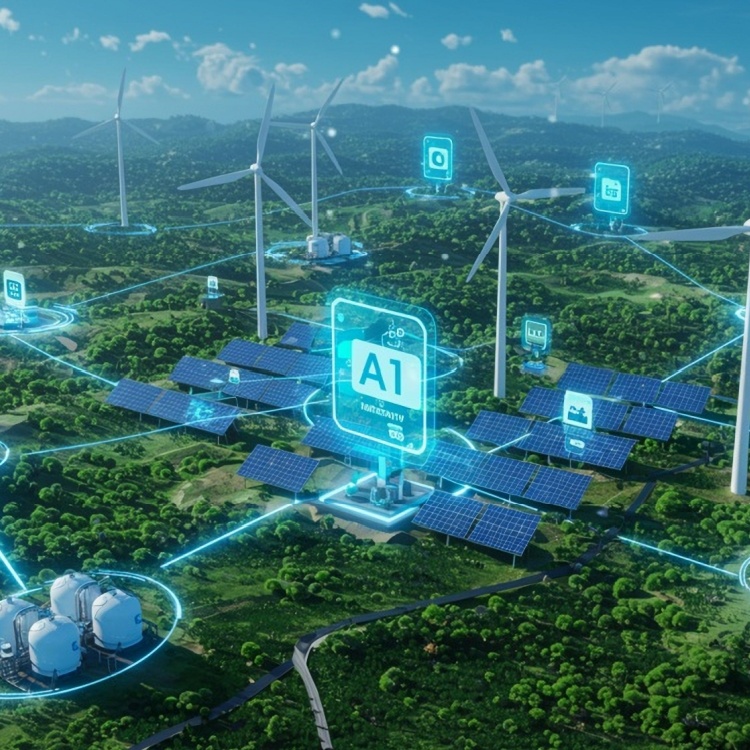
The clean energy outlook for 2026 is being shaped as much by geopolitics as by technology. China is reinforcing its dominance in clean technologies, using scale and global manufacturing strength to deepen its influence abroad. Europe continues to balance its climate ambitions with concerns over affordability and energy security. Meanwhile, the US is recalibrating its energy strategy as industries rapidly expand and redraw electricity demand forecasts.
That surge in computing power is exposing weaknesses in grids, market structures, and sustainability plans. The central question is no longer whether demand will grow, but whether infrastructure can keep up. Expanding capacity, accelerating grid upgrades, and securing flexible supply will determine which economies stay competitive as pressures intensify.
10 Power Trends Defining 2026
As governments and industries track shifting environmental indicators, several powerful trends are emerging that will shape the direction of energy in 2026.
-
Slower solar expansion
By the end of 2025, global solar installations surpassed 500 gigawatts (GW) AC, a historic leap from single-digit gigawatts just over a decade ago, driven largely by China, which accounts for more than half of the additions. However, China’s annual installs are forecast to fall from about 300 GW in 2025 to 200 GW in 2026 after a policy shift to competitive bidding. Global additions may decline by less than 10% year over year, marking a turning point in system development despite continued long-term capacity growth.
-
Solar tech advancements
Despite a slowdown in solar installations, solar panel innovations continue to accelerate. Perovskite solar cells are emerging as a low-cost, high-efficiency alternative to silicon, with tandem designs boosting conversion rates beyond traditional limits. Bifacial panels capture sunlight from both sides, enhancing output, while transparent solar technology integrates energy generation into windows and facades without sacrificing light. Together, these advancements highlight a wave of new product introductions that improve efficiency, versatility, and sustainability. These technologies promise to expand solar’s role in both commercial and architectural applications.
-
Climate action commitments from data centers
Data center industrial solutions show wide variation in sustainability ambitions, with net-zero goals far from universal. According to an assessment, 38% of companies with data center operations have no net-zero commitment. Leading AI-focused firms such as Meta Platforms Inc., Microsoft Corp., and Alphabet Inc. have pledged to reach net zero, but recent reports highlight growing challenges in meeting these targets. While data centers continue to drive clean power procurement, the pace of new agreements is slowing.
(Also read: How AI and Data Centers Drive Growth)
-
Growing environmental hazards
Weather and market-driven climate threats are adapting a necessity for the energy sector. Rising temperatures, extreme weather events, and supply chain management disruptions threaten operations, while volatile energy prices and regulatory uncertainty increase financial exposure. AI-driven electricity demand, grid constraints, and shifting procurement strategies add further pressure. Companies that integrate resilience with expansion are better positioned to succeed. These challenges underscore the importance of future-ready strategies that balance growth with sustainability in the evolving global energy landscape.
-
Strategic partnerships
Geopolitical alignment is reshaping energy and climate agendas, with major partnerships taking hold across regions. China, the EU, and others are collaborating on clean energy governance, carbon rules, and green technology exchange to strengthen system integration and supply chains. Saudi Arabia’s ACWA Power signed export agreements with European firms to support cross‑border clean energy trade. Multinational efforts like the International Partnership for Hydrogen and Fuel Cells in the Economy bring countries together to accelerate hydrogen development.
-
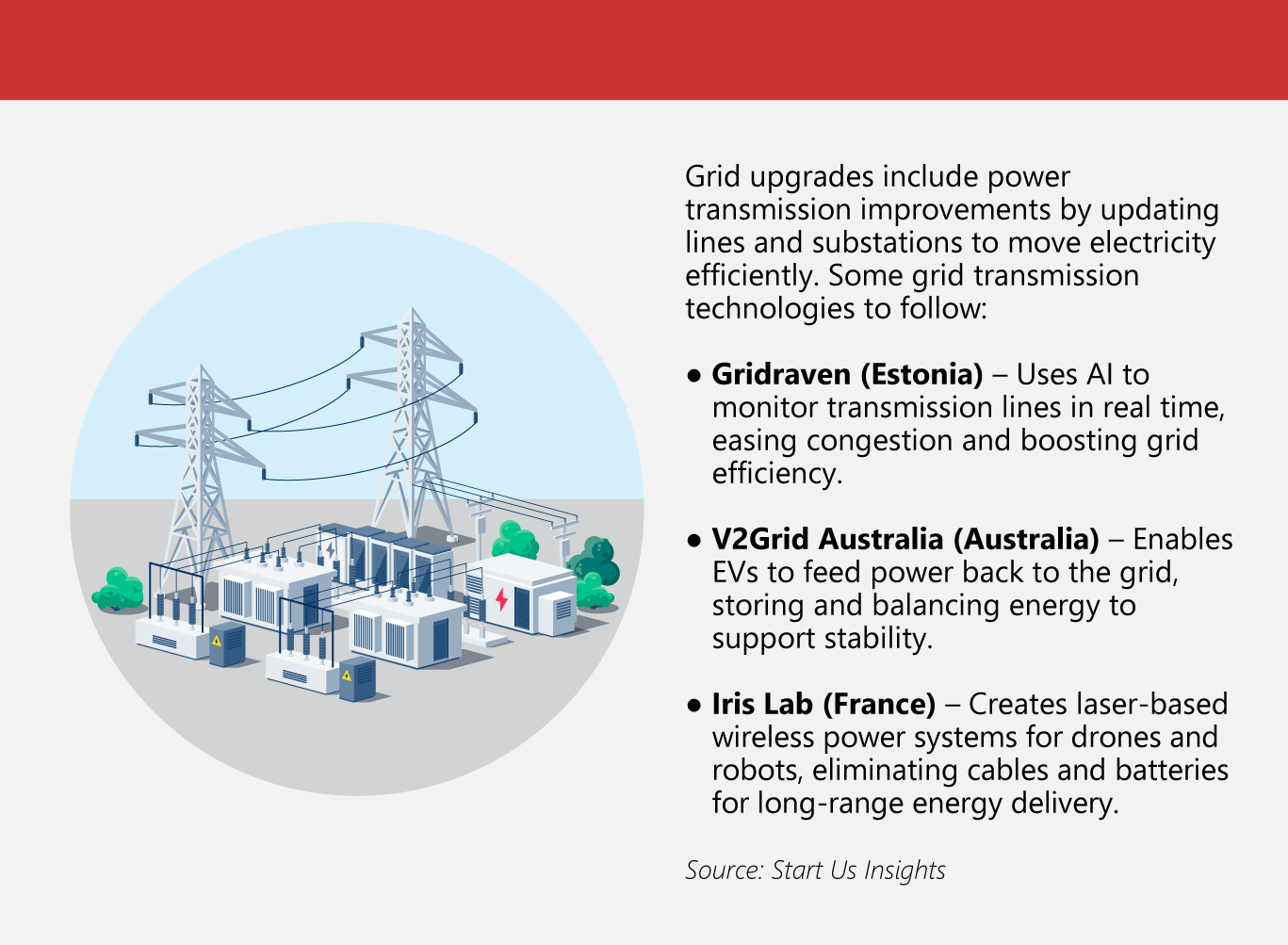
Grid upgrades
In 2026, upgrading grid infrastructure is essential to meet growing energy demands and ensure reliable, low-carbon power. Decades of underinvestment have left many systems outdated, with 40% of EU grids over 40 years old and US grids strained by data center growth. Investments in transmission, mid- and high-voltage upgrades, and smarter planning are critical to improve operational efficiency. Governments and utilities are exploring tax incentives, streamlined approvals, and accelerated component production to support a resilient, future-ready grid.
-
Surge in BESS projects
Battery energy storage systems (BESS) are crucial for the green transition, storing excess renewable energy and releasing it when demand peaks to stabilize grids and reduce reliance on fossil fuels. Standalone and co-located BESS projects are accelerating worldwide, with significant deployments planned through 2026. The US leads with nearly 15 GW of new capacity, while Germany and Australia are set to add 5 GW each, and the UK about 3 GW. These installations support grid reliability, enable higher renewable penetration, and play a central role in the shift toward a low-carbon energy system.
(Also read: Save the Planet, Save Money with V2G)
-
Green hydrogen
Green hydrogen is proving crucial for cutting carbon in difficult-to-decarbonize industries and boosting the development of manufacturing. China leads the charge, rapidly expanding domestic electrolyzer deployment and exports. Policy backing, engineering scale-up, and strategic investments in hydrogen pipelines and export facilities are driving this growth. By 2026, China’s hydrogen initiatives will enable more efficient energy conversion, provide a competitive edge in global clean molecule markets, and help manufacturing markets integrate low-carbon solutions into their operations, advancing the global energy transition.
-
Expanding EV market
Electric vehicles (EVs) are rapidly moving from niche markets to mainstream adoption, reshaping the global automotive market. Scaling EVs requires addressing infrastructure and supply chain issues, expanding charging networks, and making purchase prices more accessible. Battery electric trucks are also advancing, transitioning from pilot programs to niche markets with several commercial models available.
-
Aviation efforts
New collaborations are spotlighting aviation contrails—visible cloud streaks formed by aircraft exhaust—as a major near-term climate opportunity in the aerospace sector. Studies show that adjusting just 2% of flights could cut contrail-related warming by up to 80% through 2050. Early mitigation strategies are ready for pilot programs, and recently tested corporate accounting approaches could amplify results if stakeholders work together. Policy measures, including the EU Emissions Trading System, may further drive progress.
A Future Fueled by Innovation
As 2026 unfolds, the clean energy landscape is entering a pivotal phase. Strategic investments, technological innovation, and international collaboration are driving the sector toward greater efficiency, reliability, and sustainability. Stakeholders across industries are increasingly focused on integrating solutions that balance growth with environmental responsibility, while navigating complex markets and regulatory frameworks.
Success will depend on foresight, adaptability, and coordinated action to ensure energy systems remain resilient and scalable. The decisions made today will influence not only economic competitiveness but also the pace at which a low-carbon world becomes a global reality.
As one of the Top 30 EMS companies in the world, IMI has over 40 years of experience in providing electronics manufacturing and technology solutions.
We are ready to support your business on a global scale.
Our proven technical expertise, worldwide reach, and vast experience in high-growth and emerging markets make us the ideal global manufacturing solutions partner.
Let's work together to build our future today.
Other Blog