Top Network API Trends Shaping 2026

Network APIs are emerging as powerful digital gateways that allow applications to securely tap into and control network capabilities. Rather than viewing connectivity as a simple utility, manufacturers can actively manage network performance to match operational demands. This dynamic control enhances security, supports scalable innovation, and helps improve operational efficiency without requiring costly infrastructure overhauls.
Across industrial manufacturing, APIs are delivering tangible gains by enabling smarter automation and faster response times on the factory floor. By connecting machines, sensors, and enterprise systems, APIs make predictive maintenance and logistics more precise and coordinated. They also reinforce cybersecurity, a growing priority for manufacturers, through programmable protections that help detect vulnerabilities early and reduce the risk of costly disruptions.
(Also read: Leverage Data to Power Your Success)
Key Network API Trends Shaping 2026
In 2026, network APIs are set to reshape manufacturing industries, enabling smarter connectivity, real-time data exchange, and streamlined automation across factory floors.
-
Agentic APIs
Agentic AI, where smart agents act as both consumers and providers of network APIs, is set to transform manufacturing solutions. These agents enable automated, context-aware interactions, using data to optimize processes and decisions. Applications range from dynamic supply chain management and smart factory operations to personalized customer experiences. By seamlessly interfacing with network APIs, autonomous agents enhance responsiveness and unlock new opportunities for manufacturers and enterprises.
-
Remote SIM provisioning (RSP)
In the automotive market, API-driven remote SIM provisioning enables vehicles to connect seamlessly across countries and networks. eSIMs and future iSIMs can be activated and assigned subscriber profiles remotely, allowing cars to receive software updates and services wherever they operate. This capability supports frictionless mobility, instant-on connectivity, and continuous access to digital services, ensuring that vehicles stay connected and future-ready.
-
Multi-network APIs
A key trend for 2026 is the emergence of multi-network, multi-connectivity APIs, enabling seamless integration between terrestrial and satellite networks. This development has major implications for test and system development, particularly in industries requiring global reach, such as logistics and critical infrastructure. By connecting remote operations and resource-intensive systems, these APIs support continuous monitoring and asset tracking across vast distances, breaking traditional barriers in coverage.
-
Edge discovery
APIs for edge discovery and edge application management are set to become vital, especially for AI-driven services in the industrial market. These APIs determine the best edge locations based on proximity and local network performance, ensuring low-latency AI workloads. By enabling flexible deployment, they support advanced network architectures such as dynamic resource allocation and network slicing. This allows industrial operations to optimize computing resources and respond to demands.
-
Unlocking programmable networks
A major shift in product design and development is emerging as AI enables non-programmers, like business analysts, to create models and applications using natural language interfaces. By assisting with network code discovery, management, and generation, AI agents simplify complex programming tasks, making API-driven innovation more accessible. This democratization allows a broader range of users to contribute to software creation and empowers teams to build products without deep coding expertise.
(Also read: 8 Reasons Why You Should Use AI for Improving Factories)
-
Quality on demand
The industry’s focus on monetization is growing, supported by advanced OSS/BSS systems and rising developer engagement. APIs like Quality on Demand (QoD) enable AI agents or developers to request specific network performance metrics, such as stable latency and low jitter. This capability allows services to be dynamically created, extended, or terminated, or assigned ongoing QoD levels for certain devices.
Maximizing API Impact and Economic Value
Harnessing APIs turns digital connections into powerful engines, driving faster innovation and new opportunities across industries.
Enterprises are reluctant to adopt solutions unless network presence reaches near-complete levels within their target regions. Scattered deployment across multiple countries offers little assurance of value; concentrated, region-by-region coverage is critical. Only when markets demonstrate high availability do proof points emerge, validating business models and encouraging broader adoption.
Operators must also consider not just traditional carriers, but also Mobile Virtual Network Operators (MVNOs), as these participants play a crucial role in delivering comprehensive service.
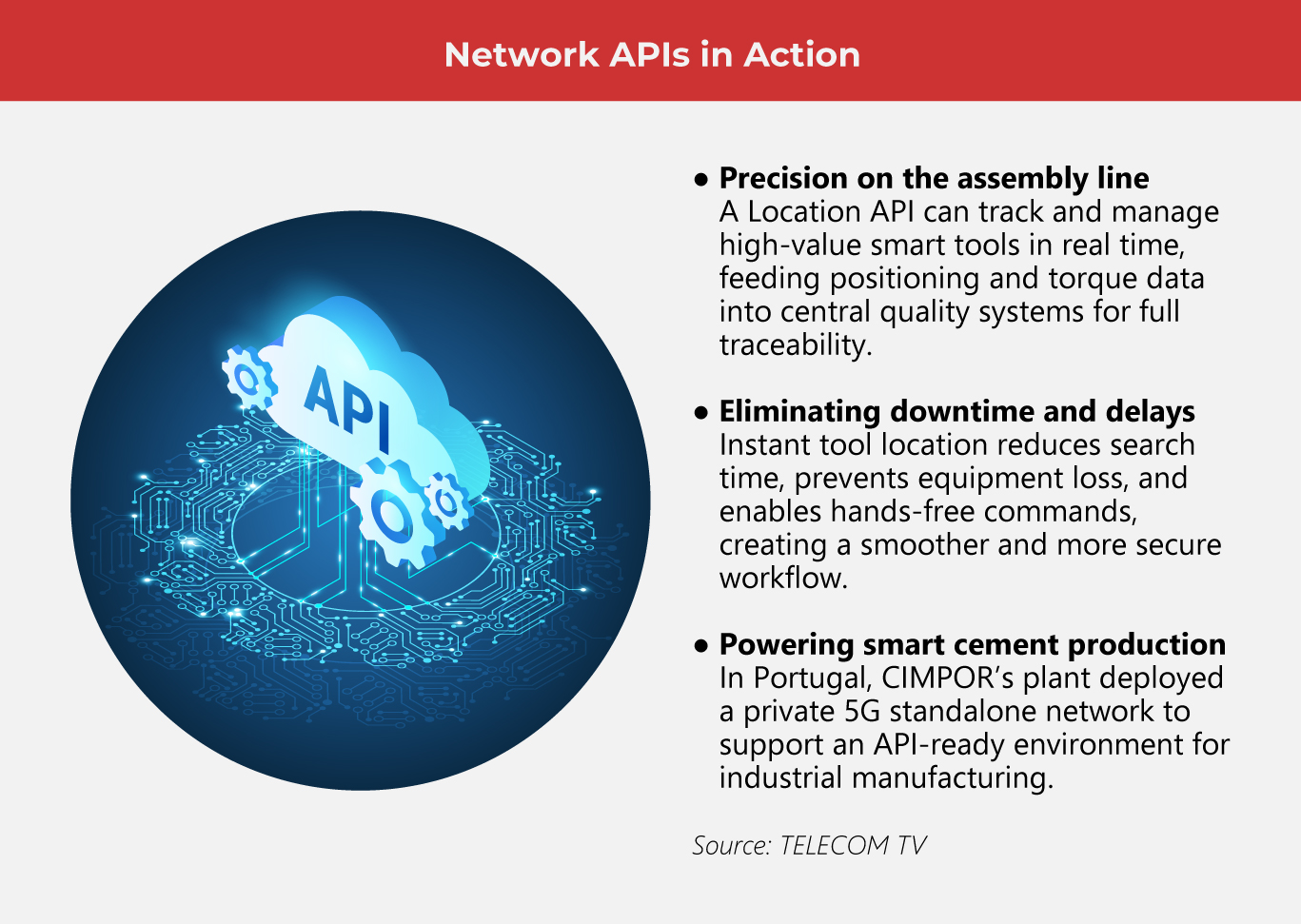
Coverage extends beyond geography—API variety matters too. While fraud-prevention tools like SIM Swap and Number Verification dominate current discussions, enterprises increasingly demand more advanced capabilities, including QoD, Device Status, Location APIs, and edge computing, to support logistics, automotive solutions, and AI-driven workloads.
Standardization is equally vital. Open frameworks CAMARA provide blueprints for consistent API implementation, enabling rapid aggregation by partners. Yet, proprietary solutions promoted by some vendors threaten scale, creating lock-in and fragmentation that hinder enterprise adoption. Global customers require a single, standardized interface; custom integrations for every operator erode the value of network APIs.
Compliance with regulations remains essential, but launching pilots with proof points often proves more effective than awaiting top-down approval. As more operators adopt standardized APIs, collective regulatory engagement becomes feasible, accelerating deployment and trust.
Standards like Number Verification impact the entire network environment, including platforms, devices, and enterprise applications. Closed-door development risks fragmented implementation and concentrated control.
Collaboration across the ecosystem is another prerequisite for success. Network APIs cannot thrive in isolation; operators, vendors, and aggregators must work together openly. Open, transparent collaboration ensures rapid delivery, reduces duplication, and maximizes the impact of new capabilities.
A Transformative Year Ahead
In 2026, network APIs will extend their influence from security and identity protection to AI-driven services and far-reaching connectivity. Success for operators and enterprises will depend on navigating a dynamic ecosystem, leveraging automation, and exposing APIs that meet real-world industrial and enterprise needs.
For the manufacturing sector, this marks a turning point, offering tools to enhance efficiency, flexibility, and competitiveness. Beyond technology, the opportunity lies in collaboration and strategic foresight. Those who harness APIs effectively will not only keep pace but actively shape the evolving landscape of connected industries. As one of the Top 30 EMS companies in the world, IMI has over 40 years of experience in providing electronics manufacturing and technology solutions.
We are ready to support your business on a global scale.
Our proven technical expertise, worldwide reach, and vast experience in high-growth and emerging markets make us the ideal global manufacturing solutions partner.
Let's work together to build our future today.
Other Blog