Your Ultimate Guide To FTTX

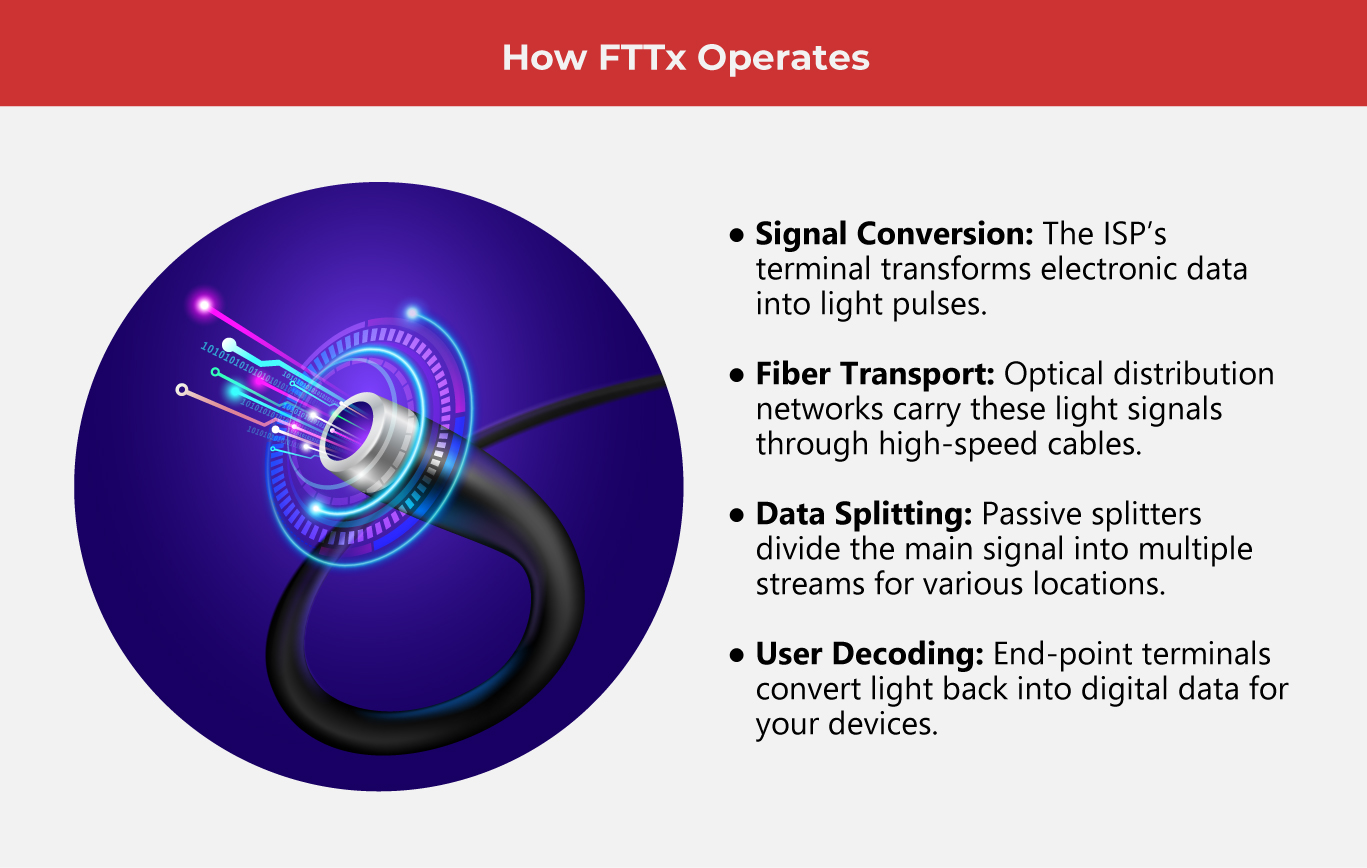
The digital landscape is undergoing a fundamental shift as FTTx replaces legacy copper systems with high-capacity optical infrastructure. By extending fiber from the provider directly to diverse endpoints—homes, enterprises, and municipal nodes—FTTx eliminates the "last mile" bottleneck. This architecture is the primary engine for next-generation access, offering a step-change in bandwidth, latency reduction, and long-term reliability for residential and industrial markets.
Deploying these sophisticated networks requires meticulous testing to ensure signal integrity across vast, multi-point architectures. As FTTx scales to support smart cities and data-heavy commercial applications, comprehensive performance analysis becomes essential for maintaining network health and minimizing downtime. These diagnostic processes allow providers to validate that the infrastructure can handle surging traffic.
By adopting a robust FTTx framework, stakeholders can bypass the physical limitations of traditional broadband. This shift does more than just increase speed; it creates a scalable foundation capable of evolving alongside global modernization and industrial solutions.
FTTX adoption will accelerate as 8K streaming and IoT demand unprecedented bandwidth. This expansion is fueled by significant government and private investment aimed at closing the connectivity gap in underserved regions.
Key drivers also include breakthroughs in manufacturing technologies and industries, which utilize fiber optics and automation to drive down deployment costs. While high capital expenditure and regulatory hurdles remain primary inhibitors, FTTH is becoming the foundation of the global digital infrastructure.
(Also read: Top Network API Trends Shaping 2026)
Exploring FTTx Network Architectures
FTTx encompasses various network architectures tailored for specific deployment scenarios. The "X" represents the fiber termination point, such as a home or commercial premise. By categorizing these diverse broadband structures, FTTx provides a scalable framework.
-
FTTH (Fiber to the Home)
FTTH delivers high-speed connectivity directly to residences via dedicated fiber optic cables. By replacing copper with end-to-end fiber, this architecture eliminates signal degradation. Modern system integration of Passive Optical Networks (PON) enables 1 Gbps speeds and beyond, providing reliable, high-bandwidth support for streaming, gaming, and advanced digital services.
-
FTTB (Fiber to the Building)
Terminating at a central distribution hub, this architecture brings optical infrastructure directly to the premises of large complexes or multi-dwelling units. It allows providers to improve operational efficiency by utilizing a building’s existing internal wiring to deliver premium bandwidth to individual offices or apartments.
-
FTTA (Fiber to the Antenna)
FTTA utilizes optical fiber to link base stations directly to radio heads on cell towers. This specialized fronthaul architecture utilizes advanced engineering capabilities to provide the ultra-low latency required for 5G. By minimizing signal loss, FTTA ensures superior performance for modern mobile networks.
-
FTTN (Fiber to the Node)
Branching out from a central neighborhood hub, Fiber to the Node (FTTN) provides a scalable approach to community-wide broadband. By terminating optical infrastructure at a local cabinet, providers bridge the distance to residential buildings via existing copper wiring. This configuration offers economic value for expanding swift data access across broader geographic areas.
-
FTTC (Fiber to the Curb)
Strategic positioning of FTTC involves extending optical infrastructure to a street-side cabinet or utility pole. By utilizing a brief copper link for the final stretch, this architecture balances performance with lower installation costs. It remains a practical choice for suburban areas seeking reliable data connectivity.
-
FTTR (Fiber to the Room)
By deploying optical infrastructure directly into specific interior spaces, FTTR eliminates indoor signal barriers. This specialized internal network ensures uniform, high-bandwidth access for every connected device. It represents the ultimate solution for latency-sensitive IoT environments and modern smart home system integration.
-
FTTD (Fiber to the Desk)
Individual workstations receive direct optical links under this architecture, successfully bypassing internal copper bottlenecks. This specialized design ensures dedicated bandwidth for data-intensive tasks. In modern workplaces, FTTD serves as a strategic choice to boost productivity through ultra-reliable, high-performance connectivity.
(Also read: Tomorrow’s Smart Cities Are on the Rise)
Unlocking Fiber Potential
Thanks to its unique features, FTTx offers these advantages:
-
Massive bandwidth capacity
By bringing optical infrastructure closer to the end-user, FTTx enables unmatched data transfer. These advanced transmission techniques provide the massive bandwidth capacity required to support high-traffic manufacturing industries and data-intensive applications without performance lag.
-
Mission-critical stability
Deploying a passive architecture ensures data stability by eliminating active field components. This design resists electromagnetic interference and environmental wear, providing a resilient setting that streamlines product testing and critical operations through superior signal integrity.
-
Extended Reach
Optical fiber maintains signal integrity over vast distances, effortlessly bridging the gap to remote locations. This superior transmission range ensures that isolated areas receive high-speed data access without the performance loss typical of traditional wiring.
-
Cost savings
Fiber networks offer significant long-term savings by reducing energy consumption and maintenance needs. Their extended lifespan and durable infrastructure provide a more economical alternative to copper systems, ensuring cost-efficient performance for modern digital requirements.
-
Future-Proof Scalability
FTTx provides a versatile foundation for evolving digital demands. Its lightweight, interference-resistant fiber supports massive bandwidth and long-distance transmission, allowing for seamless speed upgrades through equipment updates without the need to replace existing field infrastructure.
-
Enhanced Data Security
Fiber optics provides superior protection by transmitting light instead of electrical signals, making physical tapping nearly impossible to execute without immediate detection. This inherent resistance to interception makes FTTx the premier choice for safeguarding sensitive information.
Driving Digital Evolution
Despite deployment hurdles and physical maintenance requirements, the long-term advantages of FTTx far outweigh initial capital costs. Robust encryption and strategic infrastructure management successfully mitigate security risks and potential outages, ensuring that optical networks remain the gold standard for reliable, large-scale digital distribution.
As an essential pillar of modern communication, FTTx continues to revolutionize how we interact with technology. Its unmatched capacity to evolve with emerging digital demands makes it a future-proof solution for businesses and residents seeking superior performance in an increasingly connected world. As one of the Top 30 EMS companies in the world, IMI has over 40 years of experience in providing electronics manufacturing and technology solutions.
We are ready to support your business on a global scale.
Our proven technical expertise, worldwide reach, and vast experience in high-growth and emerging markets make us the ideal global manufacturing solutions partner.
Let's work together to build our future today.
Other Blog