
What Is EMC Testing for Motorbikes and Why Does It Matter?
The growing shift toward electrification and smarter vehicle systems has made electromagnetic compatibility (EMC) a key design and engineering priority. If not properly managed through shielding, grounding, and interference control, electronic subsystems can interact, leading to degraded performance, safety risks, and potential non-compliance with regulatory standards.
This technical challenge comes as electric motorcycles gain momentum in the push toward sustainability. As demand expands across commuter and performance segments, manufacturers are being challenged to strengthen their engineering capabilities while developing vehicles that deliver improved reliability and performance.
(Also read: The New Life of EV Batteries)
Understanding EMC Testing in Electric Motorcycles
EMC testing plays a critical role in ensuring the reliability and regulatory compliance of electric motorcycles. Required under Economic Commission for Europe Regulation No. 10 (ECE R10), the standard establishes guidelines for controlling electromagnetic emissions and ensuring vehicles can withstand interference from external sources.
As electric motorcycles rely on increasingly future-ready electronic systems, including battery management, motor controls, and onboard communication technologies, managing electromagnetic interference has become a priority.
Reliability testing through EMC assessments helps verify that models can perform safely and consistently on the road while avoiding disruptions to other electronic devices. In practice, EMC compliance ensures that vehicle systems operate harmoniously, reducing risks caused by unwanted electromagnetic interactions.
Evaluating Electromagnetic Performance
EMC testing helps ensure that onboard electronics operate safely and reliably in real-world environments.
-
Testing during vehicle operation
When the motorcycle is running in normal operating mode, engineers evaluate whether it generates excessive electromagnetic noise and whether its electronic systems remain stable when exposed to electromagnetic fields. The assessments typically include broadband and narrowband radiated emissions testing solutions, as well as radiated immunity evaluations.
Emissions testing measures the radio-frequency energy generated by the vehicle, helping verify that it does not interfere with nearby electronics or communication systems. Immunity testing, meanwhile, exposes the motorcycle to controlled electromagnetic fields to confirm that critical functions continue operating as intended.
-
Additional assessments during charging
Charging introduces another layer of complexity, as the vehicle interacts directly with alternating current (AC) and direct current (DC) power systems. To address these conditions, engineers perform a broader set of EMC evaluations covering power quality, conducted emissions, and resistance to electrical disturbances.
These tests may include harmonic current emissions, voltage fluctuations and flicker, conducted emissions on power and communication lines, as well as immunity assessments against electrical fast transients and power surges. Together, they help ensure that charging systems function safely without causing disruptions to the surrounding electrical network.
-
Verifying resistance to interference
One of the most demanding aspects of EMC validation is radiated immunity testing. During the procedure, the motorcycle is exposed to electromagnetic fields across a wide frequency range using specialized equipment such as radio frequency signal generators, amplifiers, antennas, and field probes.
The objective is straightforward: verify that the vehicle can continue operating normally when subjected to electromagnetic disturbances commonly encountered in everyday environments. By demonstrating both low emissions and strong immunity, electric motorcycles can achieve the level of reliability expected from modern connected vehicles.
Why EMC Compliance Matters
EMC certification allows manufacturers to display the required compliance mark, showing that the products meet established electromagnetic compatibility standards. For manufacturers, EMC testing is an essential investment that helps identify risks, improve product quality, and build confidence before a product reaches customers.
-
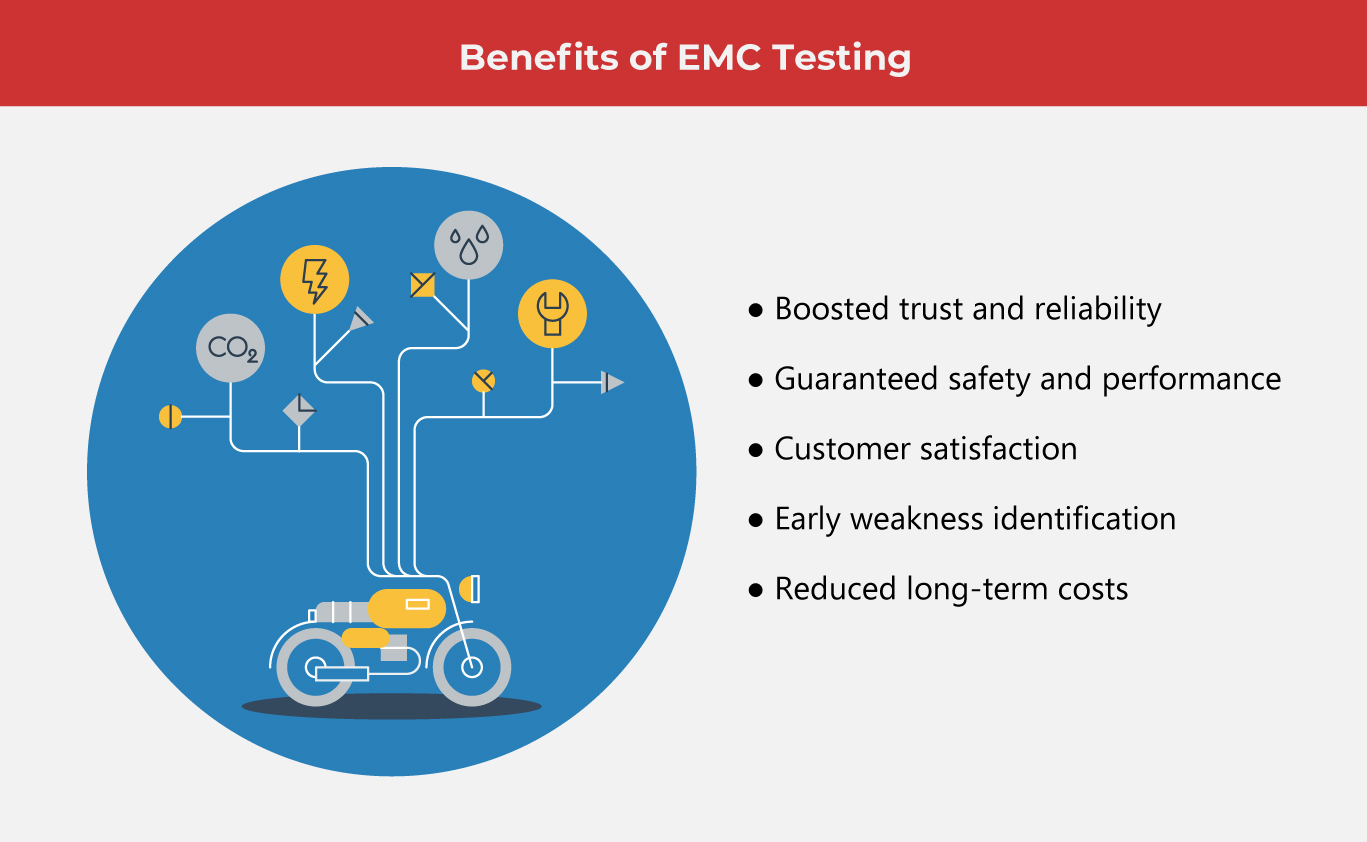
Enhancing reliability and trust
EMC validation confirms that electronic systems can perform consistently under real-world conditions. Meeting recognized standards also gives engineers greater confidence in the product design while helping customers trust its safety and dependability.
-
Strengthening safety performance
Poor electromagnetic design can contribute to system malfunctions, communication failures, or unexpected behavior. EMC testing helps reduce these risks by ensuring electronic components work properly together.
-
Ensuring compliance
Products that fail to meet required EMC standards may face delays, market restrictions, or customer dissatisfaction. Early product testing helps manufacturers address compliance issues before they become costly warranty concerns.
-
Identifying design weaknesses early
EMC assessments can reveal potential interference problems during the development stage, allowing engineers to refine designs before full-scale production begins.
-
Reducing long-term costs
Finding and resolving EMC issues early can minimize future repair needs, service expenses, and production changes, improving overall operational efficiency and economic value.
Ultimately, EMC compliance helps ensure that electric motorcycles are not only ready for the market but also capable of delivering dependable performance throughout their lifecycle.
Oman Tightens EMC Rules for E-Mobility Devices
EMC regulation is also evolving beyond established automotive frameworks, as governments expand compliance requirements into emerging mobility categories.
For instance, Oman has introduced a new regulatory framework governing electric scooters and self-balancing mobility devices. Issued by the Directorate of Standardization and Metrology (DSM), the regulation brings full-vehicle EMC requirements into formal enforcement for the first time in this segment.
At the core of the policy is mandatory compliance with EN IEC 61000-6-3 and EN IEC 61000-6-4 standards, covering electromagnetic emissions and immunity. Unlike earlier approaches focused primarily on electronic subsystems, Oman’s framework evaluates complete vehicles, including their mechanical assemblies, when they interact with electrical systems.
A notable feature of the regulation is its attention to mechanically dynamic structures such as folding joints and suspension damping systems. These are now recognized as potential failure points where mechanical movement may influence electrical stability, increasing the risk of EMC disruption.
The new rules also introduce more detailed documentation and testing expectations. Exporters must provide component-level shielding data demonstrating minimum performance thresholds across defined frequency ranges, along with integrated full-vehicle EMC test results.
This shift places additional pressure on trading firms acting as OEM representatives, which must now manage technical validation, not just paperwork. Delays or incomplete compliance submissions may result in shipment rejection or restricted market access.
Manufacturers and assemblers face equally significant changes. Mechanical design choices, such as enclosure sealing, cable routing, and grounding across moving joints, must now be integrated into EMC considerations from the earliest design stages. This requires closer coordination between mechanical engineers, electronics designers, and test laboratories.
Material suppliers are also seeing increased scrutiny, particularly for shielding and conductive materials. Buyers are now demanding verified, frequency-specific performance data supported by accredited testing and traceable production records.
Rather than treating EMC as a final compliance step, Oman’s framework embeds it into early design decisions. For global suppliers, success will depend on integrating electromagnetic considerations into mechanical architecture planning rather than relying solely on post-production testing.
Overall, the policy is seen as a potential model for other Gulf states, reflecting a growing regional focus on tightening technical standards for emerging mobility technologies.
(Also read: What’s New and Next for Green Mobility)
EMC as a Defining Standard for Electric Mobility
Across the electric motorcycle sector, EMC has emerged as a critical benchmark shaping design, testing, and regulatory compliance. From early-stage simulation to full-vehicle validation, manufacturers are increasingly required to manage electromagnetic interactions as part of core engineering. As global regulations evolve, EMC compliance now underpins safety, reliability, and market access in the wider shift toward electrified transport.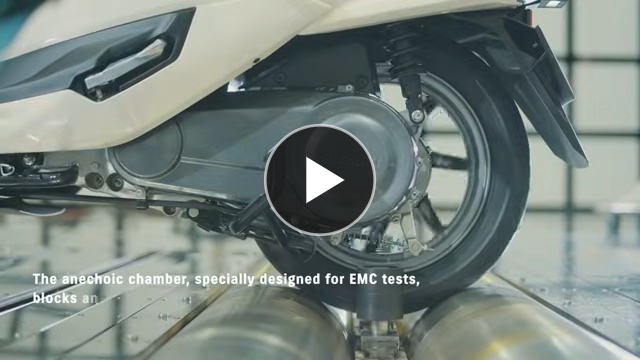
As one of the Top 30 EMS companies in the world, IMI has over 40 years of experience in providing electronics manufacturing and technology solutions.
We are ready to support your business on a global scale.
Our proven technical expertise, worldwide reach, and vast experience in high-growth and emerging markets make us the ideal global manufacturing solutions partner.
Let's work together to build our future today.
Other Blog