Box Build Assembly: Your Complete Guide
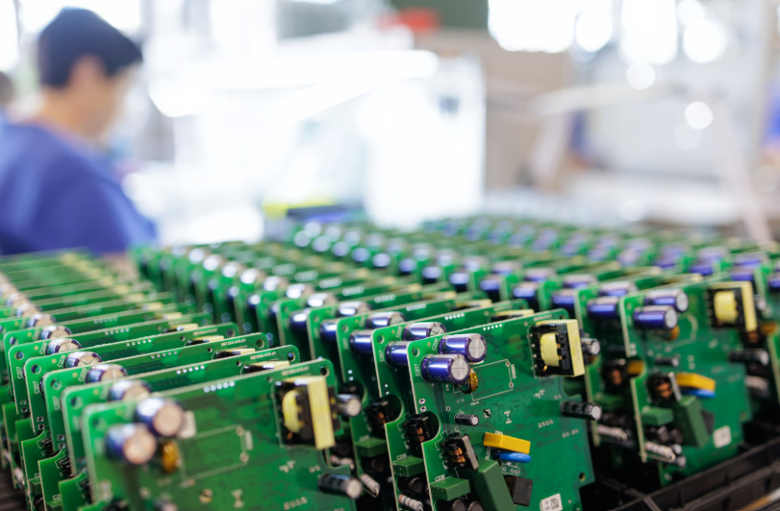
Box build assembly is the process of transforming a populated printed circuit board (PCB) into a complete electronic product. Rather than stopping at PCB assembly, it integrates the board with its enclosure, wiring, power components, connectors, cooling systems, and other mechanical parts to produce a fully functional device. The result is a finished unit that has been assembled, tested, configured, and prepared for deployment or shipment.
Typically used once a PCB has been prototyped, validated, and certified for relevant performance and regulatory requirements, box build assembly supports volume manufacturing solutions.
(Also read: PCB and PCBA: Why They Matter)
What Goes Into a Box Build Assembly
A box build assembly integrates mechanical, electrical, and software components into a complete electronic product. Each element contributes to system performance and durability, ensuring the finished unit can withstand its intended operating environment. While the exact configuration varies by application, most box build assemblies include the following components:
-
Housing or enclosure
The external casing, typically made of metal or plastic, protects internal components from environmental factors such as dust, moisture, vibration, and accidental impact while providing structural integrity.
-
Mechanical hardware
Brackets, mounting rails, standoffs, fasteners, cooling fans, and heat sinks secure components in place while promoting efficient heat dissipation, with thermal analysis helping optimize the overall design.
-
Electronic assemblies
These include the printed circuit board assembly (PCBA), power supplies, controllers, displays, sensors, and communication modules that enable the device to perform its intended functions.
-
Wiring and interconnections
Cables, wire harnesses, connectors, and grounding systems distribute power and data throughout the unit. Proper routing and strain relief help prevent wear and ensure dependable operation.
-
Supporting hardware
Items such as switches, buttons, LEDs, seals, labels, washers, and screws complete the assembly, improve usability, and provide product identification.
-
Thermal and protective materials
Thermal pads, insulation, shielding, and protective covers help manage heat, minimize electromagnetic interference, and enhance durability.
-
Software configuration
Before shipment, firmware is installed, system settings are configured, and, where required, the product is calibrated. These steps support product validation by confirming that the finished unit functions as intended.
Step-by-Step Box Build Workflow
Box build assembly follows a structured, step-by-step workflow to ensure that each product is correctly built, tested, and ready for deployment.
-
Project planning and preparation
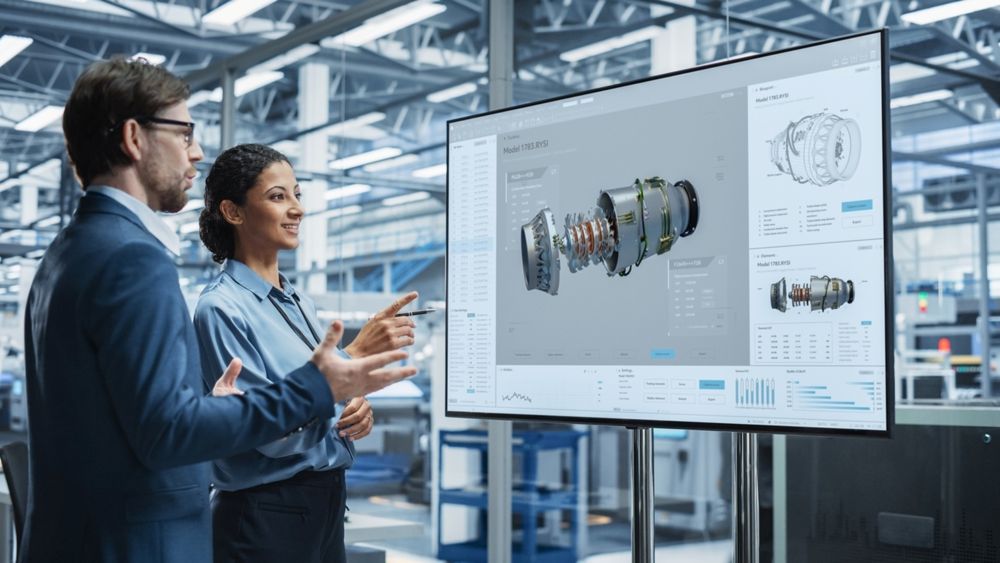
The process begins with reviewing technical documentation such as the Bill of Materials (BOM), design drawings, and testing solutions. Components are then gathered, checked, and verified to ensure they meet specifications. Clear coordination with the client helps align expectations and requirements.
-
Enclosure preparation and mounting
The housing is prepared by adding cutouts, drill points, labels, coatings, and mounting features. Mechanical elements like brackets, rails, and fasteners are installed to support proper component placement, alongside provisions for surface mount technology integration.
-
Mechanical integration
Structural parts are fitted into the enclosure to ensure stability, alignment, and durability.
-
Electronic installation
Core electronic units, including PCBs, power supplies, displays, and modules, are mounted according to design and engineering layouts and rules.
-
Wiring and cable routing
Internal harnesses and connectors are installed to link all system components, ensuring seamless system integration. Proper routing, securing, and labeling support safe power distribution and reliable signal flow across the assembly.
-
Testing and quality control
The assembled unit undergoes electrical checks, functional testing, and visual inspection to confirm performance, safety, and build integrity.
-
Final configuration and packaging
Firmware is loaded, settings are configured, and the system is finalized. Once verified, the product is labeled, documented, and packaged for shipment or installation.
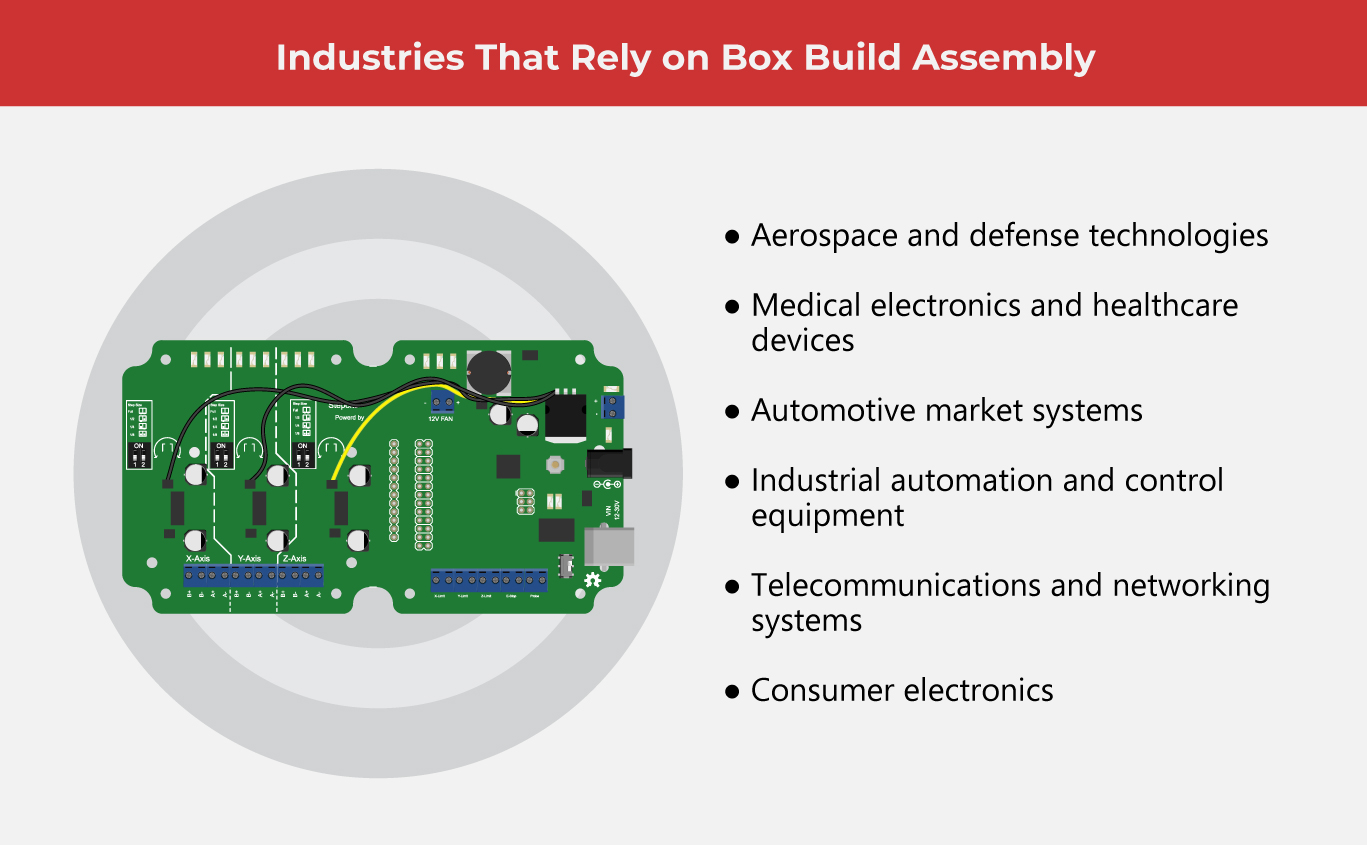
Benefits of Box Build Assembly
Box build assembly offers industrial solutions by combining multiple production stages into one integrated process that delivers fully finished, tested electronic products.
-
Improved operational efficiency
By consolidating mechanical assembly, electronics integration, wiring, testing, and packaging, box build assembly reduces handoffs between stages and minimizes coordination delays. This results in faster production cycles, fewer bottlenecks, and smoother overall execution from component intake to finished product delivery.
-
Lower overall costs
Outsourcing box build assembly reduces the need for manufacturers to invest in in-house assembly lines, equipment, and specialized labor. It also helps lower operational expenses through reduced handling steps. Compared to processes such as injection molding or extruded enclosure production, tooling requirements are typically lower, further improving economic value.
-
Consistent quality and reliability
Standardized procedures and centralized assembly environments help ensure consistent build quality across all units. Errors are reduced through controlled processes, while structured inspection and testing improve product reliability. This consistency is especially important for applications where performance stability and safety are critical.
-
Faster time-to-market
Because production infrastructure does not need to be built from scratch, manufacturers can move from design to production much more quickly. This accelerates product introductions and allows companies to respond faster to market demand or design changes without major setup delays.
-
Simplified operations and vendor management
Box build assembly reduces the complexity of working with multiple suppliers by consolidating processes under one service provider, which helps strengthen supplier quality management. This streamlining improves communication, reduces logistical overhead, and makes production planning more predictable.
-
Scalability and flexibility
The process supports a wide range of production volumes, from prototypes and small batches to moderate-scale manufacturing. This flexibility allows manufacturers to adjust output based on demand without significant changes to infrastructure or workflow.
Future Trends in Box Build Manufacturing
Manufacturers are adopting new technologies and processes in box build manufacturing to improve speed, precision, and sustainability across the assembly lifecycle.
-
Greater automation
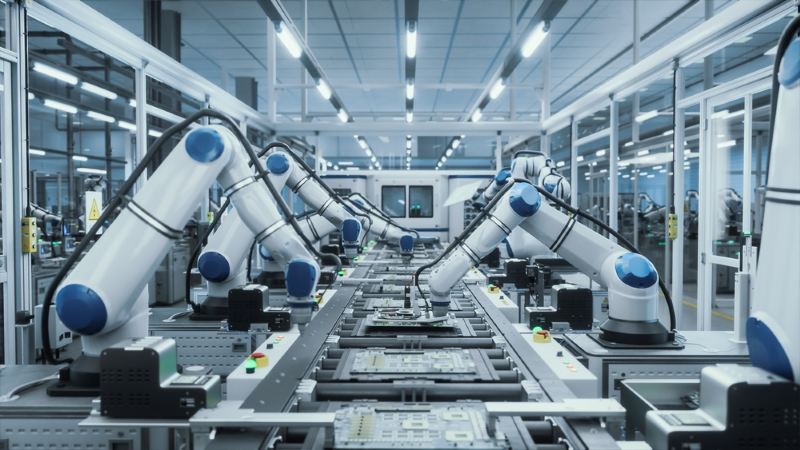
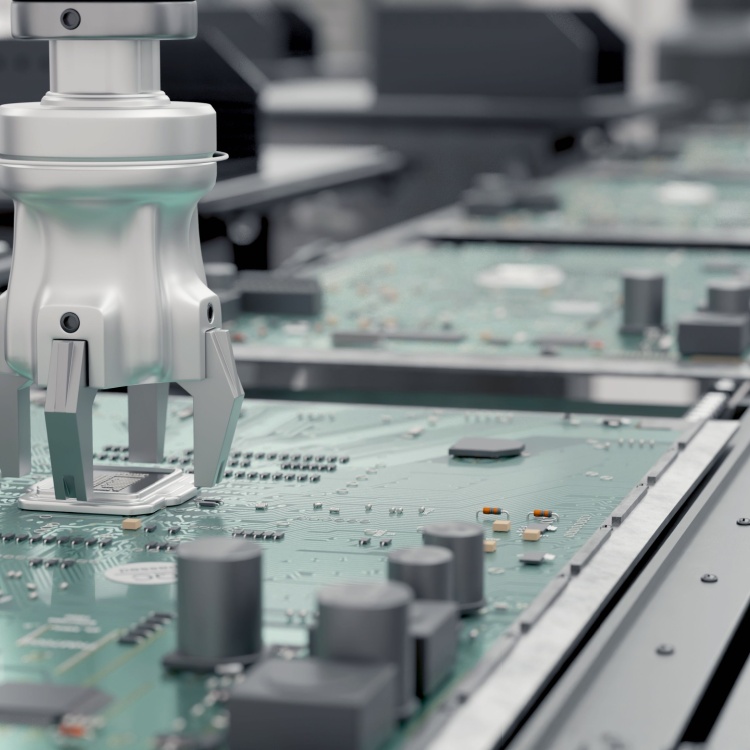
Robotics and automated assembly systems are increasingly used to reduce manual intervention and deliver more consistent build quality.
-
Smart factory integration
IoT-enabled monitoring and real-time data collection allow manufacturers to enhance quality control and make faster, data-driven decisions on the shop floor.
-
Miniaturization and higher integration
As electronic products become smaller yet more functional, assembly processes require tighter tolerances and greater precision.
-
Flexible, low-volume production
Shorter product lifecycles and increased customization are driving demand for agile production lines that can switch quickly between different builds.
-
Stronger quality and testing systems
Enhanced inspection methods and reliability testing help reduce defects and improve performance consistency before products reach the market.
-
Sustainable manufacturing practices
Manufacturers are prioritizing energy efficiency, waste reduction, and the use of more environmentally responsible materials.
Looking Ahead in Box Build Manufacturing
Box build assembly continues to play an important role in modern electronics manufacturing, supporting the delivery of complete, reliable, and ready-to-use products. As technology advances, from smarter automation systems to increasingly compact device designs, the process is steadily becoming more refined and capable. These improvements are helping manufacturers manage costs more effectively and stay responsive in a fast-moving market. As one of the Top 30 EMS companies in the world, IMI has over 40 years of experience in providing electronics manufacturing and technology solutions.
We are ready to support your business on a global scale.
Our proven technical expertise, worldwide reach, and vast experience in high-growth and emerging markets make us the ideal global manufacturing solutions partner.
Let's work together to build our future today.
Other Blog