IoT Evolves Into Smarter, Faster Connected Systems
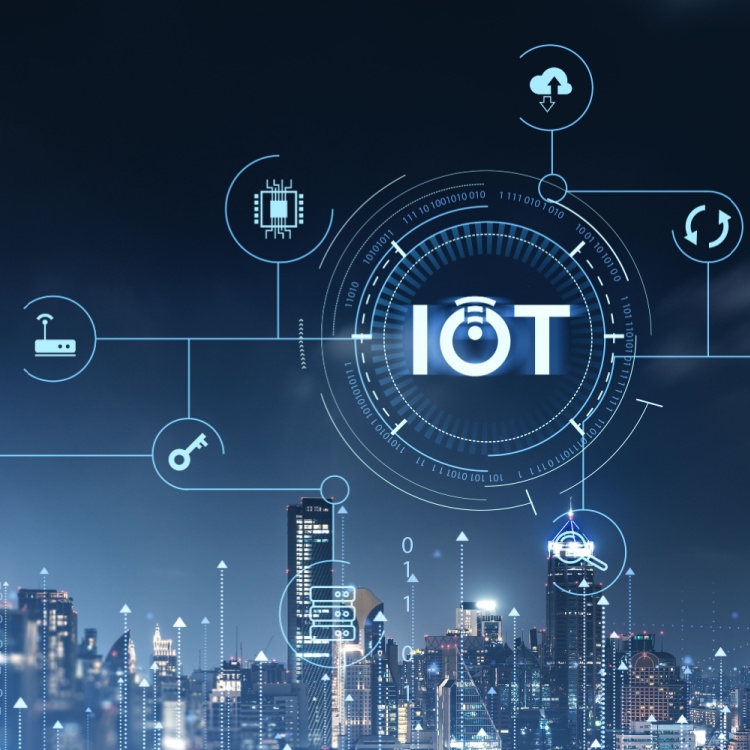
IoT refers to a connected network of physical devices that link to the internet, gather data from their surroundings, and share that information with other systems. In many cases, these devices can also respond to the data they collect, creating automated and responsive environments.
Over time, various definitions have emerged, but the core idea remains the interaction between connected objects. IoT devices range from medical technology and electronics to environmental sensors to smart appliances, all of which form the “sensor layer” of IoT architecture. Alongside these are actuators or controllers, which translate digital signals into real-world actions—such as adjusting room temperature or triggering reminders when prolonged inactivity is detected.
At its simplest, IoT can be described as: sensors plus actuators plus internet connectivity. While not a complete technical model, this equation captures its essence. Its test and system development grow as more devices are connected, enabling systems that improve coordination and real-time decision-making across environments like the automotive market and urban infrastructure.
(Also read: What’s New in Cobots for 2026)
How IoT Is Reshaping the Business Landscape
As IoT adoption continues to grow, businesses are leveraging data-driven insights and advanced industrial solutions to boost competitiveness.
-
Product innovation
IoT enables companies to unveil new product introductions while refining existing ones. By analyzing real-world usage data, firms can better align offerings with customer needs and eliminate less useful features, strengthening manufacturing excellence. It also drives innovation in everyday devices, although adoption varies, with some gaining wide acceptance while others remain niche.
-
Streamlined automation
Connected technologies now allow users to remotely manage IoT devices through smartphones or tablets, adjusting settings and receiving real-time alerts for better control and responsiveness. When integrated with robotics, these systems expand automation across warehousing and retail, significantly enhancing coordination and performance in supply chain management operations across industries.
-
Rise in Android devices
Since its launch, Android has remained open source, allowing developers to modify its code, integrate diverse gadgets, and build connected solutions using Java. Its flexibility has driven widespread adoption in IoT ecosystems. The steady rise in Android-powered devices reflects accelerating demand for scalable, future-ready technologies across increasingly connected digital environments.
-
Remote work support
IoT extends connectivity beyond users, allowing entire systems to be managed remotely across locations. Through real-time monitoring, automated processes, and alert-based notifications, businesses can oversee assets like fleets, stores, and equipment with minimal on-site presence. This boosts operational visibility, reduces disruptions, and strengthens accountability and control across distributed operations on the ground.
-
Improved productivity and earnings
Driven by real-time data, IoT enhances productivity by reducing downtime and waste. It uncovers process bottlenecks, enhancing workflow visibility and enabling more effective manufacturing solutions that support smoother, more efficient operations overall.
-
Fewer machine breakdowns
Preventive maintenance has been transformed by IoT systems that continuously monitor machine conditions through sensors, detecting early signs of wear and possible failures. This enables timely servicing, reducing costs and improving uptime through better scheduling. Digital twins further enhance this process by simulating equipment performance virtually, paving the way for advanced reliability testing and stronger asset management for high-value machinery.
-
Reduced consumption and waste
Across connected systems, IoT reduces waste through real-time monitoring of energy, water, heat, and machine activity. This visibility highlights leaks, idle assets, and inefficient settings, cutting costs without changing core outputs. Smart grids further strengthen this approach by transforming metering data into actionable control, helping companies meet sustainability objectives.
-
Asset visibility
Product tracking has traditionally relied on barcodes and scanners, but IoT has introduced more advanced methods, such as Radio Frequency Identification Tags (RFID) smart labels. These tags store detailed product data and can be detected without direct line of sight. Unlike barcodes that require manual scanning, RFID enables faster, contactless identification and enhances overall tracking accuracy and workflow.
(Also read: How IIoT Powers Faster, Smarter Industrial Progress)
IoT Trends in 2026
As connected systems continue to evolve, 2026 is expected to bring new shifts in IoT adoption, shaping how manufacturing technologies and industries operate, innovate, and scale in an increasingly data-driven environment.
-
AI-driven IoT
AI is rapidly transforming the IoT ecosystem by enabling real-time intelligence and automated decision-making at the edge. Industrial applications are expanding across sectors such as manufacturing and retail, improving business outcomes. These advances are also reshaping product design and development, as companies integrate smarter, data-driven capabilities to stay competitive and scale innovation.
-
Intelligence value
By 2026, the focus for internet service and technology providers is expected to move beyond simple device connectivity toward monetizing data-driven intelligence. With more IoT Things endpoints using neural processing units for on-device decisions, service models are shifting from basic monitoring to autonomous systems. Providers will increasingly deliver outcomes like uptime and self-managed maintenance rather than connectivity alone.
-
Security-first shift
Tighter cyber-resilience regulations are expected to reshape the IoT market, making built-in security a baseline requirement rather than an option. Products lacking automated software component tracking and secure hardware foundations risk exclusion from enterprise channels. This shift will push manufacturers toward stronger compliance, driving changes in design and engineering priorities.
-
Rise of vision sensing
IoT systems are set to move away from arrays of single-function sensors toward camera-driven platforms powered by AI. One vision system may replace multiple devices by handling tasks such as motion and environmental detection. While installation becomes simpler, data demands grow, increasing reliance on edge computing for accurate, lightweight insights.
-
Scaling beyond manual control
As connected devices surge into the tens of billions worldwide, manual management is becoming impractical. The expanding IoT ecosystem is driving a shift toward automation for asset tracking, remote monitoring, staged deployments, and rapid rollback. These capabilities are now essential as organizations adapt to increasingly complex and large-scale device networks.
-
From spend to outcomes
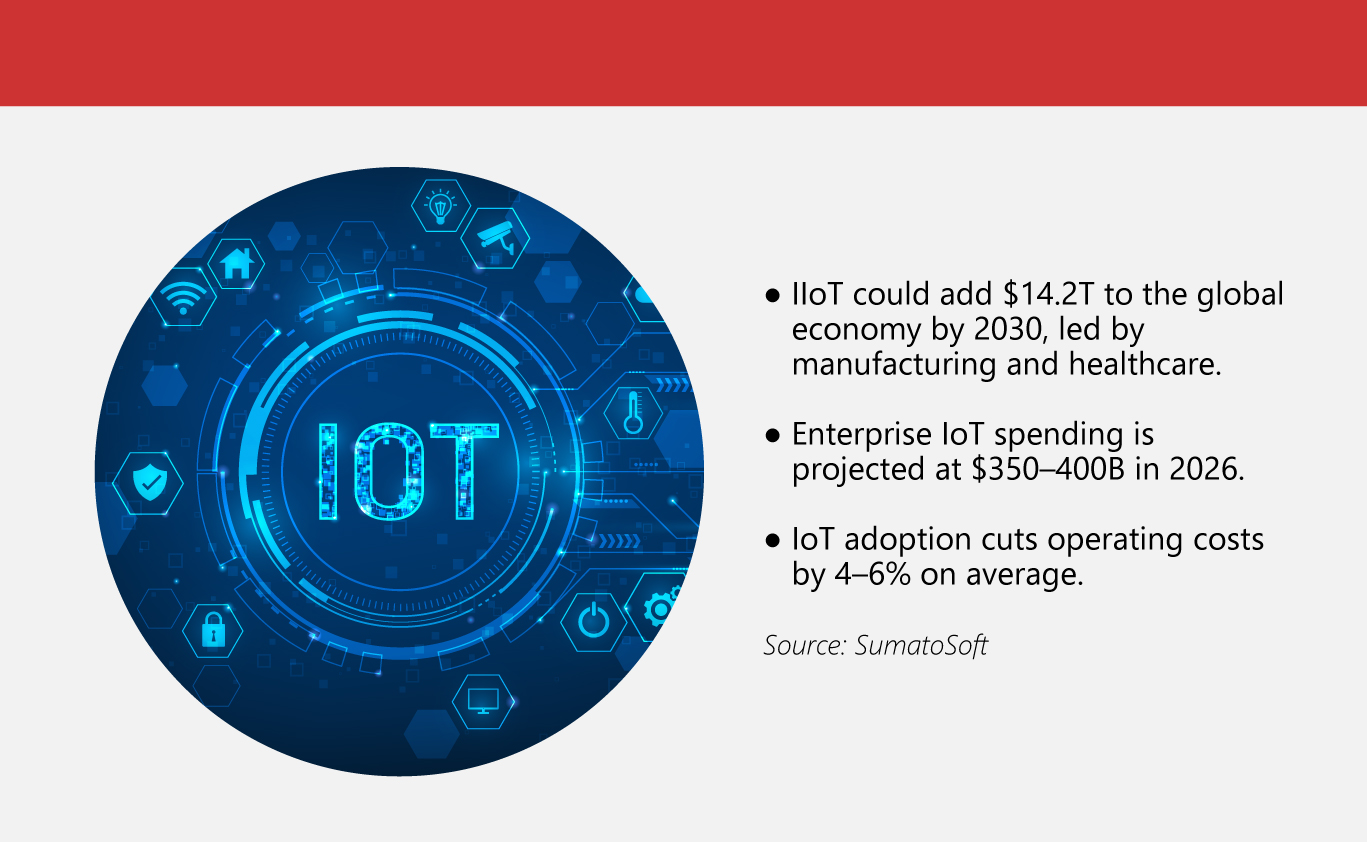
IoT investment is projected to exceed one trillion dollars by 2026, reflecting a shift from experimentation to large-scale deployments focused on measurable performance. Decisions are increasingly driven by operational metrics such as downtime reduction, energy efficiency, and response times, with businesses applying data-backed “operations math” to evaluate real business impact and return on investment.
Connected Intelligence Driving the Future
The IoT is no longer an emerging layer of technology but a structural force reshaping how industries operate, compete, and scale. As it matures into a robust ecosystem, its value is increasingly defined by outcomes rather than connectivity alone—driving resilience and data-led decision-making across manufacturing, retail, and services.
Advances in AI, automation, and edge computing are accelerating this shift, while tighter security and rising device scale are setting new operational standards.
Together, these forces position IoT as a long-term foundation for industrial transformation and digital economic growth. As one of the Top 30 EMS companies in the world, IMI has over 40 years of experience in providing electronics manufacturing and technology solutions.
We are ready to support your business on a global scale.
Our proven technical expertise, worldwide reach, and vast experience in high-growth and emerging markets make us the ideal global manufacturing solutions partner.
Let's work together to build our future today.
Other Blog