How to Attract and Secure Top Engineering Talent

AI is rapidly transforming industrial automation, boosting operational efficiency, precision, and workplace safety across factory floors. The employment picture, however, is more complicated.
Manufacturing payrolls in the US have been on a long downward trajectory since 1979, and the slide has continued in recent months. Federal data show the industry lost 78,000 jobs over the past year, extending a decline in careers in manufacturing that began in early 2023 and bringing employment to its lowest level since the pandemic recovery.
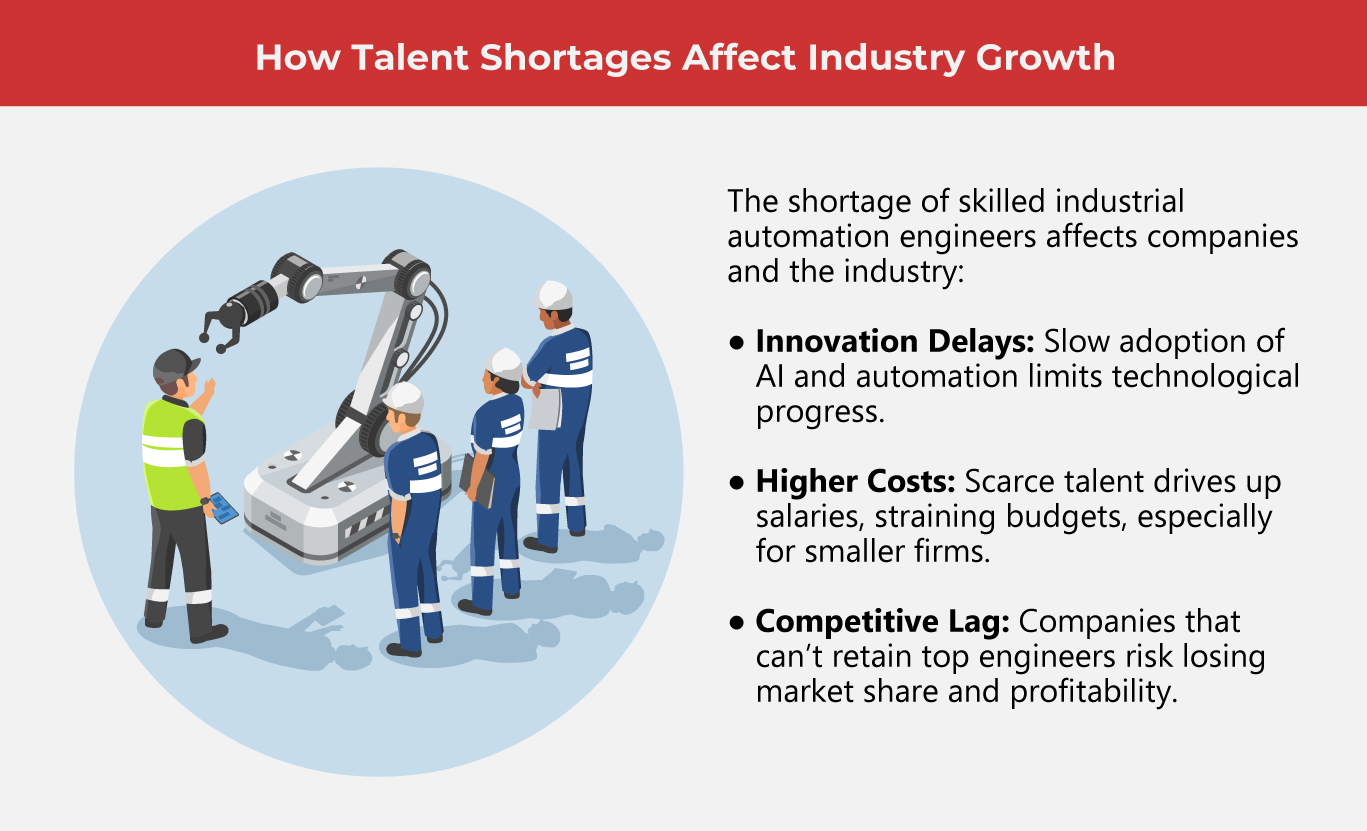
Trade policy shifts, tighter immigration rules, and an aging workforce are adding pressure to a sector that has struggled with labor shortages for years. Industrial market projections estimate that nearly 2 million manufacturing jobs could go unfilled by the end of the decade, highlighting the depth of the talent gap.
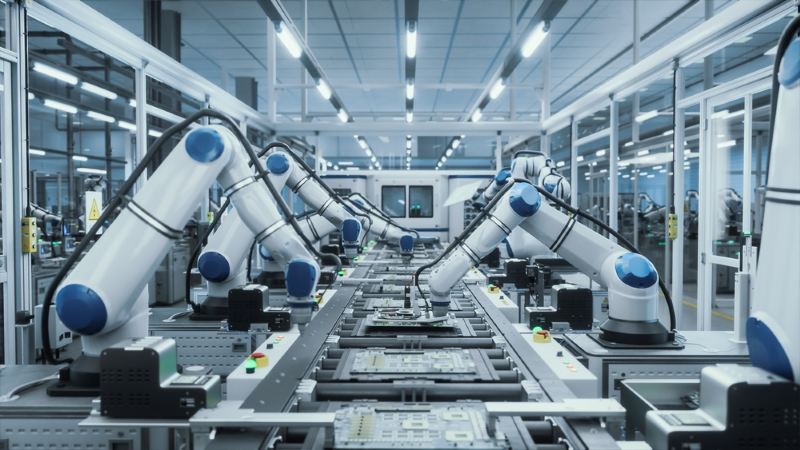
To maintain output, companies are accelerating investments in AI systems and robotics. Fully automated factories are already operating in parts of Asia, while advanced facilities in the US are adopting similar production models. High-volume industries such as the automotive market, semiconductors, electronics, aerospace, and pharmaceuticals are leading adoption, particularly where repetitive and precision-based tasks are common.
Process industries, including chemicals, petrochemicals, food production, and advanced materials, are also confronting a severe shortage of engineering talent as experienced workers retire and digital skills become increasingly essential.
The rapid deployment of automation has renewed concerns about job displacement. Yet the shift appears to be less about eliminating work and more about redefining it. Traditional assembly roles are declining, while demand is rising for technicians, robotics specialists, and data-focused professionals who can manage advanced equipment and data-driven production systems.
As factories grow more intelligent and interconnected, human roles are evolving alongside technology. The central question is not whether automation will advance, but whether the workforce can adapt quickly enough to keep pace with a changing industrial landscape.
(Also read: The New Rules of Manufacturing in 2026)
The widening engineering talent gap
Demand for highly skilled engineers is rising faster than the available supply, particularly in emerging areas such as sustainability-driven manufacturing and digital twin technology. Roughly one-third of engineering roles go unfilled each year, and in the industrial equipment sector, more than one in five machinery makers operated below full capacity in the second quarter due to labor constraints.
Several factors are compounding the challenge:
-
Stringent role requirements
Inflated job requirements are keeping qualified candidates from applying, as many feel they don’t meet the listed standards. Job seekers report that descriptions often include unnecessary skills, even though most can be learned on the job, making it harder to find the right talent.
-
Lengthy hiring procedures
Companies are facing challenges filling industrial automation engineer roles due to prolonged hiring timelines. Tech-AI positions average 56 days to close, longer than typical IT roles. Extended recruitment can push highly qualified candidates toward faster-moving competitors.
-
Unclear position duties
Many companies struggle to clearly define the skills and duties required for emerging automation roles. This ambiguity leaves job seekers uncertain about job expectations and their own qualifications. As automation technologies advance, roles and necessary skills evolve rapidly, and employers need to catch up.
-
Tech deficiencies
In industrial manufacturing, design and engineering teams often rely on costly computer-aided design software. This leads many firms to stick with outdated programs, creating a skills paradox: instead of mastering the latest tools, designers must be adept in legacy systems, making experienced professionals in these older platforms highly sought after.
-
Low candidate confidence
A survey found that many job seekers doubt their ability to land roles in today’s competitive market, often pointing to skill gaps as the main obstacle. This lack of confidence discourages applicants from applying, shrinking the talent pool and deepening workforce shortages.
-
Location-based gaps
The supply of AI professionals is heavily concentrated in major tech hubs, leaving other regions with limited access to talent. Companies outside these areas face challenges in testing and implementing AI projects, often needing to offer remote work or relocate specialists, both of which can be costly and complex.
-
Job-life balance
Demanding schedules, long hours, and frequent travel make roles less attractive. Engineers often leave high-pressure positions for jobs offering predictable hours and personal time. Companies that fail to provide flexibility struggle to retain skilled staff, shrinking the talent pool and intensifying shortages across engineering fields.
Winning the Talent Race: Hiring Engineers
To achieve manufacturing excellence, companies must adopt smart, targeted strategies for attracting and retaining top engineering talent.
-
Strengthen job descriptions.
Companies should create concise, practical job descriptions that outline required and preferred skills while providing a transparent view of the role’s growth and evolution, helping candidates understand expectations and fit.
-
Prioritizing skill development
By investing in comprehensive learning programs, manufacturers can upskill employees, creating versatile team members and reducing hiring delays. Structured learning, apprenticeships, and partnerships with schools enhance workforce skills, generating long-term economic value.
-
Invest in technologies.
Investing in advanced technology signals innovation and growth, attracting top engineering talent eager to work with cutting-edge tools. Access to modern systems enhances job satisfaction, fosters skill development, and positions companies as desirable employers in a competitive talent market.
-
Promote team-oriented leadership.
Collaborative leadership creates a supportive, team-focused culture where ideas are valued, knowledge is shared, and employees feel empowered. Employees are drawn to workplaces that encourage cooperation, mentorship, and joint problem-solving, boosting engagement and job satisfaction.
-
Collaborate with academic institutions.
Partnering with universities and technical schools helps develop a steady flow of future engineers. Research partnerships, mentorship programs, and financial support encourage students to explore AI and advanced manufacturing technologies, equipping them with the skills needed for tomorrow’s workforce.
(Also read: PH Manufacturing 2026: Progress, Challenges & Promise)
Investing in the future workforce
Addressing the labor shortage in the industrial equipment sector requires more than quick fixes. Companies need to treat workforce development as a strategic, long-term investment rather than a short-term cost. Effective solutions include comprehensive training programs, partnerships with educational institutions, and cultural changes that support employee growth.
While these initiatives demand time and resources, they are critical for sustaining innovation in an increasingly automation-driven industry. The skills gap is a structural challenge, not a temporary issue, and tackling it now ensures that the sector can thrive, with skilled professionals driving machines and growth alike.
As one of the Top 30 EMS companies in the world, IMI has over 40 years of experience in providing electronics manufacturing and technology solutions.
We are ready to support your business on a global scale.
Our proven technical expertise, worldwide reach, and vast experience in high-growth and emerging markets make us the ideal global manufacturing solutions partner.
Let's work together to build our future today.
Other Blog